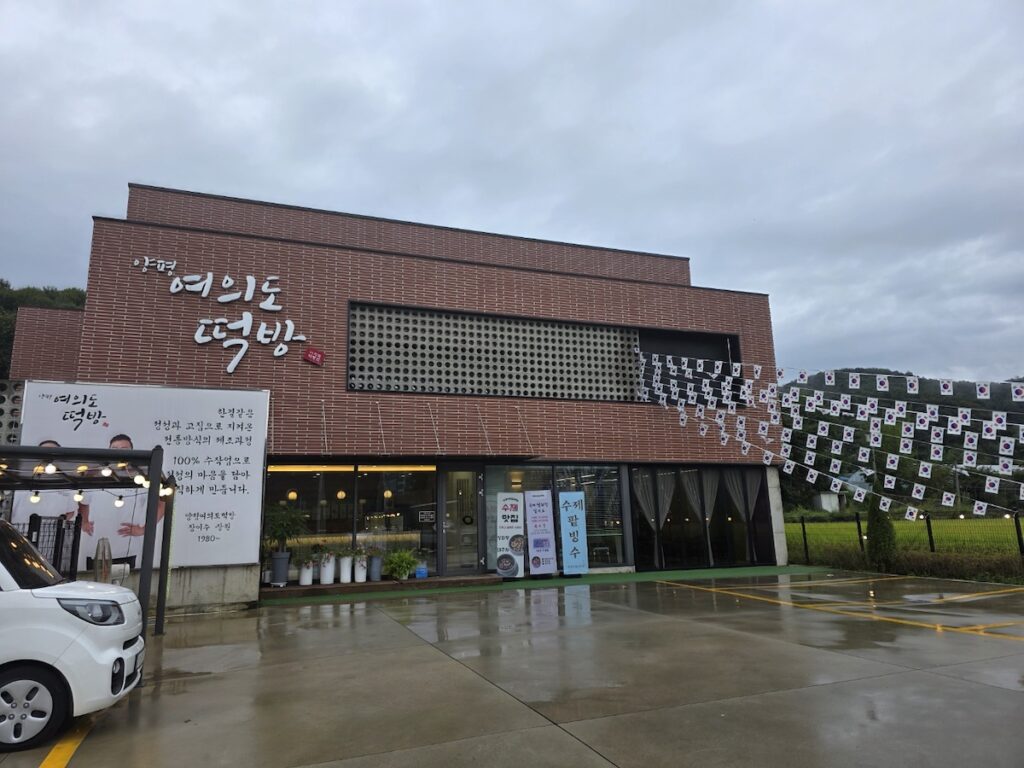
Korean tteok rice cake guide 2026 is no longer a story of dusty traditional markets and overly sweet snacks. It has transformed into a sophisticated culinary movement. Years ago, my college senior and I spent our nights in Seoul over bottles of Soju and loud music. Today, we found ourselves under the damp, grey afternoon sky of Yongmunsan Mountain, searching not for alcohol, but for a perfect piece of Tteok. It’s a quiet transition into a more refined age, where the bitterness of an Americano meets the chewy tradition of Korea.

1. The Modern Alchemy: Why Opening a Korean Tteok Rice Cake Guide 2026 Leads to Coffee Shops
At the foot of Yongmunsan, a legendary rice cake shop from Yangpyeong Market has opened a sophisticated “Tteok-bang” (Rice Cake Atelier). This is the new face of Korean tradition. For foreigners, the barrier to entry for tteok used to be its intense sweetness or unfamiliar texture. But the modern trend is Dam-baek (담백)—a refined, subtle sweetness that respects the natural grain.
- The Price of Elegance: Expect to pay around 3,000 KRW ($2.20) per piece. In these modern buildings, the value lies in the pairing.
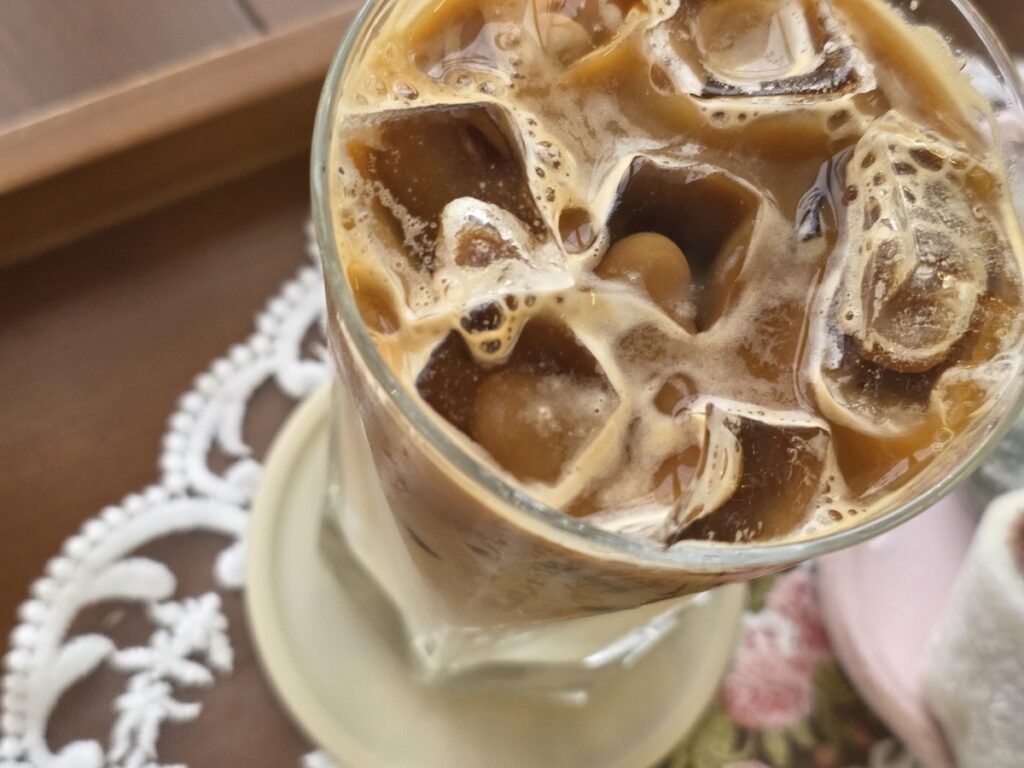
- The Pairing Ritual: In Korea, tourism isn’t just about hiking; it’s about how local specialties adapt to the coffee-loving culture. Every major tourist spot now offers these hybrid spaces where history is served on a modern plate.
2. Classic Varieties Meets Modern Slicing
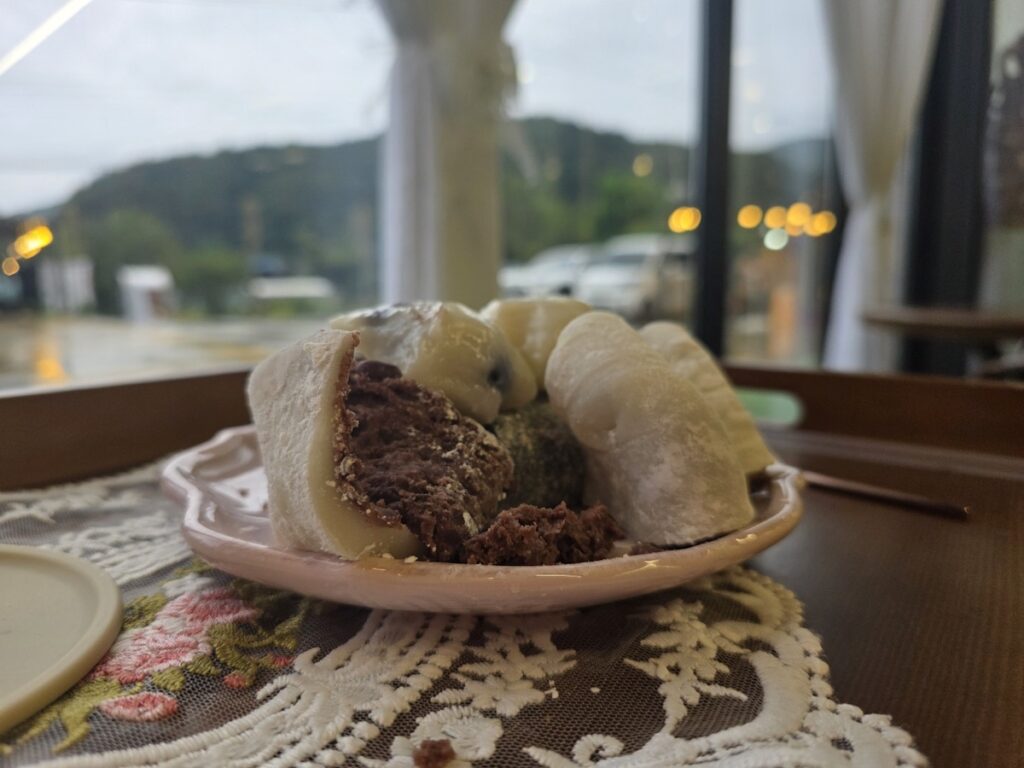
While the setting is modern, the roots are deep. As the waiter precisely sliced our tteok—a service that felt more like a ritual—I realized that this wasn’t just a snack. It was tradition evolved.
- Injeolmi (인절미): The “Introductory Tteok.” Chewy rice cake coated in roasted soybean powder. In modern cafés, it’s often served with a drizzle of honey or a side of cream.
- Baekseolgi (백설기): Fluffy and white. Traditionally for birthdays, now a staple for tea pairings due to its bread-like texture.
- Garaetteok (가래떡): The long cylinders. When grilled over an open flame and dipped in grain syrup (jocheong), it becomes the ultimate “Comfort Food.”
3. Tteok vs. Western Bread: The Health Perspective
For the health-conscious expat, tteok offers a unique alternative to Western pastries.
- Gluten-Free by Nature: Made primarily from rice, it avoids the heavy gluten found in wheat-based cakes.
- No Dairy, No Eggs: Traditional tteok relies on steam and grain, making it a “cleaner” dessert for those with sensitivities.
4. Celebrations Reimagined: Why You Should Try a Tteok Cake
If your travel partner is celebrating a milestone—a birthday, an anniversary, or even a farewell—during your stay in Seoul, don’t settle for a standard flour-based cake. A Korean tteok rice cake guide 2026 would be incomplete without mentioning the rise of “Tteok Cakes.” These are visually stunning, often decorated with intricate bean-paste flowers that look like oil paintings.
Famous Tteok Cake Ateliers in Seoul:
- Siwhadang (시화당): Known for artistic designs that redefine tteok as high art. Perfect for luxury celebrations.
- Rice & Bloom: Located near expat-friendly areas, they specialize in custom flower tteok cakes that are as delicious as they are beautiful.
- Soridang (소리당): Famous for fusing traditional textures with modern aesthetics, ideal for those seeking a “photogenic” celebration.
5. The Science of Freshness: How to Store and Revive Tteok
Tteok is a “living” food. Because it is made of steamed rice, it undergoes a process called retrogradation (the hardening of starch) as it cools. To keep your tteok tasting like it did at that Yongmunsan café, follow these practical rules:
- The Golden Rule: Never Refrigerate. The fridge is the enemy of tteok; it will turn into a hard, tasteless brick.
- Freeze Immediately: If you can’t finish your tteok within a few hours, wrap it tightly in plastic and put it in the freezer.
- The Resurrection: To eat it again, steam it for a few minutes or microwave it with a small glass of water nearby to maintain moisture. Pan-frying frozen injeolmi is also a “pro-tip” for a crispy, chewy breakfast.
- Spoilage Warning: Since authentic tteok contains no preservatives, it can spoil quickly in humid Korean summers. If it smells slightly sour or the texture feels slimy, let it go.
6. Table Manners & The “Secret Weapon” of Korean Dining
For foreigners, the first question is often: How do I pick this up? In Korea, tteok is remarkably versatile and informal.
- Hands vs. Tools: It is perfectly acceptable to use your hands for small pieces of injeolmi, but at a café, use the provided small forks or chopsticks.
- The Powder Hazard: Be careful when eating tteok coated in Gomul (bean powder). A sudden exhale can send a cloud of dust onto your clothes—or worse, cause a coughing fit. Sip your coffee after swallowing.
- Tteok for Travelers with Kids: If you are traveling with children, tteok is a fantastic, natural snack. Most cafés will serve tteok in large pieces. Do not hesitate to ask for a fork and knife.
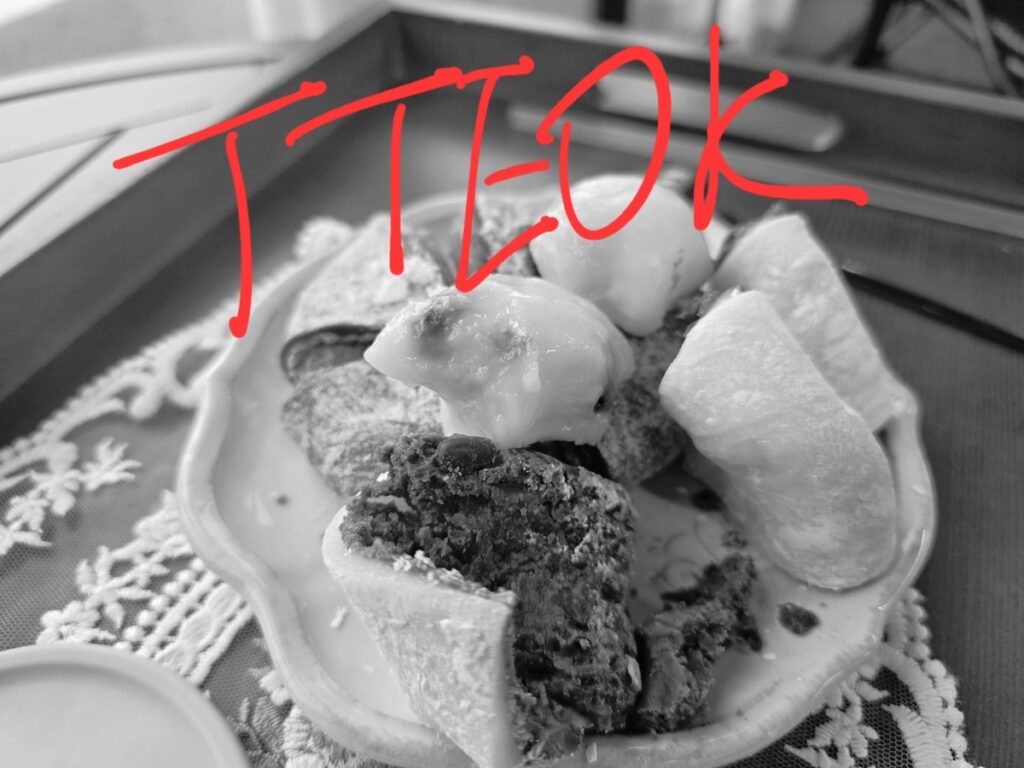
- The “Scissors” Surprise: Don’t be shocked if the server brings a pair of large metal scissors to your table instead of a knife. In Korea, scissors are the ultimate culinary tool—efficient, precise, and deeply practical. Using them to cut chewy tteok is far more effective than a dull butter knife.
🔗 The Full Korean Palette: What to Eat After Your Tteok Journey
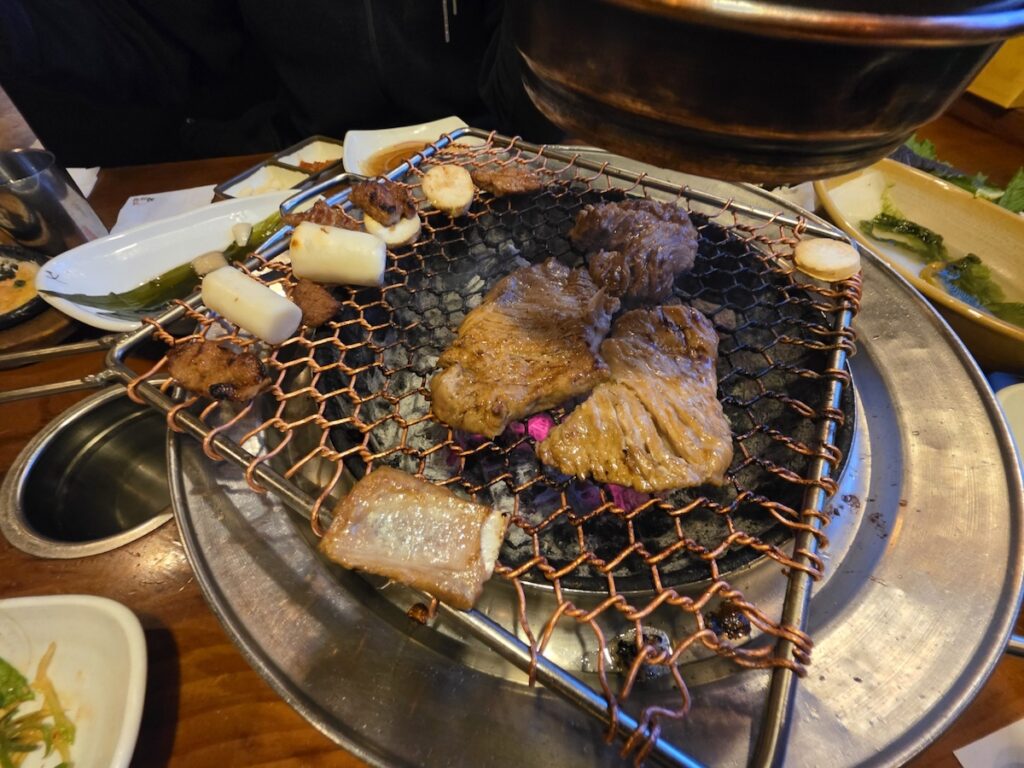
- [The Savory Icon]The Ultimate Guide to Korean Marinated Pork Ribs BBQ: A 2026 Survival Guide for Foodies
- If tteok is the soul of Korean snacks, Galbi is the heart of its dinner table. Master the art of the grill with our updated 2026 guide to marinated perfection.
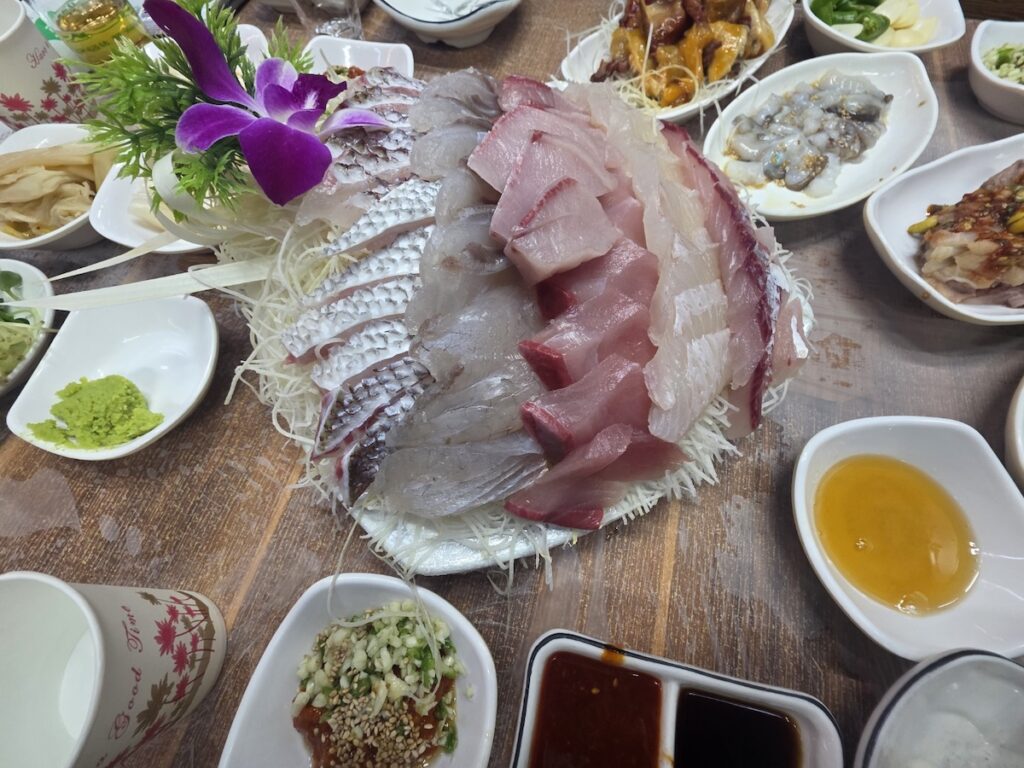
- [The Ocean’s Freshness]The Ultimate Garak Market Sashimi Guide: Beyond the Fish Stalls
- Ready for something lighter? Move from the chewy texture of rice cakes to the delicate snap of fresh sashimi at Seoul’s most authentic seafood hub.
- [The Probiotic Powerhouse][Health Alert 2026] Fresh Kimchi Salad (Geotjeori): The Ultimate Gut-Health Superfood
- Pair your meal with the crisp, unfermented bite of Geotjeori. Discover why 2026 is the year this gut-health hero takes center stage in the global wellness scene.
7. A Lesson in Textures: From Soft to Resilient
As I sat with my senior at the foot of the mountain, watching the mist roll in, I realized tteok is a metaphor for the Korean spirit—resilient, chewy, and adaptable. Whether you are cutting it with scissors or pairing it with a hot latte, you are participating in a culture that values the “long chew” over the “quick bite.”