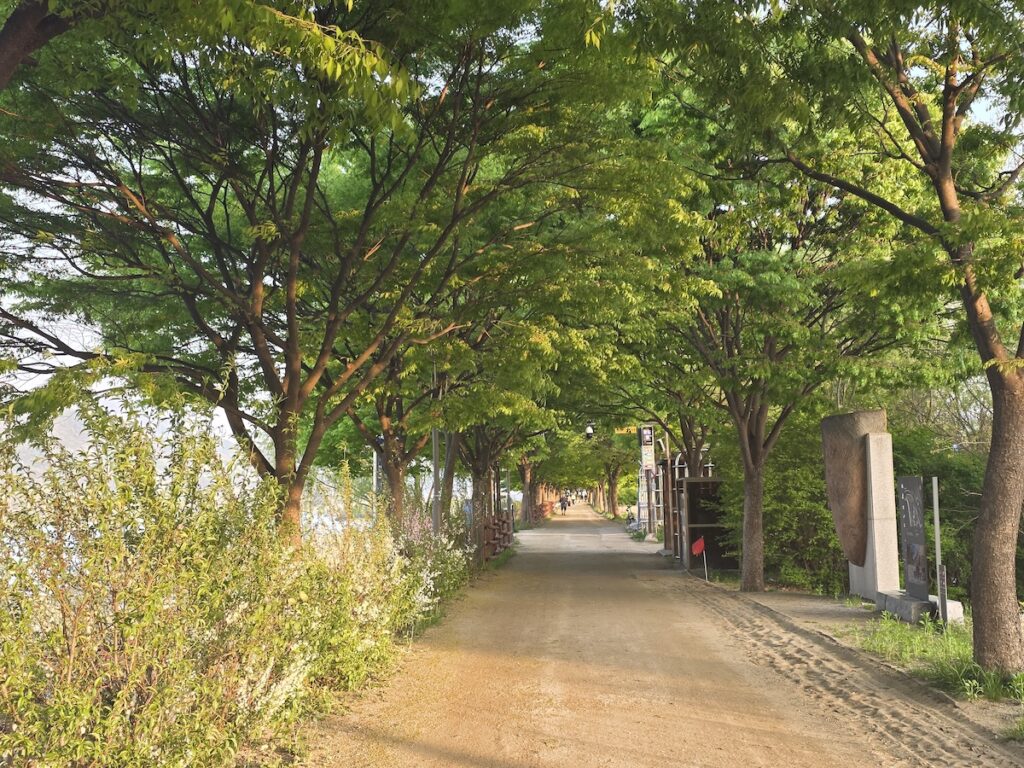
Itaewon Seoul is one of those places that looks easy to explain until you actually spend time walking through it.
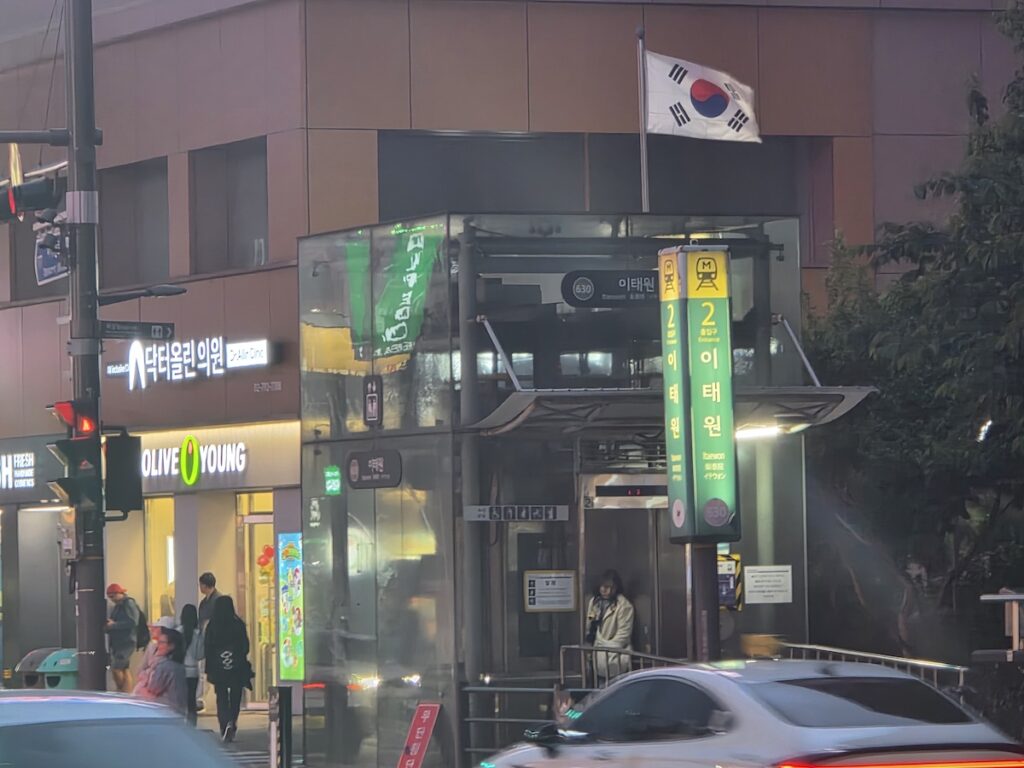
For many visitors, Itaewon means nightlife, foreign restaurants, rooftop bars, kebabs, halal food, international crowds, clubs, and maybe a slightly more “global” version of Seoul. And yes, that version of Itaewon exists. You can step out near Itaewon Station and quickly see fashionable people, English signs, trendy stores, global food, and weekend energy that feels different from other parts of the city.
But Itaewon has never felt simple to me.
I first knew Itaewon long before I thought of it as a tourist area. Around twenty years ago, I went there because I needed things that were harder to find elsewhere in Seoul. I have big feet, around size 300 in Korea, and Itaewon was one of the few places where I could hope to find shoes like Nike Air Force 1s in my size. It was also where people went for big-size clothes, foreign goods, American-style burgers, kebabs, imported food, and little pieces of culture that had not yet become mainstream in Korea.
Back then, even eating a handmade burger in Itaewon felt like entering another rulebook. I remember being surprised when I saw people cutting a burger in half and sharing it. In my mind at the time, a hamburger was something one person ordered and finished alone. Seeing it treated almost like a dish to divide, taste, and share felt oddly foreign. It was a small moment, but Itaewon was full of those small moments. You did not need to leave Seoul to feel that some other way of living was leaking into the city.
That is still what makes Itaewon interesting. Not because it is “foreign,” exactly. But because it shows how Seoul absorbs foreignness, rearranges it, commercializes it, localizes it, and then places it right next to very ordinary Korean life.
Quick Answer: What Makes Itaewon Seoul Different?
Itaewon Seoul is not just a nightlife district or a foreigner-friendly area. It is one of Seoul’s most layered neighborhoods, where international restaurants, fashion, bars, embassies, older residential streets, steep hills, and everyday local life sit very close together. For first-time visitors, Itaewon is worth visiting not only for food and nightlife, but also because it shows how global culture and ordinary Seoul life overlap in one place.
Itaewon Seoul Is Not Just a Nightlife District
It is easy to reduce Itaewon to nightlife.
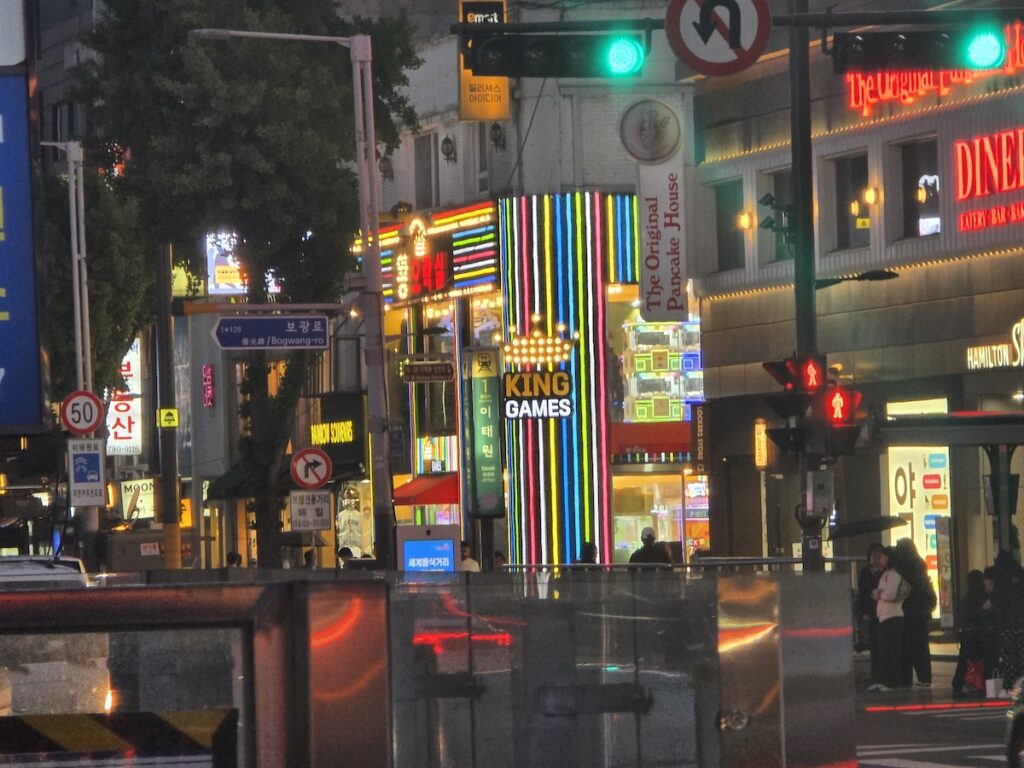
On a weekend evening, that impression is understandable. People come dressed with intention. Some look like they are going to a club, some like they are walking into a fashion shoot, and some look like they came simply to watch the night happen. You hear English, Korean, French, Arabic, Japanese, and languages you may not recognize. Restaurants advertise tacos, kebabs, burgers, Thai food, halal food, barbecue, cocktails, and brunch. Compared with many parts of Seoul, Itaewon can feel visually loud.
There is also a social code to Itaewon.
When someone in Seoul says they are going out for drinks, the next question is often where. Gangnam has one meaning. Hongdae has another. Itaewon has its own code.
Gangnam often feels polished, expensive, and connected to offices, clinics, shopping, and people coming from southern commuter areas like Bundang, Pangyo, Gwacheon, or other parts of Gyeonggi-do. Hongdae has a younger, student-heavy, music-and-street-energy feeling, with strong access from western Seoul, Incheon, and northern Gyeonggi areas. Itaewon is different. People do not always go there because it is the easiest place to reach. They go because they want that particular mix.
That makes Itaewon feel less like a convenient meeting point and more like a choice.
You choose Itaewon when you want international food, a less predictable crowd, nightlife with a different atmosphere, or a place where Seoul feels slightly less uniform. For some people, that is exciting. For others, it feels chaotic. Both reactions are fair.
The Itaewon Code: Food, Fashion, Size, and Difference
Before international food became common in Seoul, Itaewon carried a special role.
If you wanted a proper kebab, you went to Itaewon. If you wanted a burger that did not feel like a Korean fast-food chain, you went to Itaewon. If you wanted imported goods, foreign clothes, larger shoe sizes, or something that did not quite fit the standard Korean retail system, Itaewon was one of the places you checked first.
This history still matters.
Today, Seoul has changed. You can find handmade burgers in Seongsu, tacos in Yeonnam-dong, wine bars in Euljiro, brunch in Apgujeong, and imported snacks in many large supermarkets. Itaewon is no longer the only gateway to foreign culture. But it still carries the memory of being that gateway.
That memory gives the neighborhood a slightly different emotional weight.
For Korean locals, Itaewon may be connected to first experiences: first foreign bar, first club, first kebab, first big burger, first time seeing a more mixed crowd, first time feeling that Seoul could be more than the version they knew from school, office, and family life.
For foreign visitors, Itaewon may feel strangely familiar at first. There are more English menus, more international faces, more food options, and more places that seem designed for non-Korean customers. But that familiarity can be misleading. Itaewon is not a foreign country inside Korea. It is still Seoul, with Seoul’s geography, Seoul’s real estate pressure, Seoul’s social contrasts, and Seoul’s way of placing luxury, survival, nightlife, and daily life very close together.
The Bright Core and the Streets Beyond It
The central part of Itaewon can be very bright.
You see trendy fashion, popular Korean brands, stylish crowds, good-looking cafés, bars with music, and people who came to be seen. Around the main road and near Itaewon Station, there is a strong feeling of display. People dress with more freedom than in many office-heavy districts. You may see someone in streetwear, someone in a club outfit, someone in luxury casual clothing, someone in military-style vintage, and someone in simple tourist clothes all within the same block.
But walk fifteen minutes in another direction, and the feeling changes.
This is where Itaewon becomes more complicated.
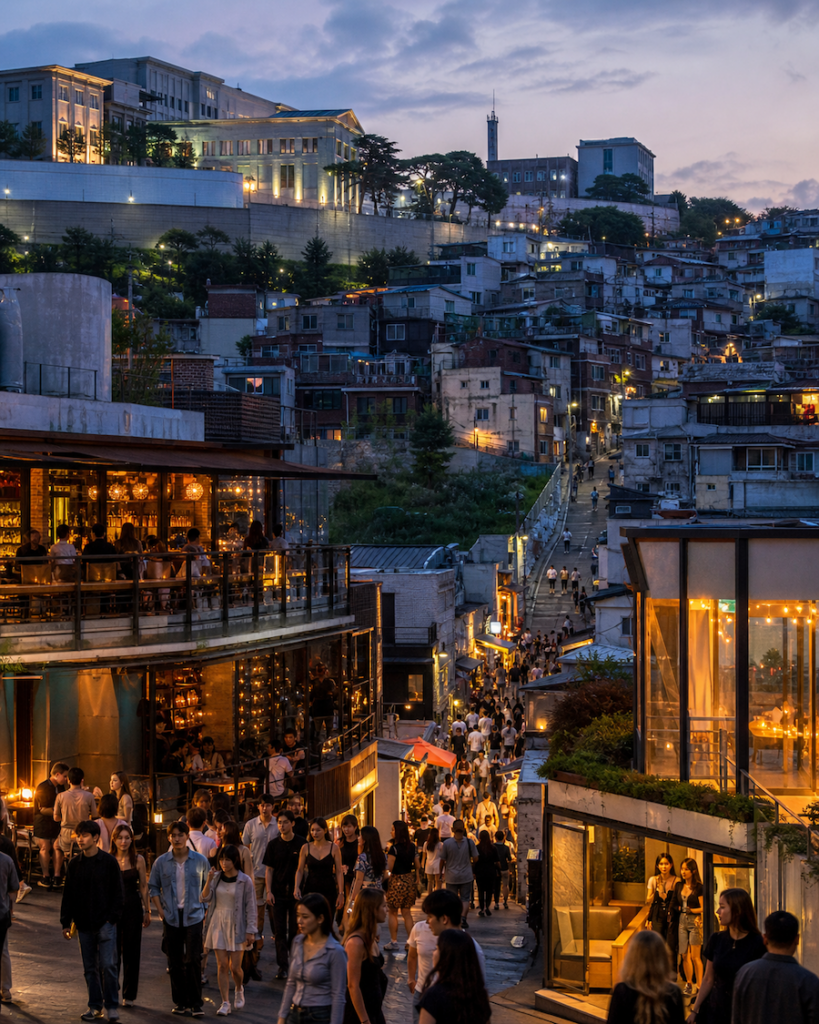
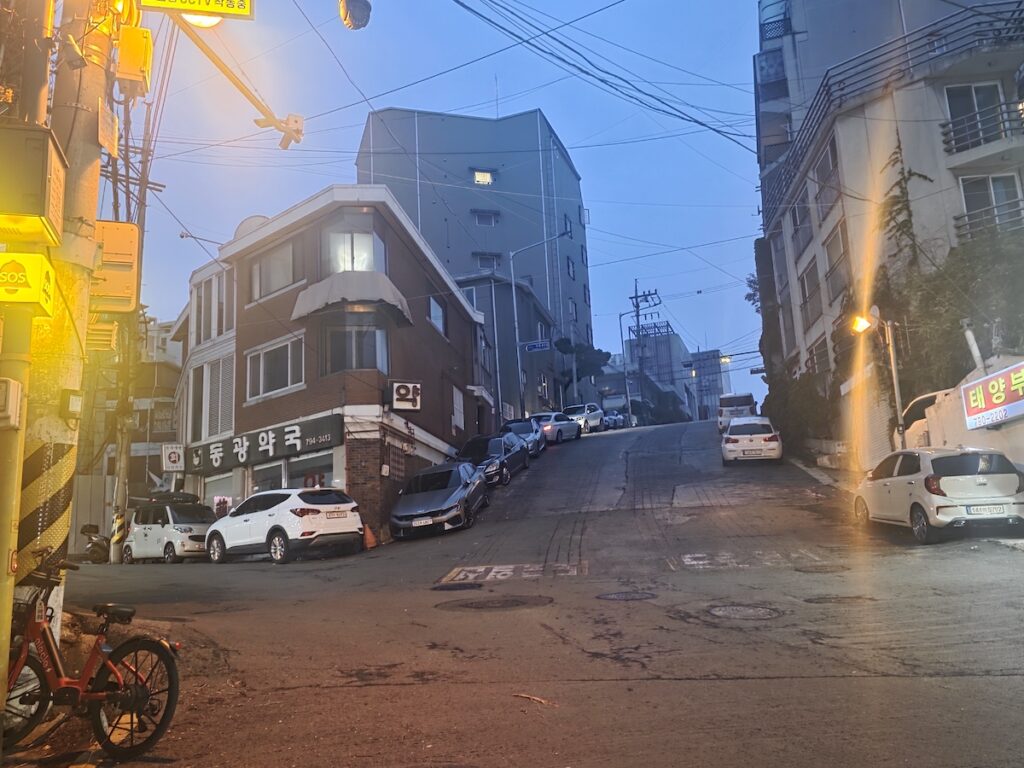
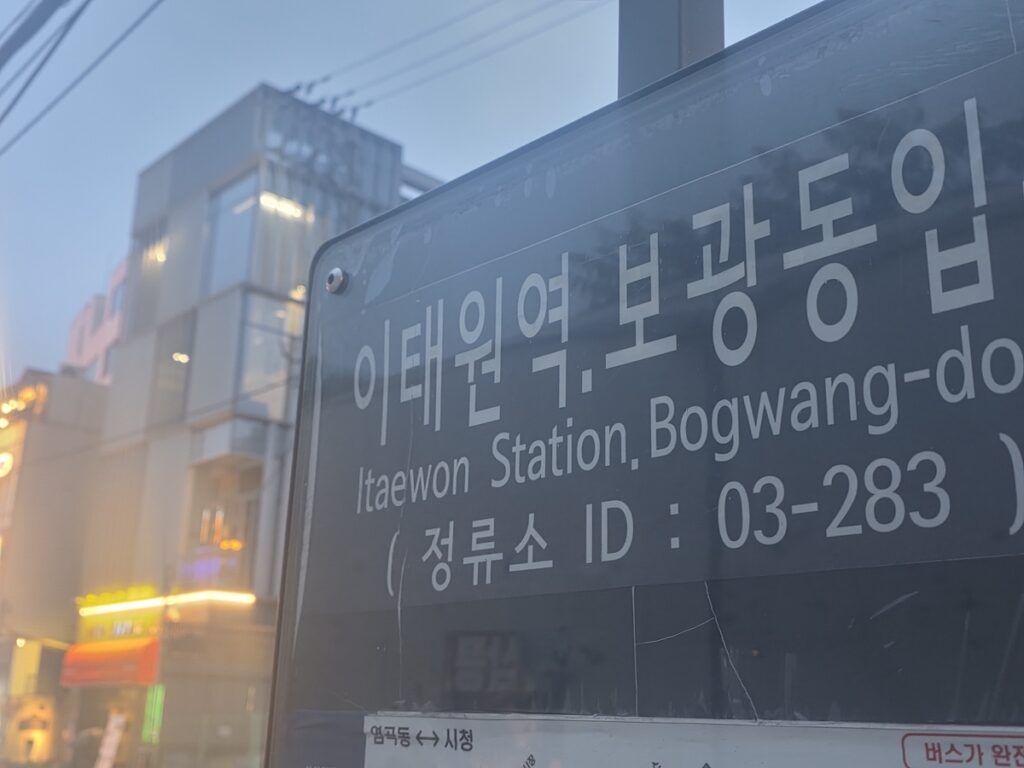
Near areas like Bogwang-dong, and in the slopes and residential pockets around the wider Itaewon-Hannam-Noksapyeong zone, Seoul can feel older, quieter, and less polished. You may see steep roads, older houses, small repair shops, local stores, narrow alleys, mixed residential buildings, and streets that do not look like the glamorous version of Seoul many visitors expect.
This does not mean these places should be treated as hidden attractions or “local poverty scenery.” That would be careless. These are people’s homes, workplaces, and daily routes. The point is not to tell travelers to wander into residential streets looking for contrast. The point is to understand that Itaewon is not only the bright commercial strip shown in nightlife videos.
Like many cities, Seoul places different worlds side by side.
In Itaewon, that contrast feels especially sharp. One street may be full of international restaurants and fashionable people. A short walk away, you may find older housing, quieter shops, people carrying groceries, delivery scooters climbing hills, and daily life that has nothing to do with weekend nightlife.
A Neighborhood of Embassies, Hills, and Uneven Ground
One reason Itaewon feels different is geography.
This part of Seoul is not flat. You climb, descend, turn, and often feel the slope in your legs before you fully understand the map. For visitors from flatter cities, this can be surprising. Seoul is a city of hills, mountains, tunnels, staircases, and neighborhoods built around uneven ground. Itaewon shows that very clearly.
Living on a hill sounds romantic in travel writing, but in daily life it can be tiring. Most people prefer flat ground. Carrying groceries uphill, walking home after work, pushing a stroller, helping an older family member, or going out in icy winter weather can make a slope feel less charming. In Seoul, elevation often shapes housing, rent, daily convenience, and even mood.
This is one reason I hesitate to describe Itaewon only as “cool.”
It is cool, yes. But it is also uneven, physically and socially. There are embassies nearby, international schools and diplomatic residences in the wider area, expensive streets toward Hannam-dong, older residential pockets, global restaurants, clubs, and people simply trying to live affordably in a city that keeps becoming more expensive.
For a first-time visitor, this may be hard to read. You may only see the surface: bars, clothes, English signs, and restaurants. But if you walk slowly, you start to notice that Itaewon is less like one neighborhood and more like overlapping systems.
What Tourists Expect vs What Itaewon Actually Feels Like
| What visitors may expect | What Itaewon often feels like in real life |
|---|---|
| A simple international nightlife area | A layered district with bars, embassies, old housing, steep streets, and daily life |
| An easy place for foreigners | More familiar than other areas, but still shaped by Korean systems, geography, and social codes |
| A place mainly for clubbing | Also a food area, expat zone, shopping area, residential edge, and cultural meeting point |
| A polished global neighborhood | Bright in the core, but rougher, older, and more uneven as you move away |
| A tourist-friendly district | Interesting, but not always comfortable or intuitive for first-time visitors |
This is why Itaewon Seoul can be difficult to explain in one sentence. It is not just “foreign.” It is not just “Korean.” It is not just “cool.” It is a place where those categories keep rubbing against each other.
Why Foreigners May Feel Both Comfortable and Confused
For foreign travelers and expats, Itaewon can feel comforting at first.
You may find food that reminds you of home. You may hear English. You may see people from many backgrounds. If you have dietary needs, Itaewon can be one of the easier places in Seoul to find halal food, vegetarian options, international menus, and restaurants used to non-Korean customers. If you are tired of guessing what everything means, Itaewon gives you a little more breathing room.
But comfort does not mean everything is simple.
Some restaurants are expensive. Some bars feel exclusive. Some streets are steep and narrow. Weekend crowds can be intense. Taxi pickups can be frustrating late at night. Certain alleys may feel confusing if you do not know where you are going. And although English is more visible here than in many Korean neighborhoods, you should not assume every shop, taxi driver, staff member, or local resident will communicate easily in English.
Itaewon can also create a strange emotional experience for foreigners living in Korea.
For some, it is a practical support zone. It is where they buy certain foods, meet friends, look for familiar ingredients, find community, or feel less alone. For others, it is a nightlife stage. They go there to drink, dance, date, dress up, and escape the more formal parts of Korean daily life.
These two versions of Itaewon exist at the same time.
Someone may be there because they are maintaining life in Korea. Someone else may be there because they want a memorable Saturday night. Someone may be shopping for affordable goods or familiar food. Someone else may be wearing expensive clothes and waiting outside a bar. This contrast is not unique to Seoul. Many global neighborhoods work this way. But in Itaewon, the contrast is unusually visible.
Itaewon Compared With Hongdae and Gangnam
If you are visiting Seoul for the first time, it helps to understand Itaewon by comparing it with other nightlife and social districts.
Hongdae feels younger and more connected to music, students, street performance, casual shopping, and late-night energy. It is often easier for people coming from western Seoul or Incheon, and the streets can feel busy even when you are not planning to drink.
Gangnam feels more polished, commercial, and status-aware. It has offices, clinics, shopping, restaurants, and nightlife, but the atmosphere is usually cleaner and more corporate. People often dress well, but in a different way from Itaewon. Gangnam’s energy is less “international mix” and more “urban Seoul ambition.”
Itaewon feels more coded.
It is not always the most convenient choice. The subway access is fine, but it does not function like a massive transfer hub in the way some other Seoul districts do. People go there because they want Itaewon specifically. They want the food, the crowd, the bars, the fashion, the feeling of difference.
That is why someone saying “I’m going to Itaewon tonight” can carry a slightly different meaning in Seoul. It suggests not just a location, but a mood.
How to Experience Itaewon Without Misreading It
The best way to experience Itaewon is not to rush to define it.
If you go during the day, it may feel quieter than expected. Some restaurants and bars may not be fully awake yet. The streets can feel almost ordinary in certain pockets. If you go at night, especially on weekends, the area can become much louder and more performative. Both versions are real.
For food, Itaewon is still one of Seoul’s strongest areas for international options. Kebabs, Middle Eastern food, burgers, barbecue, pubs, and small global restaurants remain part of its identity. But check opening hours before you go, because nightlife districts often wake up later than tourist districts.
For walking, pay attention to slopes. A place that looks close on the map may feel different when the road climbs. Comfortable shoes matter more than you may expect. Seoul often punishes the assumption that distance on a map equals effort on the ground.
For attitude, remember that Itaewon is not a theme park of diversity. It is a real neighborhood with residents, workers, business owners, visitors, diplomats, long-term foreigners, short-term tourists, and Koreans who come for many different reasons. Enjoy the energy, but do not treat the quieter residential edges as scenery.
The Real Value of Itaewon for First-Time Visitors
For first-time visitors, Itaewon is worth understanding because it reveals something important about Seoul.
Seoul is not one thing. It is not only palaces and hanbok. It is not only K-pop and cafés. It is not only subway efficiency and convenience stores. It is also a city of pressure, slopes, old houses, luxury apartments, foreign embassies, global restaurants, nightlife, work, migration, memory, and ordinary survival.
Itaewon brings many of those layers into one district.
That may be why it has stayed meaningful even as the rest of Seoul has become more global. You no longer need Itaewon to eat a burger, find a wine bar, or see foreign brands. But Itaewon still carries a particular feeling: the sense that Seoul is negotiating with the outside world in public.
Sometimes that negotiation looks glamorous. Sometimes it looks messy. Sometimes it looks like a stylish crowd outside a bar. Sometimes it looks like an older uphill street five minutes away. Sometimes it looks like a kebab shop, a big-size clothing store, a luxury-adjacent neighborhood, an embassy wall, a club queue, or a quiet resident walking home.
Final Thoughts
Itaewon is not the easiest Seoul neighborhood to explain, and maybe that is exactly why it matters.
If you visit only for nightlife, you will see one version of it. If you go only for international food, you will see another. If you walk a little, notice the hills, look at the older streets, and pay attention to who is there and why, Itaewon becomes more than a place to eat, drink, or shop.
For me, Itaewon has always been connected to difference. Big shoes when I could not find them elsewhere. Burgers before handmade burger culture became normal in Seoul. Kebabs that felt more local to Itaewon than to anywhere else in Korea. Clubs, foreign signs, unfamiliar habits, and small moments that made Seoul feel wider than I thought.
But now, walking through Itaewon also reminds me that difference is never only glamorous. Behind the bright core, there are slopes, homes, work, rent, old streets, embassies, and people living very different versions of Seoul within a short walk of one another.
That is the real reason Itaewon is worth knowing.
Not because it is the most beautiful neighborhood in Seoul. Not because it is the easiest. Not even because it is the most international. Itaewon is worth knowing because it shows how Seoul holds contrast: fashion and survival, nightlife and daily life, foreignness and Koreanness, display and quiet labor, all pressed into the same uneven ground.