“Discovering the unique Korean Bathroom Culture is an essential part of any visit to Korea, from high-tech hygiene to the ‘wet room’ design.”
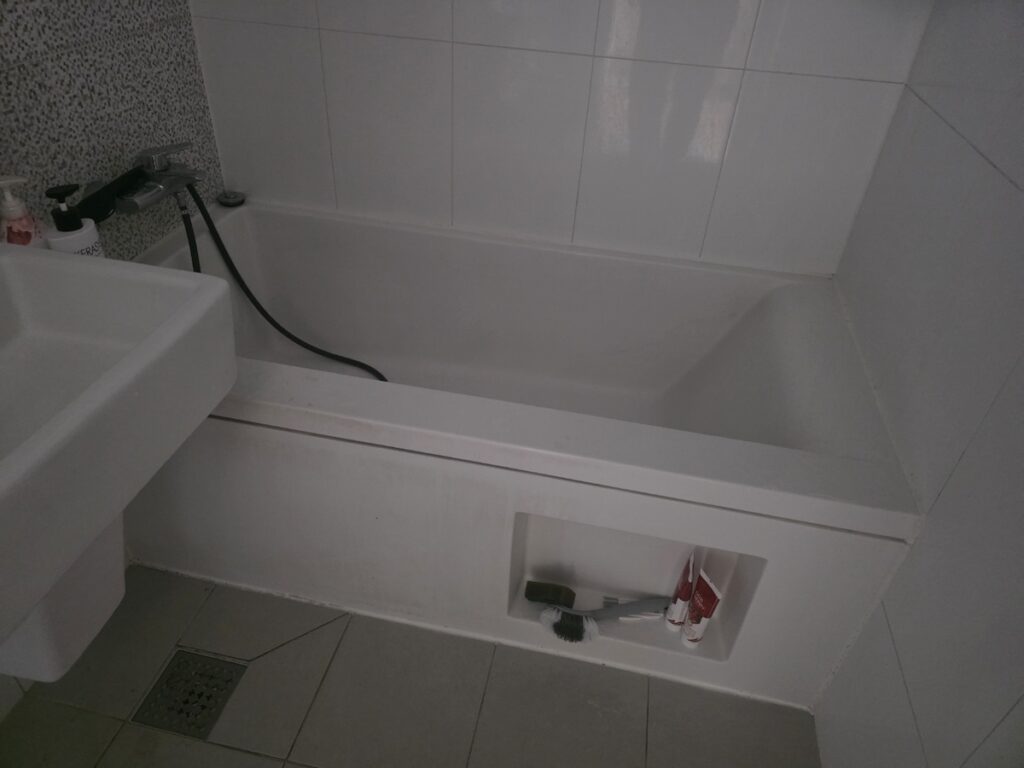
Have you ever visited a Korean home or a public facility and noticed something strikingly different about the bathroom? Perhaps the most surprising sight is the absence of a shower curtain, or a seemingly “wet floor” after someone has showered.
My own experience in Korea quickly taught me that this isn’t a design flaw, but a brilliant system. It’s an intentional Korean Wet Room culture, perfectly complemented by advanced Smart Bidet technology. If you’ve ever wondered why Korean bathrooms are built the way they are, or why a simple toilet can offer such an advanced cleansing experience, join me on a journey to uncover these fascinating secrets.
1. The Mystery of the Korean Wet Room: No Shower Curtains Needed
Unlike Western “dry bathrooms” where every effort is made to keep water contained to the shower area, Korean bathrooms embrace water. This is perhaps the most unique aspect.
- Integrated Drainage System: Look closely at the floor, even outside the shower or bathtub area, and you’ll often find a central drain. This ingenious design allows the entire bathroom floor to get wet without causing damage or flooding.
- Built for Cleanliness: This isn’t just for showering. Koreans regularly hose down and scrub their entire bathroom floors, making deep cleaning a breeze. It’s a hygienic approach that keeps the entire space sparkling clean.
- Durable Materials: Floors and walls are typically tiled with waterproof materials, designed to withstand constant moisture. This robust construction makes the “wet room” concept practical and long-lasting.
2. The Bidet Revolution: A Journey to Ultimate Cleanliness
Once you’ve experienced a Korean bidet, there’s truly no going back. It’s an essential part of the bathroom experience, not a luxury.
- Universal Adoption: From modern apartments to public restrooms, the Smart Bidet Toilet Seat is ubiquitous in Korea. For many Koreans, toilet paper alone is simply not enough for true hygiene.
- Beyond Basic Wash: These aren’t just simple water jets. Modern Korean bidets offer a range of functions designed for comfort and cleanliness.
- Environmental Impact: By reducing reliance on toilet paper, bidets contribute to a more sustainable lifestyle, saving trees and reducing waste.
🚇 Looking for a Clean Spot on the Go? If you’re out exploring Seoul and need to find a high-quality bathroom with these features, don’t worry. Check out our [Need a Bathroom in Korea? Head to the Subway — A Foreigner’s Guide to Korea’s Cleanest Public Toilets] for the best public options
3. Mastering the Controls: A High-Tech Experience
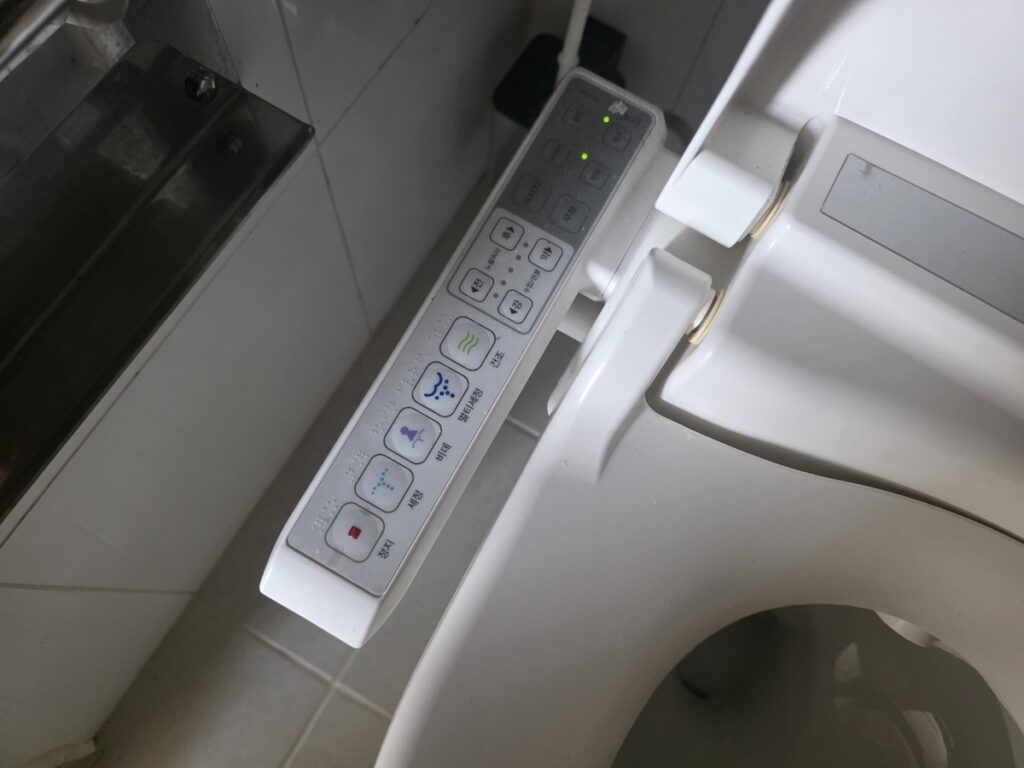
The control panel of a Korean bidet can look intimidating at first, but it offers unparalleled customization.
- Personalized Cleansing: Functions typically include front and rear wash, adjustable water pressure and temperature, and oscillating sprays. Many even have specific settings for women and children.
- Warmth and Comfort: Say goodbye to cold toilet seats! Most Korean bidets feature a heated seat function, a welcome luxury during colder months. Some even offer warm air drying after washing, eliminating the need for toilet paper entirely.
- Hygiene and Maintenance: Advanced models often include self-cleaning nozzles and deodorizing features, ensuring optimal hygiene with every use.
4. The Bathroom Slipper: An Essential Part of the Korean “Wet Room” Etiquette
With the entire bathroom floor often getting wet, Koreans developed a simple yet effective solution: the bathroom slipper.
- Keeping Feet Dry: These dedicated slippers keep your feet dry and warm, preventing slips and maintaining comfort.
- Hygiene Transition: It also serves as a clear boundary. You wear regular slippers in the house, but switch to bathroom slippers when entering the wet area, maintaining hygiene throughout the home.
💡 Cultural Tip: Bathroom habits can be a serious topic of debate in Korea. To avoid any awkward moments and understand local norms, read our guide on [Korean Bathroom Etiquette 2025 — Why Toilet Seat and Hygiene Habits Became a Cultural Debate].
5. Common Mistakes Foreigners Make in Korean Bathrooms
Living or traveling in Korea can be a steep learning curve, especially when it comes to the bathroom. Here are the most common “oops” moments that foreigners experience:
- The Slipper Swap Fail: The most frequent mistake is forgetting to switch into bathroom slippers or, even worse, wearing the wet bathroom slippers back into the living room. In Korea, this is a major hygiene “no-no” that can lead to some funny (or awkward) looks from your host.
- Fear of the “Flood”: Many foreigners panic when they see water spreading across the entire floor while showering. They often try to mop it up immediately, not realizing that the floor is designed to be wet and will drain naturally through the central floor drain.
- The “Bidet Button” Russian Roulette: Pressing buttons on the bidet control panel (Image 002.jpeg) without knowing what they do can lead to a surprising—and sometimes very wet—experience. A common mistake is accidentally triggering the “Turbo” or “Move” functions without being prepared for the water pressure!
- Leaving the Door Open: Because it’s a “wet room,” the bathroom can get quite humid. Foreigners often close the door out of habit, but Koreans usually leave the bathroom door slightly ajar when not in use to allow for proper ventilation and to help the floor dry faster.
🗺️ Be Prepared for Anything! Knowing the secrets of the wet room is great, but knowing where to find a restroom when you’re in a hurry is even better. Save yourself from a “bathroom emergency” with [Don’t Panic! The Ultimate Survival Guide to Finding a Toilet in Korea].
6. Conclusion: Embracing the Korean Bathroom Culture
Understanding the unique Korean Bathroom Culture is more than just learning how to use a high-tech toilet; it’s about discovering a lifestyle that prioritizes hygiene, efficiency, and smart technology. While the “wet room” design and the advanced bidet control panels might seem intimidating at first, they quickly become comforts that are hard to live without.
By mastering the bidet and respecting the simple etiquette of the wet floor, you’ll not only stay cleaner but also navigate Korean homes and public spaces like a seasoned local. We hope this guide helps you feel confident and prepared during your next trip to Korea!