Korean Dining Experience often begins with a sensory overload: the frantic clatter of stainless steel, the aromatic fog of fermenting stews, and a pace that feels like a choreographed “Midnight Run” through a neon-lit kitchen. For the uninitiated international traveler, sitting down at a local table in Seoul is not just about eating; it is a complex negotiation of cultural shorthand and unspoken rules.
You might find yourself performing the “Oh My Card” ritual—checking your wallet with a mix of anticipation and anxiety—wondering if you are about to step on a social landmine or if you are entitled to that second bowl of kimchi. Understanding the mechanics of the Korean table is the difference between a frustrated evening and a cinematic cultural immersion.
The reality of the Korean Dining Experience is built on a foundation of communal trust and high-speed efficiency. However, beneath the surface of the “Pali-pali” (hurry-hurry) culture lies a sophisticated legal framework designed to protect the very people serving you. Navigating the transition from being a guest to being a participant in this society requires a keen eye and a strategic mind.
1. The Sovereignty of the Side Dish: Understanding Your Refill Rights
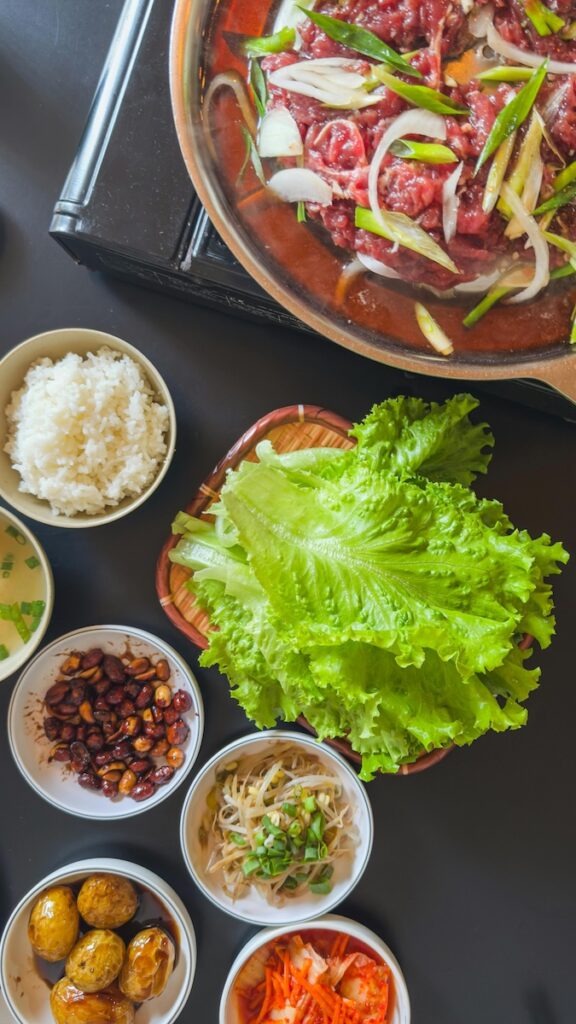
In the Korean Dining Experience, the concept of “Banchan” (side dishes) is a test of a traveler’s confidence. Many foreigners hesitate, fearing that asking for a third plate of pickled radish will result in a hidden charge or a look of disdain. On the contrary, the refill is a fundamental right of the patron in most traditional establishments. This is the “Service” culture of Korea at its finest—a gesture of hospitality that expects you to eat your fill.
However, the “Refill Right” comes with a condition: observation. Before you raise your hand to call a server, scan the room. In the modern landscape of Seoul, efficiency often dictates that side dishes are “Self-Service.” If you see a stainless-steel bar with trays of kimchi and bean sprouts, the staff expects you to be the architect of your own meal. Taking the initiative to refill your own water or radish isn’t just helpful; it shows you have mastered the local rhythm.
2. The Responsibility Paradox: Why Staff Want to Solve Your Problems
One of the most profound realizations of the Korean Dining Experience is the deep-seated sense of responsibility inherent in the local workforce. You may encounter a server who seems flustered or avoids eye contact when they realize you speak English. It is easy to misinterpret this as coldness or a lack of service. In reality, it is often the opposite: it is an internal pressure to fulfill their role perfectly.
Korean culture places a high premium on “Chaeg-im-gam” (responsibility). When a staff member struggles with your language, they aren’t trying to ignore you; they are often agonizing over how to provide the correct solution. Whether you are using a translation app or broken Korean, once the message is received, the staff will usually go to great lengths to resolve the issue. Recognizing this effort changes the dynamic of the meal from a transaction to a shared human moment.
3. The Red Line: Navigating the Occupational Safety and Health Act
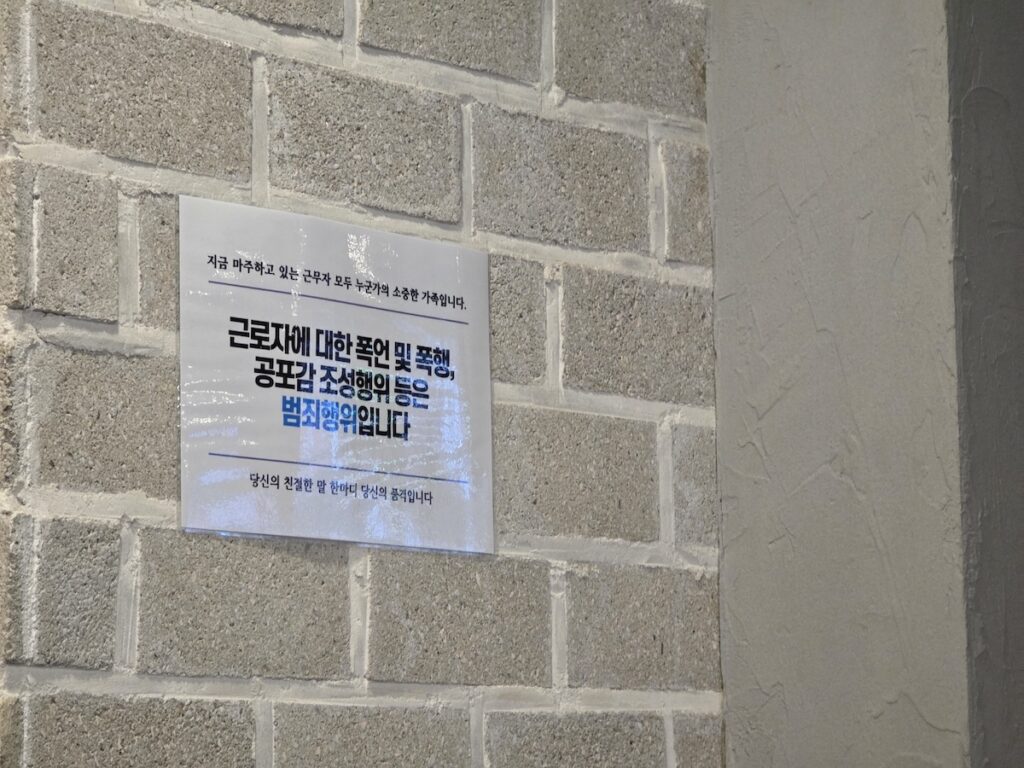
While you have the right to request refills and expect accurate orders, there is a legal boundary that is invisible but absolute. In recent years, South Korea has moved aggressively to protect service workers from “Gapjil”—the abuse of power by customers. This is codified in the Occupational Safety and Health Act, specifically Article 41, which mandates that employers protect “customer-facing workers” from violent or insulting behavior.
In your pursuit of the perfect Korean Dining Experience, a moment of frustration can lead to a lifetime of legal headaches. If a server is slow or an order is wrong, raising your voice or using derogatory language isn’t just rude; it is a violation of the law. The Korean legal system increasingly favors the worker in these disputes. Understanding that the person serving you is legally shielded from your anger is a vital piece of survival intelligence for any visitor.
4. The Art of the Elegant Complaint
If you feel you are being treated unfairly—perhaps your table is being ignored while others are served, or the food quality is genuinely poor—how do you complain without crossing into the “Article 41” danger zone? The key is to separate the problem from the person.
Instead of attacking the server’s competence, focus on the factual discrepancy of the Korean Dining Experience. Use the “Responsibility” trait to your advantage. By saying, “I am sure there has been a mistake with the order,” rather than “You gave me the wrong food,” you allow the staff to save face while triggering their innate desire to fix the error. This tactical approach yields faster results and keeps you safely on the right side of the law.
5. Decoding the Silence: When No Service is Good Service
For those accustomed to Western-style service where a waiter checks in every ten minutes, the Korean Dining Experience can feel neglectful. You might sit for twenty minutes without anyone asking how the first bite was. In Korea, this silence is a form of respect for your privacy. The staff assumes that if you need something, you will use the call button (found on most tables) or shout a polite “Yogiyo!” (Over here!).
Failing to understand this leads to “foreigners’ frustration,” where a guest feels invisible. The “Midnight Run” through a busy BBQ joint requires you to be proactive. If you need water, check the fridge for a “Self” sign. If you need the bill, take your table marker to the front. Taking control of these logistics isn’t a sign of poor service; it’s a sign that you are a “Pro” traveler who understands the local system.
6. The “Oh My Card” Ritual: The Final Act of Respect
The conclusion of the Korean Dining Experience is as important as the first bite. The way you pay reflects your understanding of the social hierarchy. Handing over your card with two hands, or placing it respectfully in the tray, closes the transaction on a high note.
This ritual is more than just politeness; it is a strategic move. If there was a minor dispute during the meal, a respectful payment ceremony acts as a “reset button.” it signals that despite the friction, the social contract is fulfilled. It leaves the staff with a positive impression of international visitors, reinforcing the cycle of mutual respect that keeps the city’s hospitality engine running.
7. The Legal Shield: Why You Should Never Settle Disputes Privately
If a major conflict arises—perhaps a physical altercation or a significant service failure—the temptation to “settle it” right there on the sidewalk is high. However, in the context of the Occupational Safety and Health Act, any escalation that happens within the business premises is highly documented. Most Korean restaurants are equipped with high-definition CCTV.
If you feel your rights are being violated, do not shout. Do not touch the staff. Simply document the situation, pay the bill to avoid “dine and dash” allegations, and seek mediation through official channels or the management. In the legal theater of South Korea, the person who keeps their cool and follows the “System” is the one who wins.
Action Plan for a Smooth Dining Experience
- Identify the “Self” Zones: Immediately upon sitting, locate the water station and side dish bar.
- Use the Call Button: Don’t wait to be noticed; the button is there to be pressed.
- The “Two-Hand” Rule: Always use two hands when receiving or giving items to staff.
- Stay Calm under Friction: If a mistake happens, remind yourself of Article 41 and keep your voice at a conversational level.
- Leverage Translation: Use apps like Papago to communicate specific needs clearly, showing that you respect the language barrier.