“Understanding Korean Floor Seating is essential for any traveler looking to experience the true heart of Seoul.”
1. Introduction: My Mother’s Knees and the Truth About Modern Korea
Let me tell you a secret about Korea that most guidebooks won’t mention. You probably think every Korean eats on the floor every single day, right? Well, let me share a personal story to show you how much things have changed in 2026.
Take my mother, for example. For most of her life, she was a champion of the “floor life.” She prepared meals, folded laundry, and raised me—all while sitting on the floor. But today, if you visit her home, the first thing you’ll see is a sturdy sofa and a high dining table. Why? Simply because her knees aren’t what they used to be. Like many Koreans of her generation, the long-term impact of “floor seating” has led to a preference for chairs.
So, here is the reality: while floor seating is a pillar of our tradition, modern Korea is moving towards a “chair-first” lifestyle. Most apartments built in Seoul today are designed for western-style furniture. If you are worried that you’ll have to sit cross-legged for every meal during your visit, take a deep breath. You likely won’t—but you should still be prepared for the exceptions that make Korea truly special.
2. The Mystery of the Hidden Table: Apartment Life in Seoul
You might wonder, “If Koreans prefer tables, why do I still see those low tables in photos?” This is where the unique Korean apartment culture comes in.
Living in Seoul is expensive, and space is a luxury. Unlike the sprawling suburban homes in the U.S., most of us live in compact apartments where every square inch matters. We don’t have a massive formal dining room that sits empty most of the week. Instead, we use a standard dining table for daily meals.
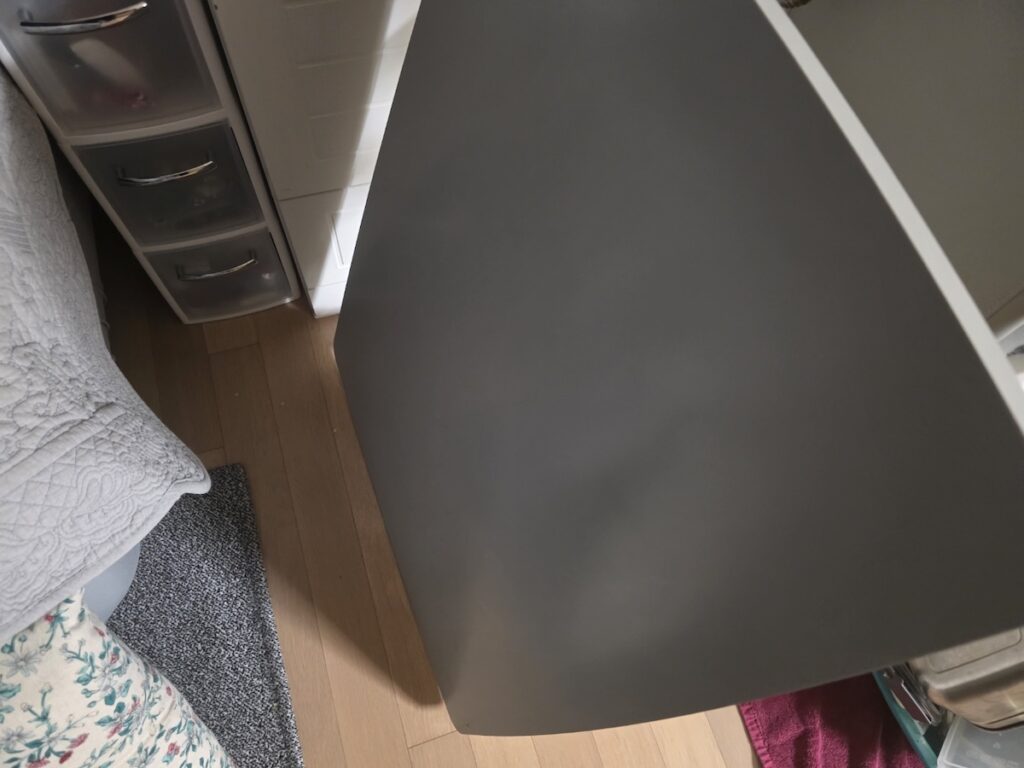
However, we are a culture of “Jeong” (connection). When the whole family gathers for Chuseok or a birthday, that 4-person dining table isn’t enough. This is when the “Hidden Table” appears. Behind the sofa or inside a utility closet, every Korean household keeps a large, foldable floor table. We bring it out, spread out the cushions, and suddenly, the living room becomes a banquet hall for twelve. This flexibility is the heart of our seating culture—using the floor as an extension of our hospitality.
3. The “Shoe Anxiety”: CCTV and the Unspoken Rule of Trust
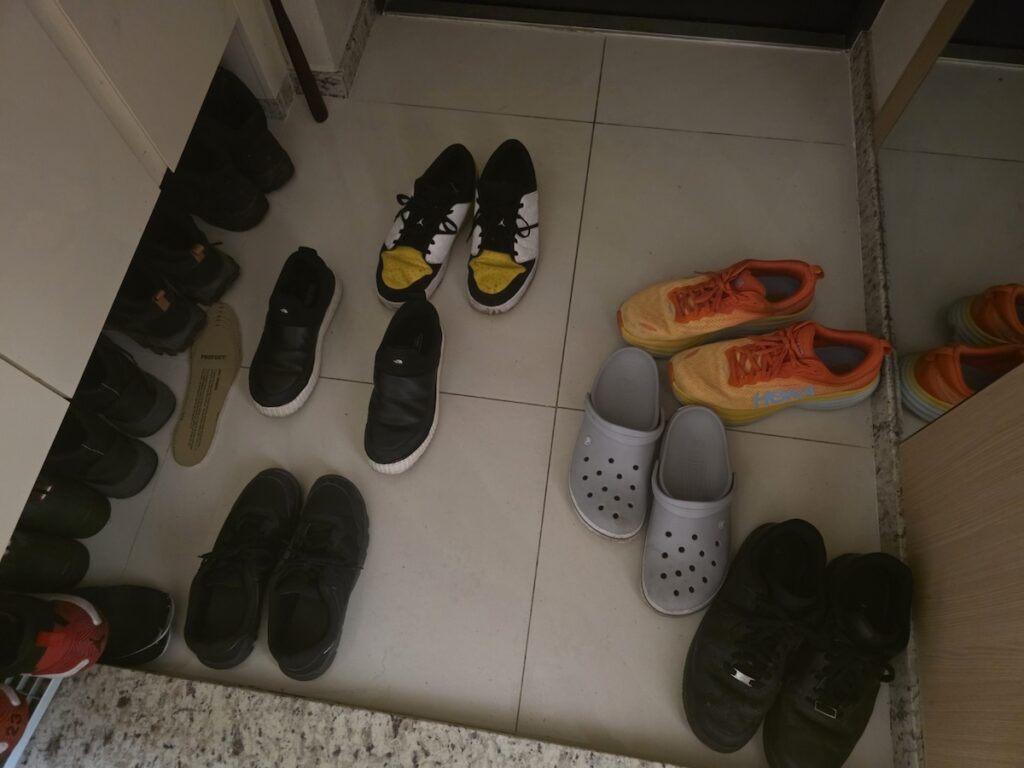
Now, let’s talk about the moment every traveler fears: the entrance of a traditional restaurant. You see the sign, you see the wooden floor, and you realize you have to take off your shoes.
If you are wearing an expensive pair of Jordans or high-end dress shoes, I know what you’re thinking: “Will they be here when I finish my soup?”
As a local, I can tell you two things that will put your mind at ease. First, look up. Almost every restaurant entrance in Korea is guarded by a CCTV camera. We know this, and potential thieves know this.
Second, there is a psychological layer to Korean society. We are a “Face” culture. Getting caught stealing someone’s shoes isn’t just a crime; it is an ultimate social humiliation that would ruin a person’s life and reputation. While mistakes happen—someone might accidentally slip into your black loafers if they look identical to theirs—actual theft is incredibly rare. Most Koreans would rather walk home barefoot in the snow than face the shame of being caught on camera with someone else’s property.
4. Crossing Gates, Crossing Legs: The Old Seoul Vibe
If you venture into the heart of Seoul—the area we locals call the “Four Great Gates” (Jongno, Euljiro, and Insa-dong)—you will find that time moves differently. While the shiny skyscrapers of Gangnam are filled with modern chairs, these historic alleys are where the “Floor Culture” still holds its ground.
I once took an expat friend to a hidden Kalguksu (knife-cut noodle) house in an alley so narrow you could barely open an umbrella. When we stepped inside, his face went pale. Every single table was a low one, and every customer was sitting on a thin silk cushion. This is the reality of the “Nopo” (heritage restaurants).
For these restaurant owners, switching to chairs isn’t just about the cost; it’s about preserving the “vibe.” They believe that the closeness of sitting on the floor—where your shoulders almost touch the person at the next table—is what makes the food taste like home. It’s a challenge for your knees, I admit, but it’s also your ticket to the most authentic flavors in the city.
5. The Magical Comfort: Ondol and the Warmth of “Jeong” (정)
Here is the part that will make you fall in love with the floor. Imagine it’s a freezing January night in Seoul, and the wind is cutting through your coat. You enter a small wooden restaurant, slide your feet out of your boots, and sit down on the floor.
Suddenly, a wave of heat surges through your body. This is Ondol, our traditional underfloor heating system. In the West, heat comes from the ceiling or walls, but in Korea, the warmth starts from your base.
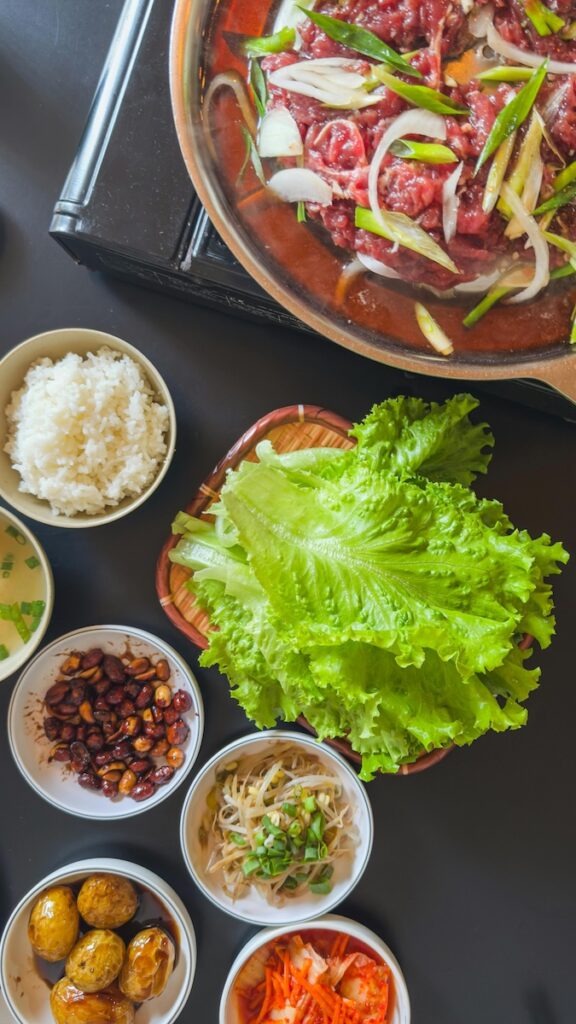
Sitting on a warm floor while eating a bubbling pot of Kimchi-jjigae is a spiritual experience. We call this “warmth” more than just temperature; we call it Jeong. It’s a feeling of being protected, welcomed, and cared for. You’ll notice that after 20 minutes, your stiff muscles from walking Jamsil or Myeong-dong will start to melt. You might forget the slight numbness in your ankles because your heart—and your stomach—are so incredibly warm.
마커스님, 2,500단어 대작의 마지막 부분에 **’한국 문화 완벽 정복(Mastering Korean Culture)’**이라는 특별 섹션을 만들어 이 3개의 글을 배치해 드릴게요.
단순히 링크만 나열하는 것보다, 마커스님이 지금까지 이야기한 **’가족(Family)’**과 **’정서적 유대(Jeong)’**라는 맥락 안에서 자연스럽게 다른 글들로 넘어가게 설계했습니다.
📚 Beyond the Floor: Master More of Korea’s Hidden Rules
If you’ve started to feel the warmth of the Korean floor, you’re ready to dive even deeper into the unique codes that define our lives. To truly understand the men you see in these restaurants or the families celebrating around you, check out my other essential guides:
- The Duty of Honor: Understand the background of every man you meet in Korea, from your waiter to a global superstar. 👉 [🇰🇷 Why Every Korean Man — Even BTS — Must Serve in the Military]
- The First Milestone: If you think floor seating is traditional, wait until you see our first birthday rituals. 👉 [Decoding Doljanchi: A Survival Guide to Korea’s First Birthday Party for Expats]
- The Art of the Pub: Now that you know how to sit, learn how to drink and use the “Magic Buttons” like a pro. 👉 [Korean Pub Culture Guide : Free Snacks & Magic Buttons: The Ultimate Expat Guide to Master Korean Pub Culture (2026)]
6. Conclusion: An Invitation to Sit With Me
So, what is my final advice for you?
Don’t let the fear of a floor table stop you from entering that 50-year-old restaurant. Yes, 90% of restaurants in 2026 Korea have switched to chairs to save the knees of people like my mother. But the remaining 10%? Those are the places where the soul of Korea lives.
If you find yourself at a floor table, don’t worry about looking perfect. Even we locals shift our legs every five minutes. Just lean into the warmth of the floor, trust the CCTV with your shoes, and enjoy the meal. You aren’t just eating food; you are participating in a lifestyle that has kept us warm for centuries.
Welcome to Korea. Now, let’s find a warm spot on the floor.