Korean military service facts for foreigners 2026 must begin with an understanding of the word “Sacred.” In South Korea, military service is not merely a legal obligation; it is a national rite of passage that demands the utmost respect. When a young man shaves his head, he isn’t just preparing for training; he is stepping into a lineage of sacrifice that has preserved this peninsula for generations. To mock or attempt to evade this duty is a social sin in Korea, as it touches the very core of national survival and fairness.
## The Nonsan Ritual: A Family’s Sacrifice
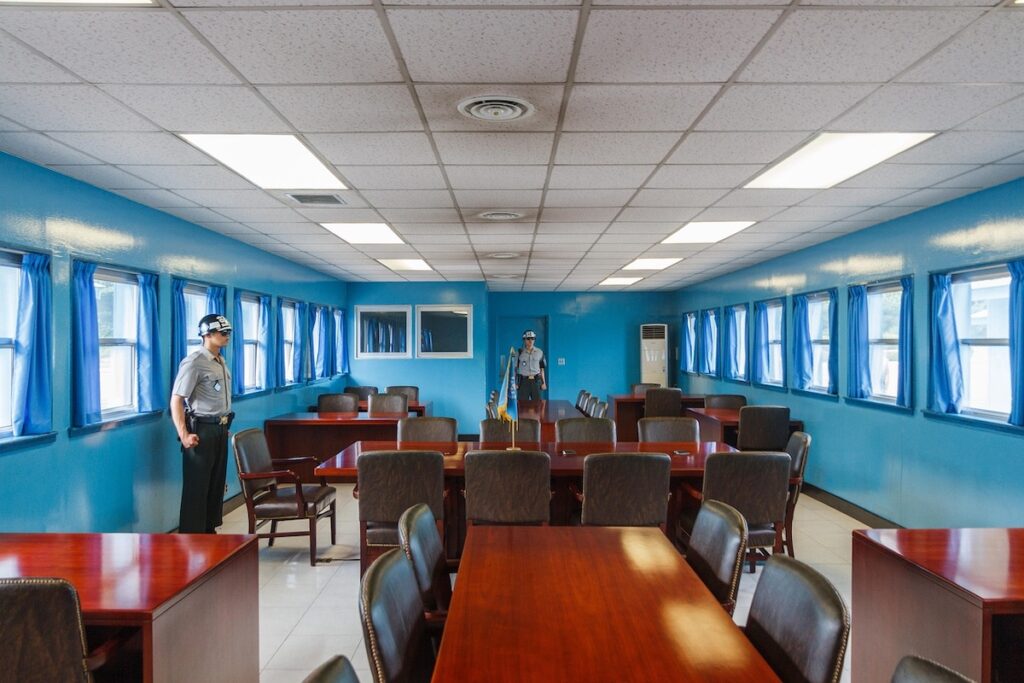
Every Tuesday, the city of Nonsan transforms into a sanctuary of bittersweet farewells. You will see 50-year-old mothers who have taken their first leave from work in years, fathers hiding their glistening eyes behind sunglasses, and younger siblings clutching their brother’s hand.
- The National Equalizer: Whether you are a college student or a global icon like a member of BTS, the gates of the training center are the ultimate leveler.
- The Shared Heartbeat: Every Korean family has a “Military Story.” We remember our brothers serving in the heat of Iraq, our fathers guarding the DMZ in the 80s, and now, our sons serving in the high-tech barracks of 2026. This shared experience is the invisible thread that binds Korean men across generations.
## The Sacredness of the ROK Army
In Korea, the military is a “Sacred Equalizer.” Whether you are a billionaire’s son or a member of BTS, once you shave your head, you are a soldier of the Republic. This shared sacrifice is what builds the unique Korean “Brotherhood” (Jeon-u-ae) that lasts a lifetime.
## 2026 Service Roadmap: Duration and Branches
As of 2026, the structure of the military has evolved to be more specialized, yet the discipline remains as rigorous as ever. Here is the current landscape for the Korean military service facts for foreigners 2026.
| Branch (군별) | Duration (복무 기간) | Training Hub | Unique Cultural Note |
| Army (육군) | 18 Months | Nonsan / Frontline | The most common path; focused on ground defense. |
| Navy (해군) | 20 Months | Jinhae | Known for the prestigious white uniforms and sea endurance. |
| Air Force (공군) | 21 Months | Jinju | The longest service; highly technical and academic. |
| Marine Corps (해병대) | 18 Months | Pohang | The “Ghost Catchers.” Famous for extreme pride and brotherhood. |
## 2026 Branch & Duration Table
| Branch | Duration | The 2026 Vibe |
| Army | 18 Months | The “Jin & J-Hope” path. Modernized barracks with smartphone access. |
| Navy | 20 Months | Technical and prestigious. Recent home to NCT’s Taeyong. |
| Air Force | 21 Months | Academic and rigorous. The choice for many elite specialists. |
| Marines | 18 Months | Extreme pride. Where stars like SHINee’s Minho earned their red name tags. |
## The K-Pop Calendar: From Stage to Barracks
For global fans, 2026 is the “Year of Reunion.” This list is the heart of our Korean military service facts for foreigners 2026, marking the end of a long wait for millions of fans.
1. The BTS Final Reunion (The Big Four)
Following the return of Jin and J-Hope, the remaining five members are scheduled to complete their sacred duty in June 2025 and throughout 2026.
- RM (Kim Nam-joon): Expected June 10, 2025
- V (Kim Tae-hyung): Expected June 10, 2025
- Jimin (Park Ji-min): Expected June 11, 2025
- Jung Kook (Jeon Jung-kook): Expected June 11, 2025
- Suga (Min Yoon-gi): Expected June 21, 2025 (Due to public service term)
- Note: While many returns are in mid-2025, their massive 2026 world tour and comeback activities make these dates the most searched terms in 2026.
2. The 1995-1996 Line Enlistment & Discharge
As of early 2026, we are seeing the return of legendary performers:
- NCT Taeyong: Expected December 2025 / Early 2026 (Navy)
- SEVENTEEN Jeonghan: Expected June 2026 (Public Service)
- Hwang Min-hyun: Expected December 2025 / January 2026
- Song Kang (Actor): Expected October 2025 / 2026 transition
🔗 Deep Dive into Modern Korean Culture
- [The Private Sanctuary]Amazing Korean Four Cuts Photo Booth Guide: Why You Should Rent This 24-hour Private Space
- Whether it’s a soldier in uniform capturing a memory or friends celebrating a reunion, the “Four Cuts” booth is Korea’s favorite cultural time capsule.
- [Rest & Recovery]How to Find a Day-Use Room in Korea: A Survival Guide for Travel Emergencies (Short-stay & Daisil)
- Need a place to rest after a long journey to the Nonsan training center? Understand the “Daisil” system—a uniquely Korean way to find comfort for just a few hours.
- [The Traditional Foundation]The Truth About Korean Floor Seating: A Local’s Guide to Comfort, Tradition, and Shoe Safety (2026)
- From the barracks to traditional restaurants, sitting on the floor is part of the Korean soul. Learn the etiquette and the comfort secrets behind the “Ondol” lifestyle.
## The 2026 “Grand Reunion” Countdown (D-Day)
The year 2026 is the “Year of the Phoenix.” The global music industry is bracing for the return of the world’s biggest stars.
- BTS Full Reunion: Mid-2025 to 2026. Fans are tracking every second until RM, V, Jimin, and Jung Kook are back together.
- Seventeen & NCT: 2026 marks a major transition as 1996-born members conclude their service.
## The Social Paradox: Gender, Politics, and Pride
To truly master the Korean military service facts for foreigners 2026, one must understand the friction. The debate over “Military Points” (extra points for veterans in job applications) remains a sensitive political topic, often sparking intense discussions on gender equality and social compensation.
However, despite the political noise, the individual soldier remains a figure of respect. When you see a soldier in a subway station, you are looking at someone who has paused their youth to ensure yours remains peaceful.
## The Soul of Service: What it Truly Means to “Go to the Army” in Korea
To an outsider, the Korean military service facts for foreigners 2026 might look like a simple security measure. But for Koreans, it is the invisible foundation of our social architecture.
1. The Rite of Adulthood (성인식)
In Korea, “Have you been to the army?” is often the first question asked among men. It’s not about bravado; it’s about shared language. The military is where a “boy” learns the weight of responsibility and the value of hierarchy, returning as a “man” who understands sacrifice. This transformation is why society views veterans with a silent, profound respect.
2. The Ultimate Equalizer (공정의 척도)
Korea is a competitive society, but the military remains the last bastion of Fairness (Gong-jeong). When a chaebol’s son, a top-tier athlete, and a global superstar like BTS all wear the same digital camouflage and eat the same 11,000-won meal, it reinforces a core national value: Before the nation, everyone is equal.
3. The “Jeon-u-ae” (Brotherhood) Phenomenon
There is a specific type of friendship in Korea called Jeon-u-ae. It’s a bond forged in the freezing winter of the DMZ and the humid nights of summer drills. This brotherhood is why, decades later, older men still talk about their service days with a glimmer in their eyes. It’s a lifelong membership in a club that requires 18 months of your youth as an entry fee.
4. A Pause for Peace
Ultimately, military service is a “Sacred Pause.” It is a 1.5-year commitment where young men stop their clocks to ensure the rest of the country can keep theirs running. When you see a soldier on leave, remember: they are the reason Seoul remains one of the safest cities in the world.
✅ [Action Plan] How to Show Respect to a Soldier in Korea
- [ ] Acknowledge the Uniform: If you see a friend enlisting, don’t say “Good luck.” Say “Stay healthy and come back safely” (Geon-gang-ha-ge jal da-nyeo-wa).
- [ ] Understand the “PX” Culture: If you have a friend in the army, ask them about “Dr.G Cream” or “Military Burgers.” It shows you’ve done your homework on their daily life.
- [ ] Respect the Silence: During enlistment, idols often ask for a private entrance. Respect the sanctity of that family moment.