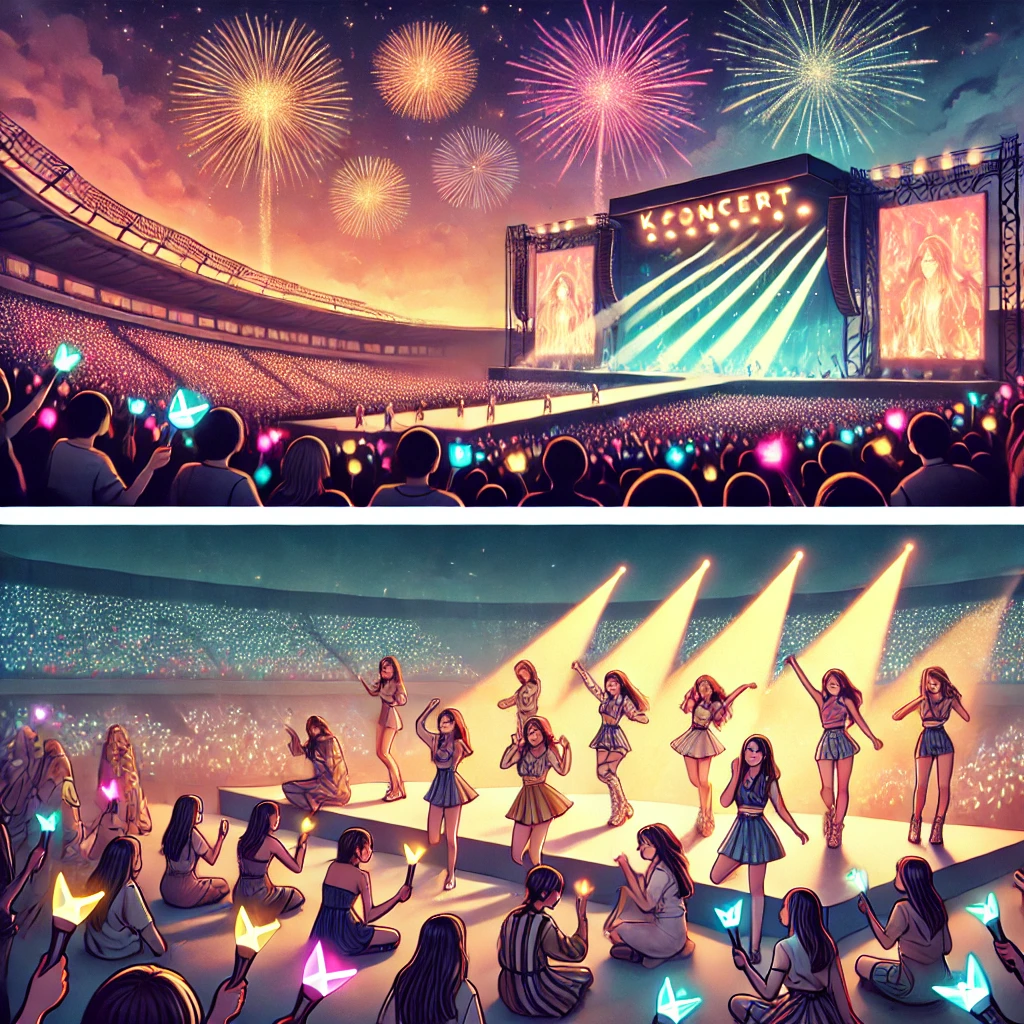
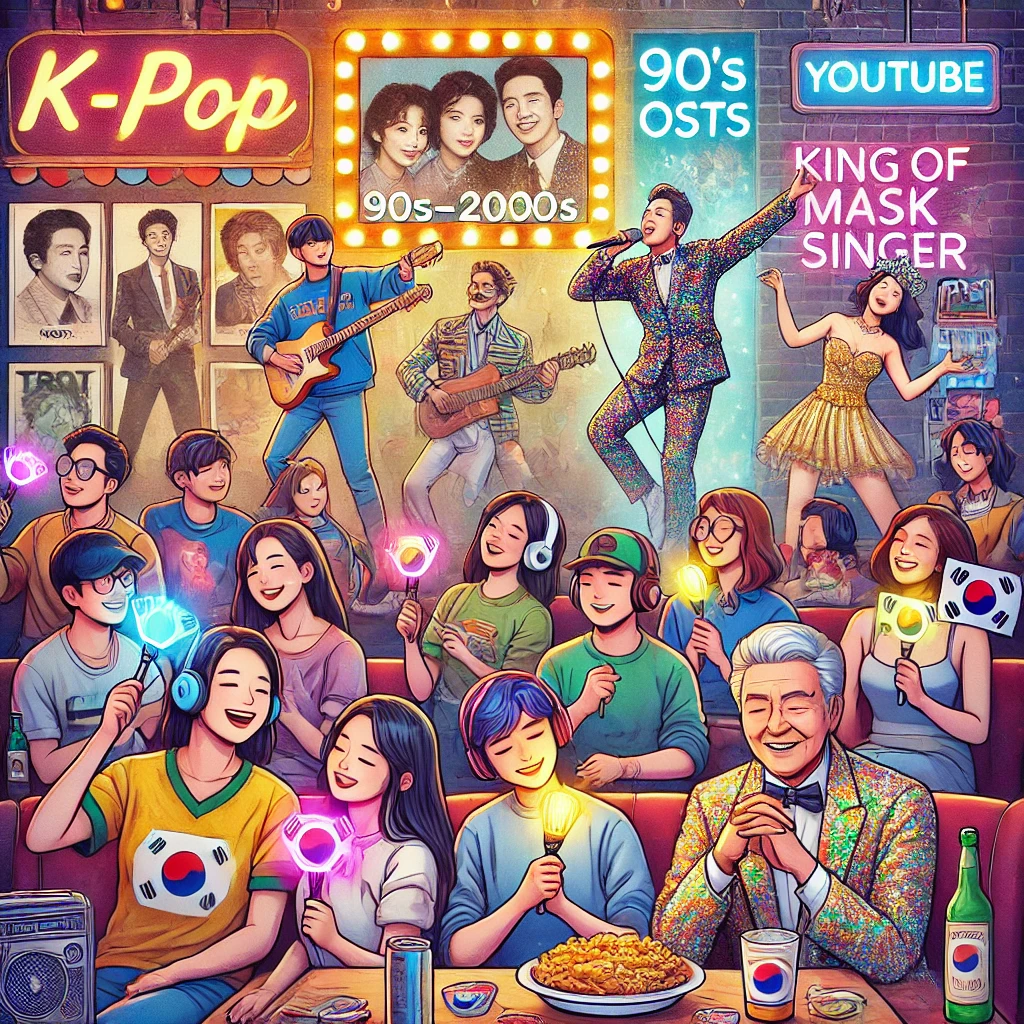
“In this Kpop Generations Guide, we explore how music transformed over the decades.”
1. Introduction: More Than Just Music
K-pop isn’t just a genre; it’s a cultural phenomenon built over three decades. Understanding the “Generations” of K-pop is the key to understanding how South Korea conquered the global music charts. Each era is defined by technological shifts, training systems, and how idols interact with fans.
2. The Timeline of K-pop Generations
| Generation | Era | Iconic Groups | Key Characteristics |
| 1st Gen | 1996 – 2004 | H.O.T., S.E.S., g.o.d | Birth of the “Idol System” |
| 2nd Gen | 2005 – 2011 | BIGBANG, Girls’ Generation | The Hallyu Wave goes to Asia |
| 3rd Gen | 2012 – 2017 | BTS, BLACKPINK, TWICE | Social Media & Global Fandom |
| 4th Gen | 2018 – 2022 | NewJeans, Stray Kids, aespa | Digital Content & Metaverse |
| 5th Gen | 2023 – Present | RIIZE, TWS, BABYMONSTER | “Easy Listening” & Global Diversity |
3. Deep Dive: The Complete Kpop Generations Guide
1st Generation (1996–2004): The Genesis of the Idol Blueprint
- The Big Bang of Idols: It all began with Seo Taiji and Boys in 1992, who shocked the nation by blending American rap with Korean lyrics. However, the “Idol System” as we know it was perfected by Lee Soo-man of SM Entertainment with the debut of H.O.T. in 1996.
- Key Characteristics: This era was about establishing the “trainee” model—rigorous training in dance, vocals, and public image. Fandoms were born here, characterized by physical letter-writing and waiting outside agencies for hours.
- Global Impact: While mainly domestic, groups like S.E.S. and Baby V.O.X. made the first ripples in China and Japan, proving that Korean music had export potential.
- Iconic Acts: H.O.T., Sechs Kies, S.E.S., Fin.K.L, g.o.d, Shinhwa.
2nd Generation (2005–2011): The Hallyu Wave Conquers Asia
- The Digital Shift: As the internet became mainstream, K-pop began to spread via early social platforms. This era saw the rise of the “Hook Song”—tracks with addictive choruses like BIGBANG’s “Lies” and Girls’ Generation’s “Gee.”
- Key Characteristics: Idols became “multi-entertainers,” appearing in variety shows and K-Dramas, making them household names across Asia. This was also the birth of sophisticated performance videos and “Point Dances” (signature moves everyone can follow).
- Global Impact: Wonder Girls became the first K-pop group to enter the Billboard Hot 100 with “Nobody,” and TVXQ revolutionized the Japanese music market, setting the stage for future global dominance.
- Iconic Acts: BIGBANG, Girls’ Generation, Super Junior, 2NE1, SHINee, Wonder Girls, 2PM.
3rd Generation (2012–2017): The Social Media Revolution & Global Dominance
- The YouTube Era: This generation leveraged YouTube and Twitter to bypass traditional media. BTS is the pinnacle of this era, using direct communication with their “ARMY” to build a global movement.
- Key Characteristics: Storytelling (Lore) became essential. Groups like EXO and BTS created complex fictional universes that spanned multiple albums. This era also saw the rise of the “Girl Crush” concept, led by BLACKPINK, appealing to a massive female audience worldwide.
- Global Impact: K-pop became a staple on global charts. BTS headlined stadiums worldwide and performed at the Grammys, while BLACKPINK became the first K-pop girl group to headline Coachella.
- Iconic Acts: BTS, BLACKPINK, EXO, TWICE, SEVENTEEN, Red Velvet, GOT7.
4th Generation (2018–2022): Digital Natives & The Post-Pandemic Bloom
- The Metaverse & TikTok: Debuting during the digital age (and often the pandemic), these groups mastered short-form content. aespa introduced the metaverse with virtual avatars, while NewJeans redefined the aesthetic with a nostalgic, “Y2K” lo-fi vibe.
- Key Characteristics: Extreme performance difficulty and “Self-Producing” idols (like Stray Kids) who write and produce their own tracks. Fandoms moved to dedicated apps like Weverse and Bubble for real-time interaction.
- Global Impact: “Global-first” strategy. Many groups now debut with members from multiple countries and release English-first singles to target the US market immediately.
- Iconic Acts: Stray Kids, NewJeans, IVE, aespa, LE SSERAFIM, TXT, ENHYPEN.
5th Generation (2023–Present): The Era of “Easy Listening” & Diversity
- The New Normal: As of 2026, the trend has shifted toward “Easy Listening”—melodic, comfortable tracks meant for daily streaming (e.g., RIIZE’s “Love 119” or TWS’s “Plot Twist”).
- Key Characteristics: A focus on “youthful” and “relatable” vibes rather than intense, dark concepts. Diversity is at an all-time high, with groups like BABYMONSTER showcasing immense vocal talent and members from all over Asia.
- Global Impact: The boundary of “K-pop” is blurring as agencies launch “K-pop style” groups in the US and Europe. K-pop is no longer just “Korean music”; it is a global production system.
- Iconic Acts: RIIZE, TWS, BABYMONSTER, ZEROBASEONE, BOYNEXTDOOR.
4. [New Section] Region-Specific K-pop Icons: From Early Pioneers to Global Localization
The global conquest of K-pop didn’t happen overnight or all at once. It was a strategic, region-by-region expansion where certain groups became “national icons” in specific countries. Today, the trend has evolved into “Localization 2.0″—incorporating foreign members to eliminate cultural barriers.
1. Japan: The Blueprint of Success (BoA, TVXQ, and TWICE)
- The Foundations: In the early 2000s, BoA and TVXQ (DBSK) didn’t just visit Japan; they “localized.” By singing in Japanese and appearing on local variety shows, they paved the way for K-pop to be seen as a premium music genre.
- The Multi-National Boost: TWICE revolutionized this by debuting with three Japanese members (Momo, Sana, Mina). This “J-Line” created an instant emotional connection with Japanese fans, making TWICE a household name and the first K-pop girl group to hold a dome tour in Japan.
2. Southeast Asia: The “LISA” Effect and Beyond
- The Hero of Thailand: Thailand is arguably one of K-pop’s most loyal markets, and much of this is due to BLACKPINK’s LISA. As a Thai national achieving global stardom, she is treated as a national hero. Her success has inspired a massive wave of Thai youths to audition for K-pop agencies.
- Localized Representation: Groups like SECRET NUMBER saw a massive explosion in popularity in Indonesia thanks to member Dita Karang, the first Indonesian K-pop idol. For Southeast Asian fans, seeing “one of their own” on the global stage creates a level of fandom loyalty that is unmatched.
3. China & Greater China: The Strategic Fandom Power
- The Unit Strategy: Agencies like SM Entertainment created specific units like EXO-M and WayV to target the Chinese-speaking world.
- Modern Icons: Today, members like SEVENTEEN’s Jun and The8, or (G)I-DLE’s Yuqi, act as vital bridges. Their presence in Chinese variety shows and social media (Weibo) drives millions of album sales, proving that cultural representation is the most effective marketing tool.
4. North America & Europe: The Era of “Global Natives”
- Cultural Fluency: The success of groups like BLACKPINK (Rosé from Australia) and LE SSERAFIM (Huh Yunjin from the US) in Western markets is partly due to their “Global Native” status. They speak fluent English and understand Western cultural nuances, making the group feel relatable and accessible to the US audience.
- The Future: K-Pop Without Koreans? We are now seeing the debut of “K-pop style” groups with zero Korean members, such as KATSEYE and VCHA. This proves that the K-pop “system” has become a global standard that transcends nationality.
5. Why Does Localization Work?
- Language Barriers: Local members communicate directly with fans through interviews and social media without a translator.
- Cultural Sensitivity: They help the group avoid “cultural appropriation” issues and ensure the content respects local traditions.
- National Pride: Fans in Thailand, Japan, or China feel a sense of “National Pride” supporting a group that includes their compatriot, leading to record-breaking streams and votes.
5. The Future of K-pop is Global and Boundless
K-pop’s global dominance is far more than just “catchy tunes” or “synchronized dancing.” It is a sophisticated, evolving ecosystem that has redefined how music is produced, consumed, and experienced across the world.
As we look toward the future, three key factors will ensure K-pop’s lasting legacy:
- Human Connection Over Language: By integrating local icons like Lisa (Thailand) or Dita Karang (Indonesia), K-pop has transcended national pride, becoming a shared language for a truly global audience.
- Technological Adaptability: From the metaverse avatars of the 4th generation to the “easy listening” trends of the 5th, K-pop’s ability to pivot with digital shifts is its greatest strength.
- The Power of Storytelling: Beyond the music, K-pop offers a “universe” where fans (STANS) are active participants, creating an emotional loyalty that traditional Western pop often lacks.
6. Conclusion: Why This Kpop Generations Guide Matters
Understanding these generations isn’t just about music history; it’s about witnessing a global production system that has become the new gold standard. Whether you are a first-generation fan or just discovering the newest 5th-gen stars, K-pop’s journey is a testament to the fact that cultural boundaries are a thing of the past.
✨ Level Up Your K-pop Knowledge: What’s Next?
Now that you’ve mastered the five generations of K-pop, are you ready to dive deeper into the industry’s hidden secrets? Choose your next mission below:
🤔 “Wait, what exactly does a ‘Visual’ or ‘Center’ do?”
- 10 Surprising K-Pop Positions Explained: The Ultimate Guide for Fans
- From Main Vocals to the mysterious ‘Maknae’ power—understand the roles that make every group perfect.
📍 “I’m in Seoul! Where can I actually find these idols?”
- Visiting K-pop Entertainment Agencies — Where to See Your Favorite Idols in Seoul (2025 Guide)
- A strategic map of the Big 4 agencies (HYBE, SM, JYP, YG) and the best local spots to catch a glimpse of stardom.
💄 “How do idols get that perfect camera-ready look?”
- “From Glow to Matte: How Korean and Western Makeup Define Beauty in 2025”
- Explore the aesthetic secrets behind the K-pop look and how it’s redefining global beauty standards this year.