Seoul Restroom Rituals 2026 is not a guide to the polished marble of five-star hotels. Instead, it is a deep dive into the “Raw Texture” of Seoul’s nightlife—specifically within the trendiest pockets of Konkuk University (Konkuk-dae). When you enter a place like Minji Super (민지슈퍼), you expect the neon lights and the heavy bass of K-Pop. But the true narrative of Seoul’s modern youth culture is hidden behind a weathered wooden door in the back.
The Neon-to-Tile Transition: A Shift in Reality
In the heart of Seoul’s 2026 nightlife, the transition from the vibrant bar area to the restroom is a sensory jolt. As the muffled beats of the music fade behind a heavy door, you are suddenly confronted with the skeletal remains of an old industrial building. This is the “Subway-like” grit of Seoul—exposed pipes, uneven tiles, and the cold touch of steel. Yet, for the Seoul hipster, this lack of polish isn’t a failure; it’s a canvas for a new kind of sophisticated ritual.
The Idol Guardians: A Sanctuary of Pop Culture
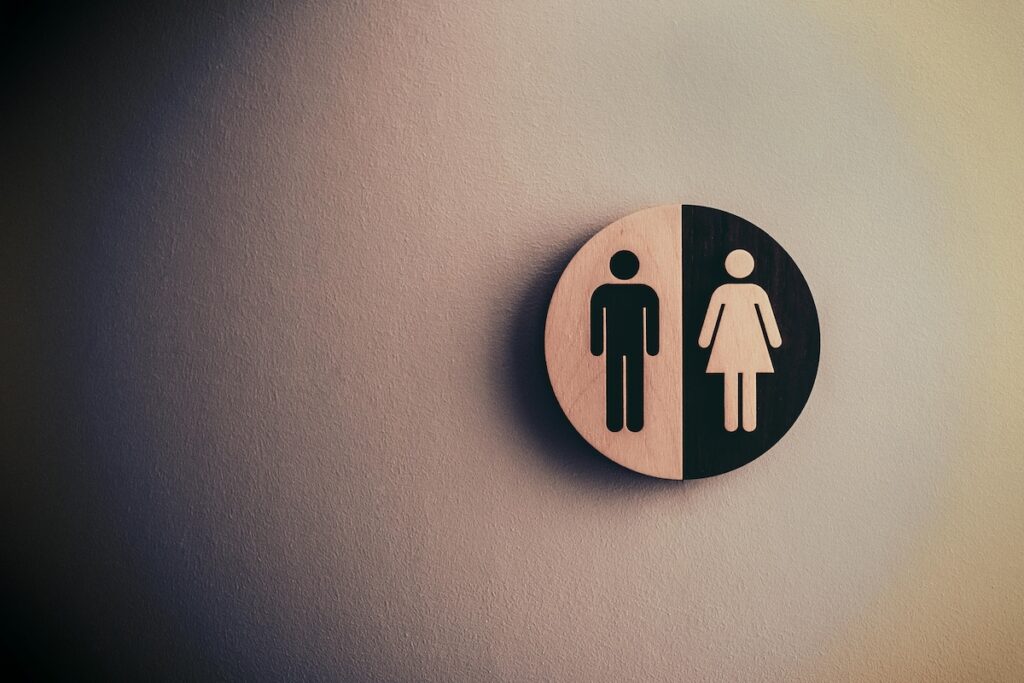
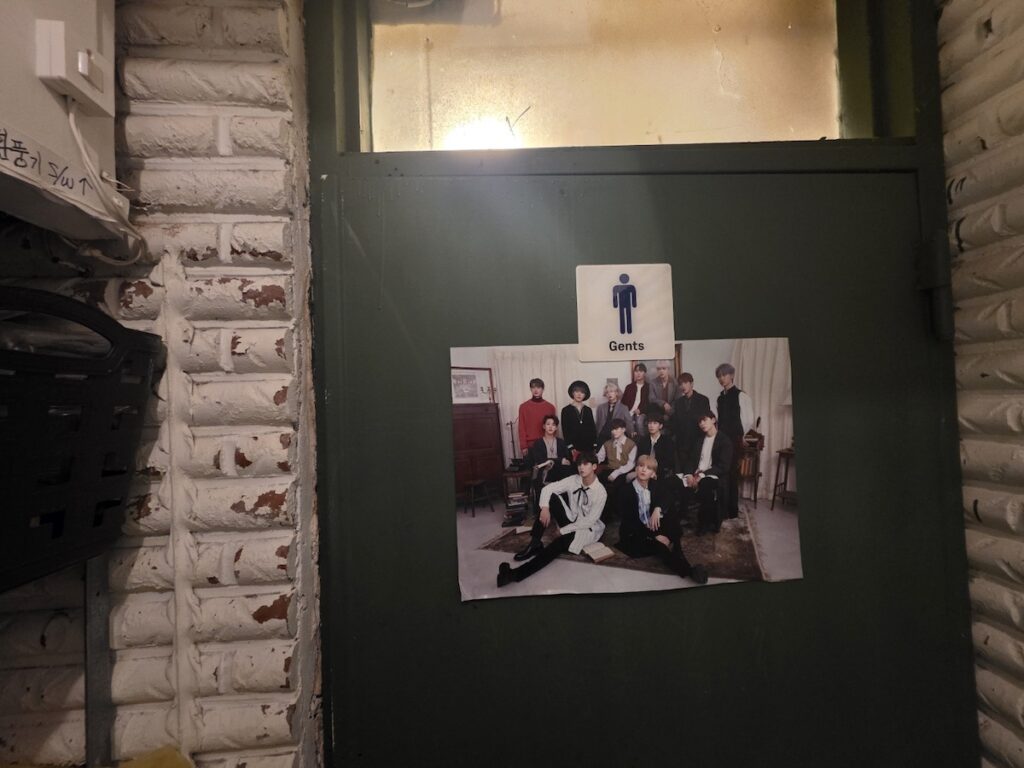
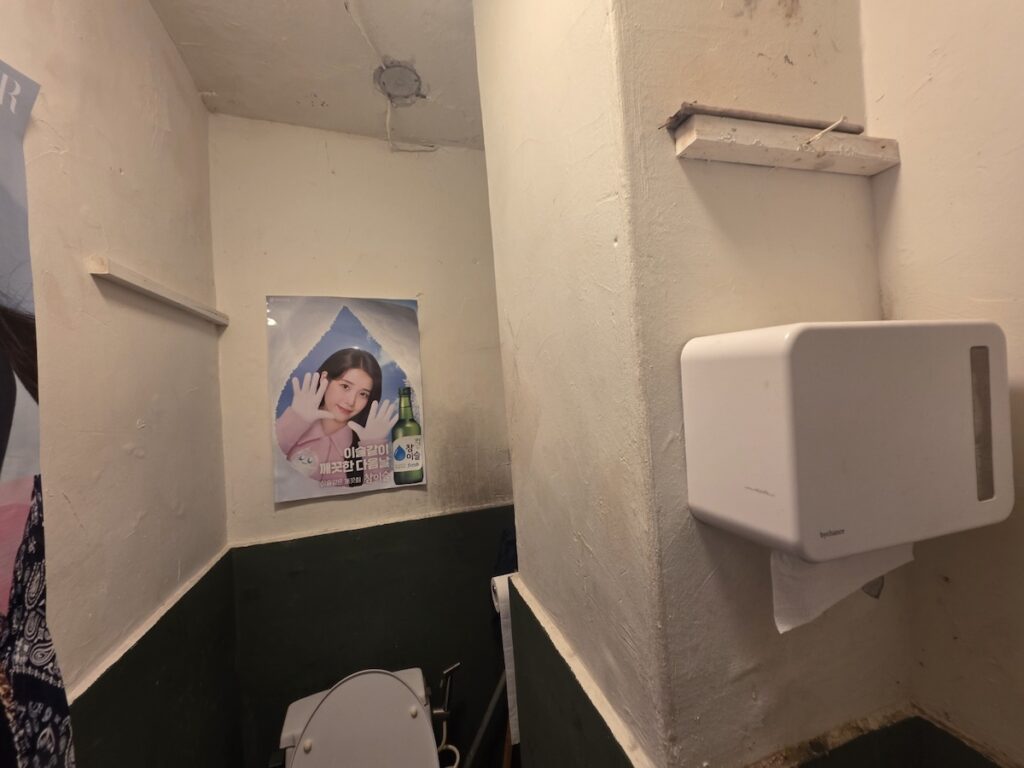
The most striking element of Seoul Restroom Rituals 2026 is the visual takeover by K-Pop icons. In the restroom of Minji Super, you aren’t greeted by cold “Men” or “Women” signs. Instead, you face the gaze of Seventeen or the gentle smile of IU.
- The Fandom Ritual: This isn’t just decoration. In a space that could feel derelict and cold, these posters act as “Cultural Anchors.” They transform a utilitarian space into a familiar, almost friendly sanctuary. To the global traveler, seeing a world-class superstar taped to a crumbling wall is a quintessential Seoul paradox—where the pinnacle of global pop culture meets the unvarnished reality of the city’s backstreets.
The Scent of Contrast: Granhand vs. The Rust
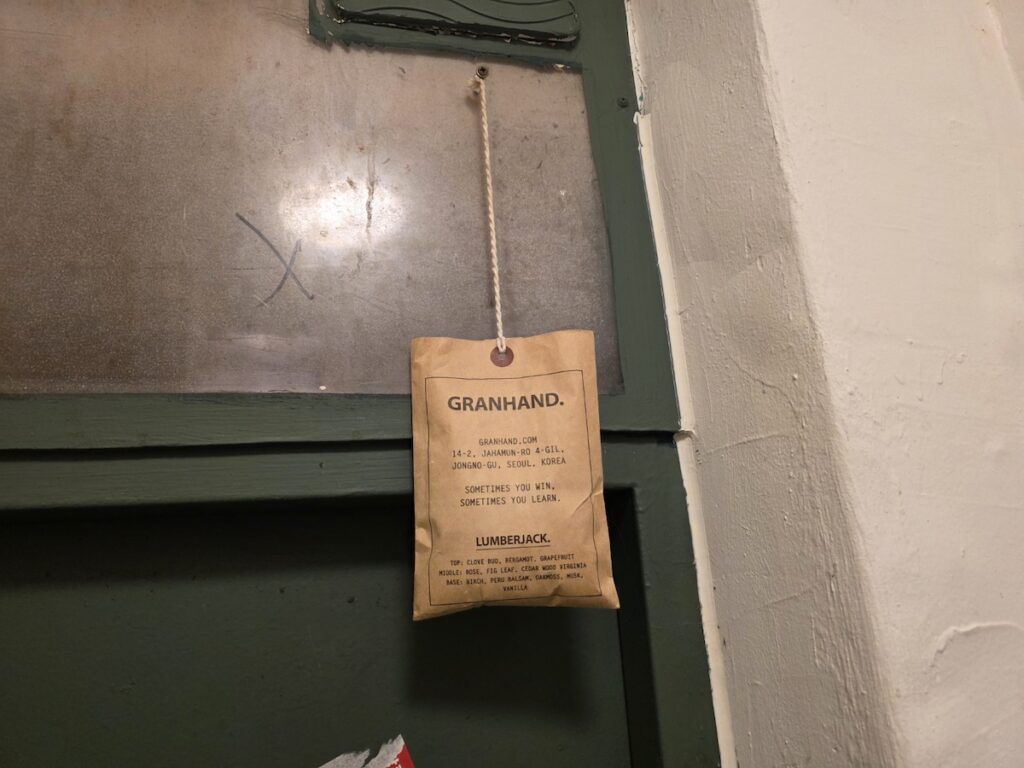
If the posters provide visual comfort, the Granhand Sachet hanging on a rusted latch provides the soul. This is the climax of our Seoul Restroom Rituals 2026 narrative.
- Taste over Luxury: The wooden door might be decades old, and the lock might be a simple manual bolt (Image 008), but the scent is premium. Granhand, a niche Seoul fragrance brand, represents the uncompromising taste of the MZ generation. They might tolerate a cramped, old restroom, but they will not tolerate a space without “Scent.”
- The Ritual of Scent: This juxtaposition—a high-end fragrance pouch hanging against a weathered, DIY-style door—is the ultimate “Seoul Vibe.” it proves that in 2026, trendy isn’t about being new; it’s about how you curate a ritual within the old.
🏮 The Survival Ritual: Napkins and the Invisible Watchman
While navigating Seoul Restroom Rituals 2026, there are two unique cultural codes that every traveler must master. These are not just tips; they are the unspoken social contracts of a Seoul night.
1. The “Napkin Grab” Ritual: Why Your Table Holds the Key
In many of Seoul’s trendiest but older buildings, like those in Konkuk University’s back alleys, the restroom might lack a central toilet paper dispenser. For women, this is a critical piece of information.
- The Ritual: Before you leave your table, glance at the napkin box. It is a common Seoul Restroom Ritual 2026 to grab a handful of napkins from your table to take with you. In these “Raw Aesthetics” pubs, the table napkin is your ultimate insurance policy. It’s a small, rhythmic gesture that locals perform without thinking, but for a visitor, it’s the difference between a smooth night and a minor crisis.
2. The Invisible Guardian: The Peace of the Unattended Table
One of the most shocking experiences for a global traveler in Seoul Restroom Rituals 2026 is the sight of expensive smartphones and wallets left unattended on tables while their owners are in the restroom.
- The CCTV Culture: Almost every corner of a Seoul pub is monitored by high-definition CCTV. This “Digital Eye” has created a high-trust society where your seat is your sanctuary. Unless it is an exceptionally crowded or open-air space, you can leave your belongings (except perhaps your passport or massive wads of cash) on the table.
- The Social Contract: Returning from the “Idol-guarded” restroom to find your drink and your phone exactly where you left them is a ritual of peace. It allows you to focus entirely on the sensory experience of the night, knowing the city’s invisible watchmen are on duty.
Practical Survival: The Unspoken Rules for Travelers
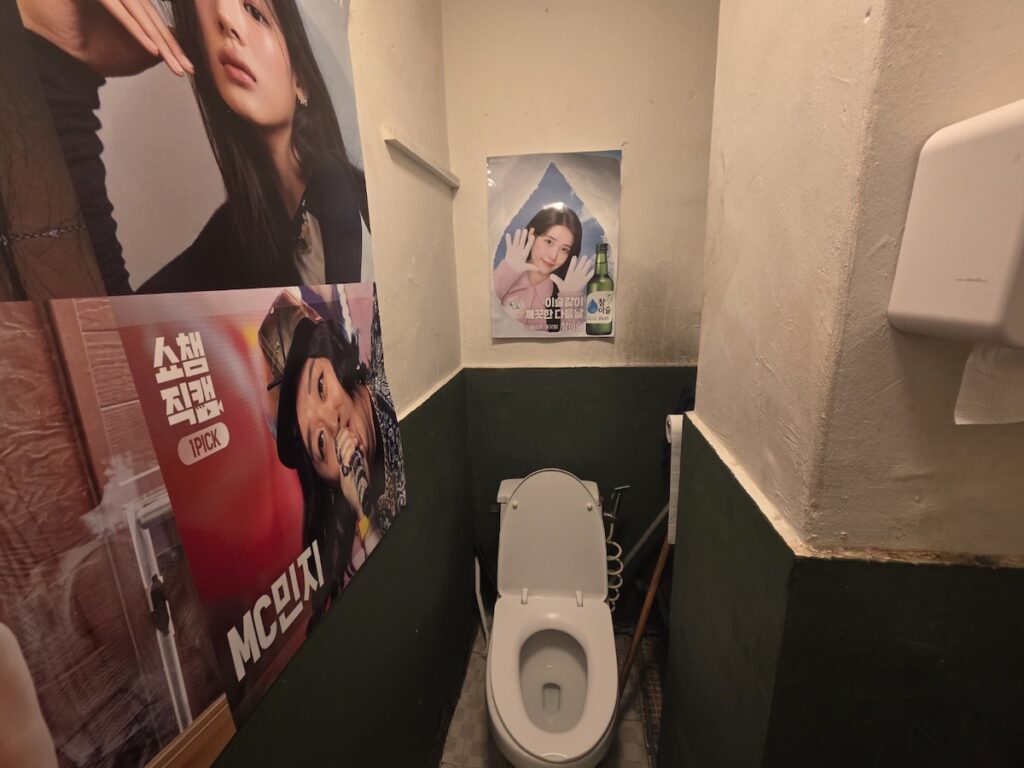
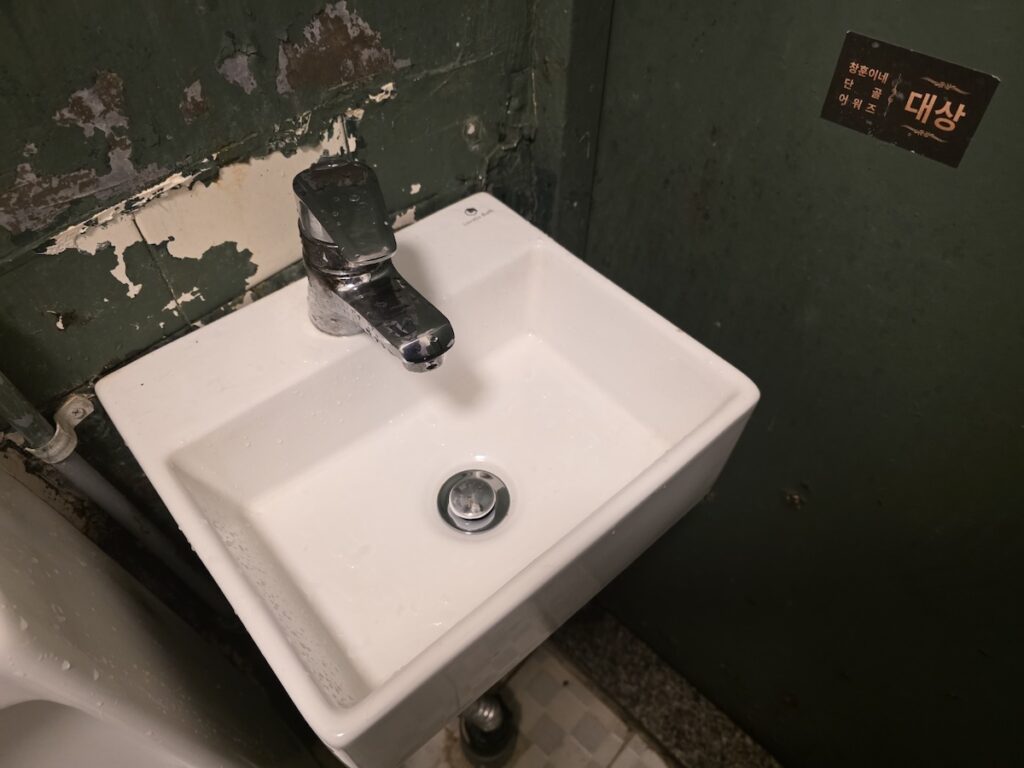
For the international visitor, navigating Seoul Restroom Rituals 2026 requires an understanding of the city’s industrial evolution.
- The Gender Ambiguity: Don’t look for traditional symbols. Follow the “Vibe” or the posters. Often, these trendy spots prioritize aesthetic flow over Western-style signage.
- The Manual Bolt: Embrace the mechanical. The heavy iron latches are part of the raw charm. Locking yourself in is a ritual of claiming your private moment amidst the chaos of the city.
- The Java Hygiene : Even in the grittiest corners, you’ll find high-tech hygiene like “JAVA” automatic flush systems. It’s the constant clash of the 1970s infrastructure and 2026 technology.
The Paradox of Hygiene: Extreme Cares and Instant Recovery
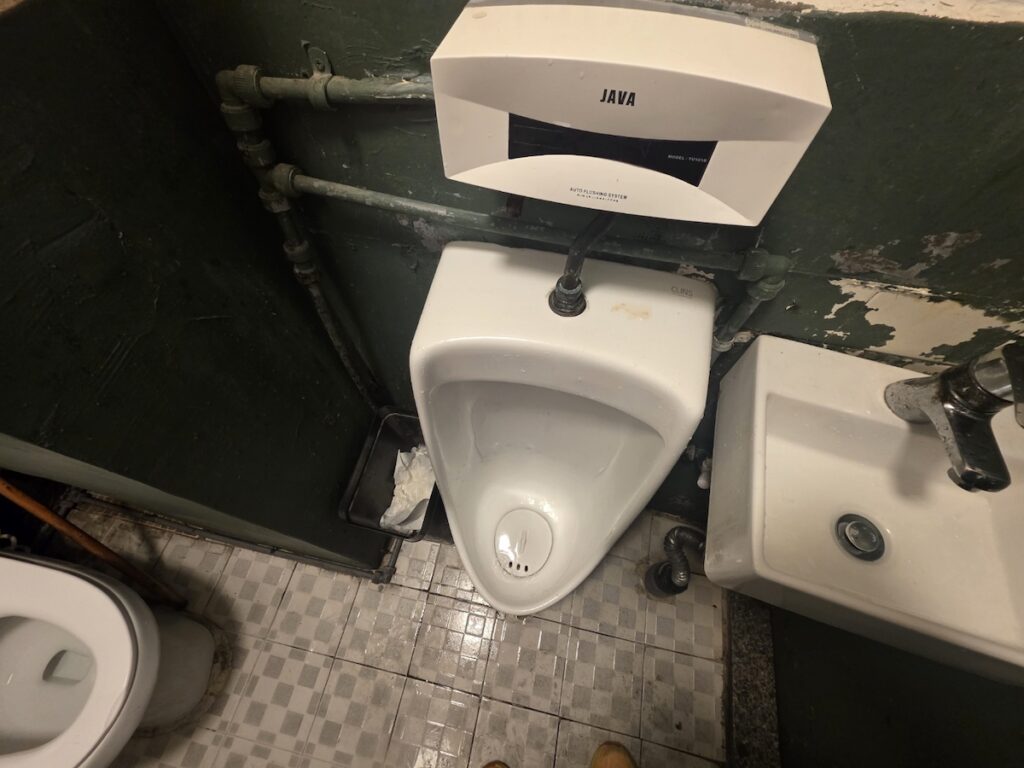
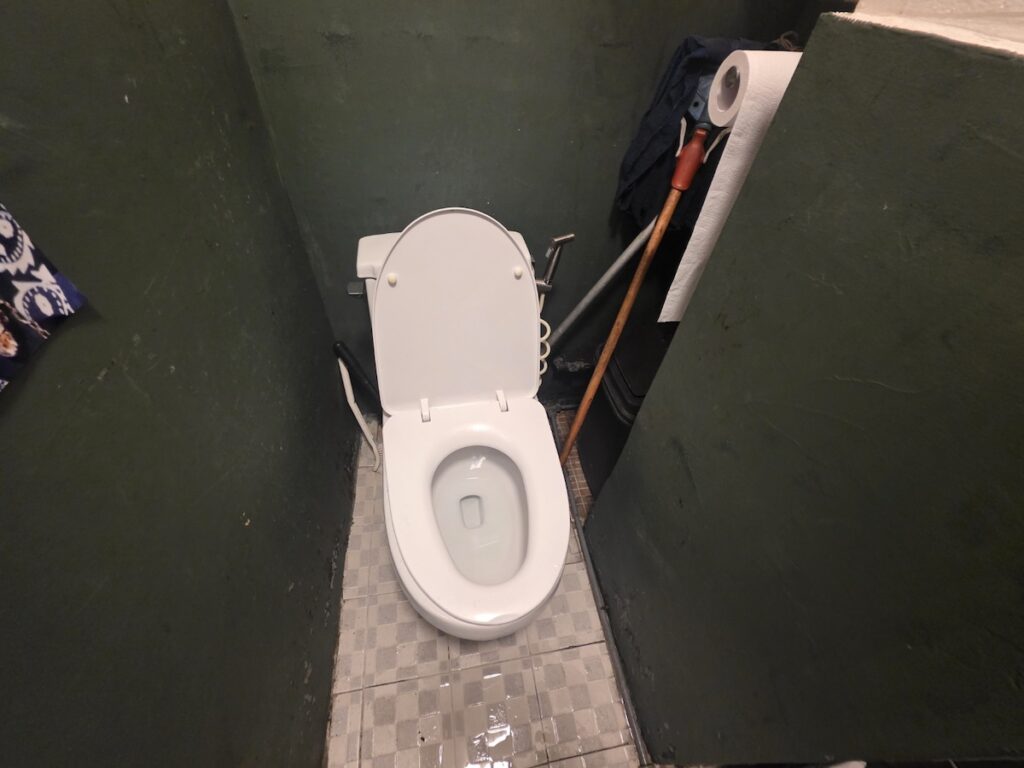
Within Seoul Restroom Rituals 2026, there is a silent struggle between the city’s aging infrastructure and the modern Korean’s high standards for cleanliness. This tension creates unique behaviors and a distinctive service culture.
1. The “Contactless” Obsession
In some of the raw, industrial-style pubs where the facilities aren’t brand new, you might encounter a peculiar phenomenon. Out of an extreme fear of unsanitary surfaces, some users attempt to minimize contact with the toilet seat, occasionally leading to unconventional usage.
- The Reality: This isn’t about a lack of etiquette, but rather an intense, almost desperate desire for hygiene in a shared space. It reflects the high “Sanitation Sensitivity” of the MZ generation, who expect a premium scent (like the Granhand sachet) even in a building from the 1980s.
2. The “Pali-Pali” Recovery: Rapid Response Culture
While restrooms in nightlife districts worldwide often suffer from the aftermath of excessive drinking, the way Seoul handles these “accidents” is remarkably efficient.
- The Ritual of Feedback: If you encounter a mess—whether it’s a lack of paper or a hygiene emergency—simply informing the staff usually triggers an immediate reaction. Unlike in many other global cities where maintenance might be deferred until the next day, Korean staff prioritize restroom recovery as part of their core service.
- The Service Mindset: In the competitive landscape of Konkuk University’s pubs, a “dirty restroom” is a fatal flaw for a brand. Therefore, the “Pali-Pali” (hurry-hurry) culture ensures that the invisible guardians of the pub are constantly patrolling and restoring the sanctuary, maintaining the delicate balance between the raw exterior and the clean interior.
Related Guides
- Korean Toilet Culture: Why Public Restrooms Are Free and How It Differs from Other Countries – After exploring the raw aesthetics of a Konkuk pub, take a step back to understand the macro-scale of Seoul’s infrastructure. Discover the historical and social reasons why high-quality public restrooms are a fundamental right in Korea, unlike the paid-entry systems often found in Europe or North America.
- No Tissue Worries: The Surprising Standard of Hand Wash in Korean Bathrooms – While our current guide highlights the “Napkin Ritual,” this article focuses on the high-tech evolution of Korean hygiene. From touchless foam dispensers to the science behind the “JAVA” systems, explore why the Korean hand-washing ritual is setting a new global standard for 2026.
- Korea Night Air: 5 Reasons Why Seoul’s Shared Breath Ritual is the Safest in the World (2026) – We discussed the “Invisible Guardian” (CCTV) inside the pub; now, look at the safety of the streets. Learn why leaving your belongings unattended is part of a larger, nation-wide social contract that makes Seoul’s nightlife uniquely peaceful and secure.
- Korea Subway Escalator: Why You Shouldn’t Stand on the Left (5 Depth Secrets) – The “Pali-Pali” culture we observed in restroom maintenance extends to the city’s veins. Understand the unwritten rules of the Seoul subway escalator—a ritual of efficiency that mirrors the fast-paced recovery and movement of the city’s trendiest districts.
Conclusion: The Most Honest Gallery of Seoul’s Survival and Style
Seoul Restroom Rituals 2026 teaches us that a city’s true character is not found in its grand monuments, but in the small, seemingly mundane contradictions of its backstreets. The restroom at a Konkuk University pub is perhaps the most honest gallery in Seoul—a place where the scent of a premium Granhand sachet battles the cold reality of rain-soaked concrete, and where global K-Pop idols watch over a quiet, private ritual.
This space is a microcosm of the Korean paradox:
- It is a place of High Trust, where you can leave your expensive smartphone on a table to follow the “Napkin Ritual” into the unknown.
- It is a place of Extreme Hygiene, where the “Pali-Pali” culture ensures that any “nightlife accident” is met with a rapid, almost defensive recovery by the staff.
- And it is a place of Resilient Beauty, where a manual iron bolt and an old wooden door are not signs of neglect, but a canvas for a generation that refuses to sacrifice “Scent” for “Space.”
For the global visitor, navigating these restrooms is an initiation. When you learn to grab your napkins before leaving the table, and when you find yourself nodding back at a poster of IU amidst the scent of a luxury sachet, you are no longer just a tourist. You have synchronized with the rhythm of the city. In Seoul, even the most functional corner of a pub is a stage for a sophisticated ritual.