Seoul Subway Exit Numbers and Directions serve as the silent, geometric pulse of South Korea’s capital, offering a level of predictable precision that few other global metropolises can match. For the millions of travelers who descend into the glittering underground of Gangnam, Myeongdong, or Seoul Station, these numbers are often perceived as a confusing maze. However, the sophisticated observer quickly realizes that Seoul is not a city of chaos, but one of a strict, mathematical contract. Every single exit, from the bustling gates of Hongdae to the serene steps of Gyeongbokgung, follows a universal logic designed to integrate the commuter into the city’s rhythm with zero friction.
To truly navigate the “Soul” of Seoul, one must move beyond the digital map and understand the Clockwise Code. This system is the ultimate manifestation of Korean efficiency and “Nunchi”—the art of sensing the environment’s hidden rules. In a city where the 40s and 50s generation of engineers have meticulously laid every tile, the exit numbers act as a spatial compass. Once you grasp why Exit 1 is the anchor and how the numbers spiral outward, you stop being a lost tourist and begin to own the city’s grid like a local elite.
The Anchor: Why Exit 1 Sets the Stage
The numbering of Seoul Subway Exit Numbers and Directions is not a mere administrative afterthought; it is a masterclass in urban geometry. To find the elusive “Exit 1,” one must understand the concept of the Upstream Anchor. In the Korean transit hierarchy, the numbering begins at the most significant point of the station’s orientation—the point where the train enters the “city center” or moves toward the line’s starting terminal.
Imagine you are standing on the platform of Line 3 at Gyeongbokgung Station. Exit 1 is not chosen by chance. It is positioned at the very front of the train heading “Upstream” (toward the northern peaks), specifically on the right-hand side of the tracks. This specific coordinate serves as the Zero Point for the entire surrounding neighborhood. Once this anchor is dropped, the city’s logic unfolds:
- The Right-Hand Rule: The selection of the right side for Exit 1 aligns with Korea’s right-hand traffic flow, ensuring that as you emerge, you are immediately integrated into the primary pulse of the street.
- The Upstream Logic: By placing Exit 1 at the “beginning” of the station’s heading, the system creates a mental map for the commuter. If you are at Exit 1, you are at the station’s “head”; if you are at the highest-numbered exit, you are at its “tail.”
- The Transfer Complexity: In massive multi-line hubs like Seoul Station or Hannam, the anchor is determined by the oldest or most dominant line (typically Line 1). This prevents the “Exit 1” label from being duplicated, creating a unified numerical flow across multiple underground levels.
The Extremes: Seoul’s Most Challenging Exit Mazes
Beyond the standard grid, some stations in Seoul defy conventional logic, serving as ultimate tests for a traveler’s spatial awareness. These stations are where the Seoul Subway Exit Numbers and Directions become a fascinating urban puzzle.
1. The Labyrinth of Incheon & Bupyeong (The Exit King)
While technically part of the greater metropolitan grid, Bupyeong Station (Line 1) holds the crown for the most exits in Korea—boasting a staggering 31 exits. Navigating from Exit 1 to Exit 31 is a cross-district journey that takes you through one of the world’s largest underground shopping malls. Without the clockwise logic, finding your way here is a mathematical impossibility.
2. The Great Distance: Jamsil Station (The Epic Walk)
At Jamsil Station (Line 2 & 8), the distance between certain exits can exceed 500 meters. For instance, moving from the Lotte World side (Exits 3-4) toward the Songpa-gu Office side (Exits 10-11) requires a marathon-like trek through underground plazas. Here, knowing your exit number isn’t just a tip—it’s a physical necessity to avoid adding 15 minutes of walking to your commute.
3. The Deepest Descent: Magoknaru & Yeouido
In business districts like Yeouido (Line 5 & 9) or the tech-heavy Magoknaru, the exits don’t just move horizontally; they move vertically. Some exits require ascending four to five levels of escalators. In these “Deep Stations,” Exit 1 is often the closest to the primary government or corporate headquarters, reinforcing the “Anchor” as the point of highest importance.
4. The Multi-Hub Chaos: Dongdaemun History & Culture Park
With three lines intersecting (Lines 2, 4, and 5), this station features exits that pop up in entirely different neighborhoods. If you exit at Gwanghui-dong (Exits 3-5) when you meant to be at the DDP Design Plaza (Exits 1-2), you face a complex overground crossing that proves why the “Anchor” logic is the only thing keeping the city’s chaos in check.
Related Guides
- [The Londoner’s Antithesis: Why Seoul is the Best Winter Escape for Londoners in 2026] – Understand the urban sanctuary of Seoul through a Londoner’s lens.
- [The Oracle of Seoul: Why You Can’t Ignore Korean Saju in 2026] – Explore the metaphysical “Nunchi” that governs the city’s decision-makers.
- [Customized Korean Hangeul Towel Souvenir 2026: 1 Best Gift] – The ultimate guide to gifting with sophisticated Korean etiquette.
Action Plan: Master the Seoul Grid
To navigate the sophisticated landscape of Seoul with the efficiency of a local elite, follow this strategic protocol:
- Identify the Anchor (Exit 1): Before surfacing, locate Exit 1 on the station map. It serves as your primary compass, usually pointing toward the city center or the upstream direction of the line.
- Apply the Clockwise Rule: If you are looking for a specific exit, remember the spiral. Numbers always climb in a clockwise direction. If you see Exit 2, Exit 4 will be further ahead in that same rotation.
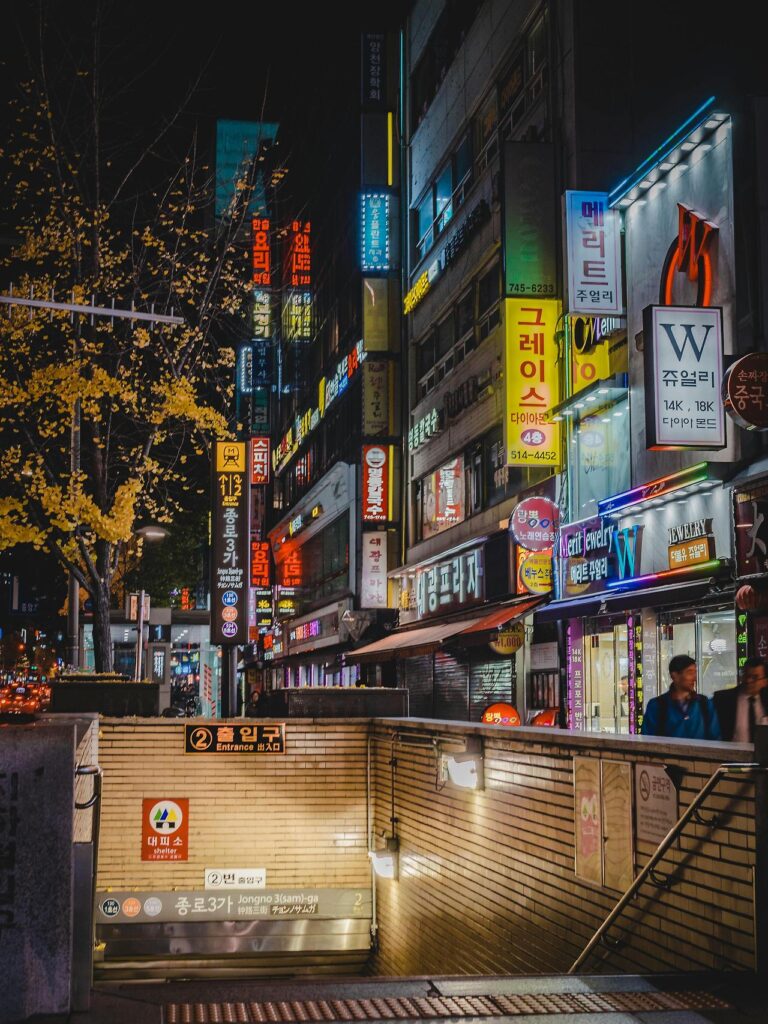
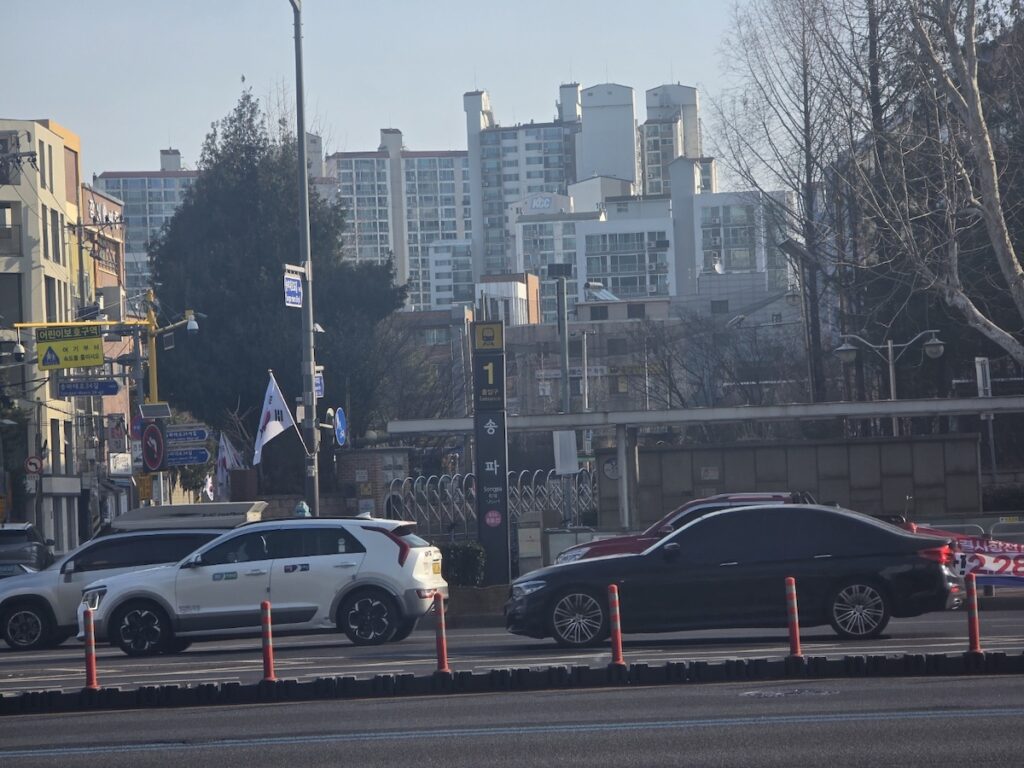
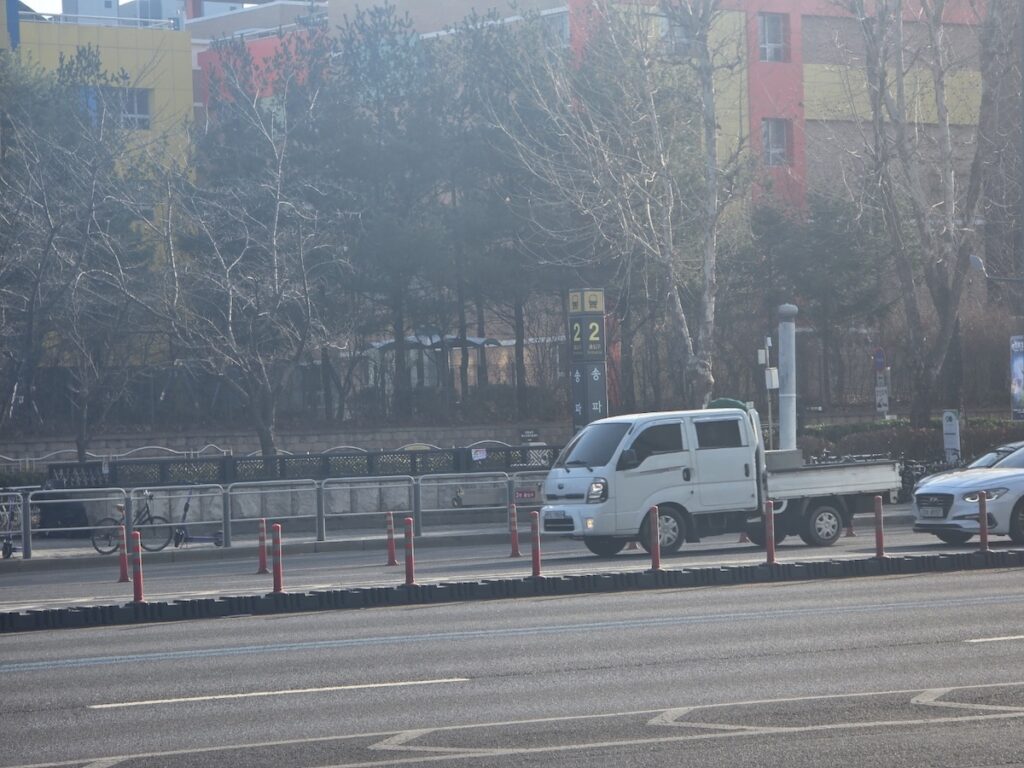
- Scan the Vertical Poles: Look for the grey vertical signposts, as seen in the Songpa Station examples. These pillars are your visual confirmation in the busy streetscape, clearly displaying the exit number, station name, and line color.
- Pre-Set Your Digital Compass: Use the Google Maps block integrated into this guide. Pin your high-end destination—such as the Park Hyatt Seoul or Grand InterContinental—and correlate it with the exit numbers to minimize outdoor walking time.
- The Transfer Strategy: In complex hubs like Seoul Station or Dongdaemun History & Culture Park, stick to the exit numbers assigned to the oldest line (Line 1 or 2) to avoid confusion between overlapping exits.
Conclusion: The Geometric Soul of a High-Speed City
Mastering the Seoul Subway Exit Numbers and Directions is more than a mere travel hack; it is an initiation into the sophisticated operating system of one of the world’s most advanced metropolises. Whether you are navigating the glittering luxury of Samsung Station or observing the daily pulse of residential corridors like Songpa Station, the clockwise code remains your most reliable compass.
This hidden geometry—anchored by the strategic placement of Exit 1—ensures that even in a labyrinth of 31 exits, there is always a predictable path to your destination. In a city that never stops moving, understanding this invisible grid allows you to reclaim your time and focus on the experiences that truly matter. Seoul does not ask you to get lost in its beauty; it provides the map, the logic, and the numbers to ensure you arrive exactly where you are meant to be.