“Seoul Subway Kiosk Guide is essential for any traveler who wants to navigate the complex ticketing system without losing their cash to common errors.”
Seoul Subway Navigation: Mastering the Kiosks. Navigating Seoul’s subway is a marvel of efficiency, but for the uninitiated, the ticket kiosks can be a psychological and financial trap. Beyond the flashing lights and multi-language buttons lies a system of strict protocols where a single “Input Error” can freeze your funds and stall your itinerary. This guide isn’t about how to ride; it’s about the financial tactics and systemic shortcuts to ensure you don’t lose a single cent—or a minute—to the machine.
1. Reclaiming Your “Frozen Assets”: The 500 KRW Refund Ritual
Every single-journey ticket you purchase in Seoul includes a hidden 500 KRW ($0.40) deposit. While it may seem like a trivial amount, it represents a collective “frozen asset” that many tourists unwittingly donate back to the system. If you are traveling as a group of four over five days, forgetting this ritual is equivalent to throwing away enough money for a full traditional meal.
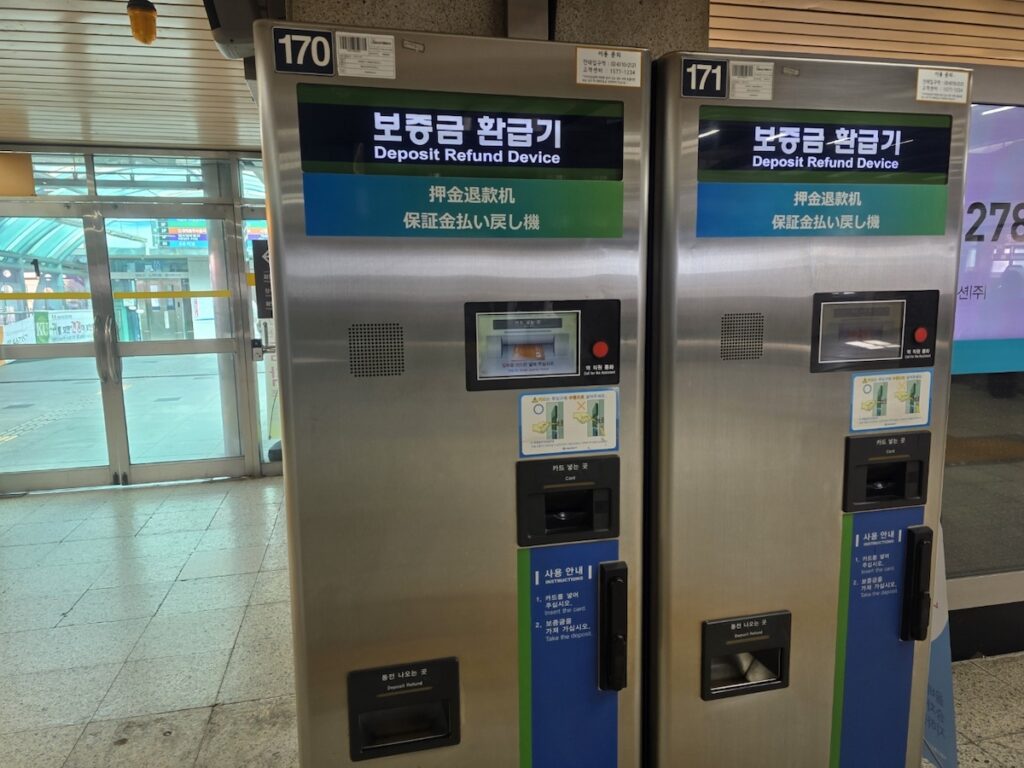
- The Tactical Save: Once you arrive at your final destination and exit the gate, do not head for the street immediately. Scan the area for a machine labeled “Deposit Refund Device” (보증금 환급기). These are typically located within 10 meters of the exit gates and the main ticket kiosks.
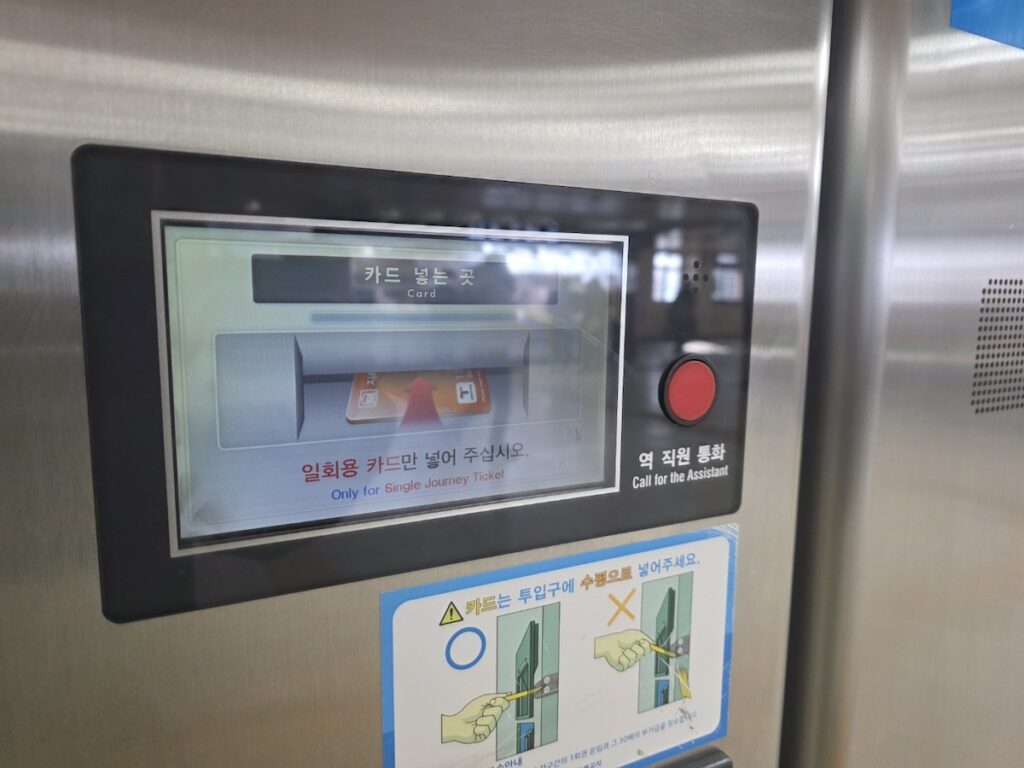
- The Action: Insert your used orange card into the slot marked “Card” as shown in the visual guide. The machine will process the chip for 2 seconds and dispense a 500 KRW coin.
- The ROI: This isn’t just about the 500 won; it’s about the discipline of the “Seoul Travel Ritual.” Accumulate these coins to experience a premium convenience store coffee or use them as exact change for your next street food purchase at Gwangjang Market.
2. The “5-Minute Protocol”: The Ultimate Shield Against Directional Blunders
One of the most anxiety-inducing moments for a traveler is tapping through the subway gate, walking down the stairs, and realizing the train is heading towards “Incheon” when you meant to go to “Gangnam.” In many cities, this mistake costs you a full fare. In Seoul, there is a legal and systemic grace period.
- The Financial Shield: If you catch your mistake immediately, do not panic. Seoul’s transit system has a “5-Minute Rule.” If you exit the gate you just entered and re-enter the gate for the opposite direction within 5 minutes at the same station, the system recognizes it as a directional correction and will not charge you a second fare.
- The “Help” Button Strategy: Sometimes, the gate might block you with an “Already Tagged” error. If this happens, look for the red “Assistant Call” button located on the side of the turnstile gate. You don’t need to explain the situation in Korean. Simply point to the opposite side and say “Wrong way.” The staff will remotely unlock the gate or guide you through the side entrance without deduction.
3. Deciphering the Surcharge Trap: The Shinbundang Line Logic
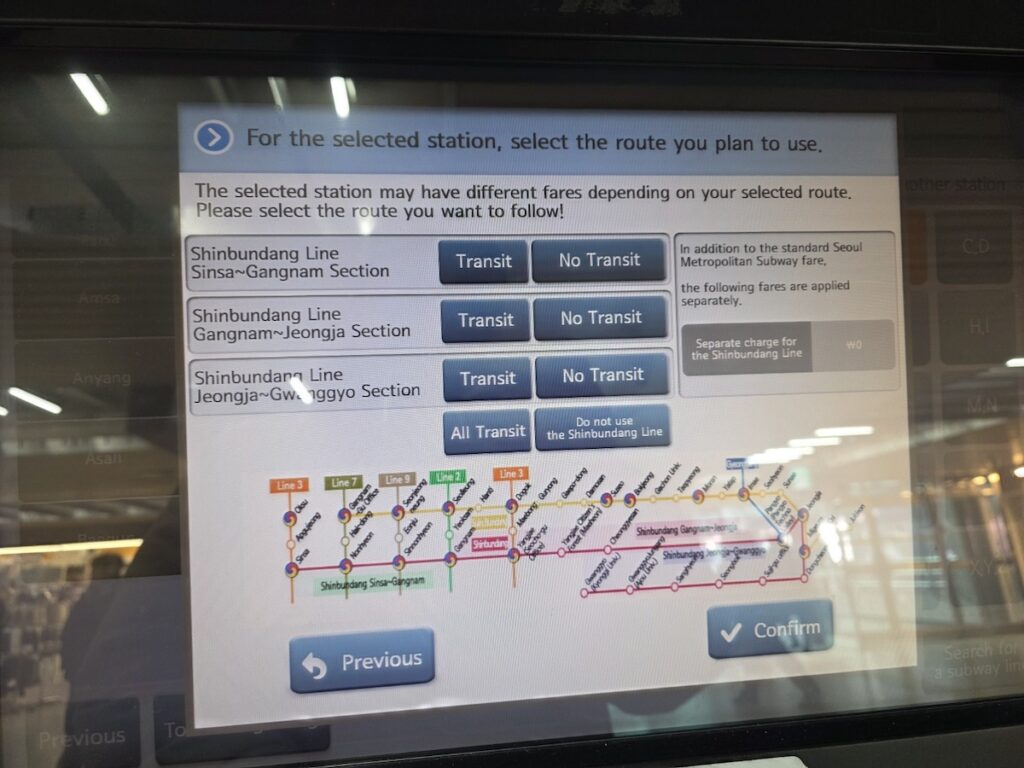
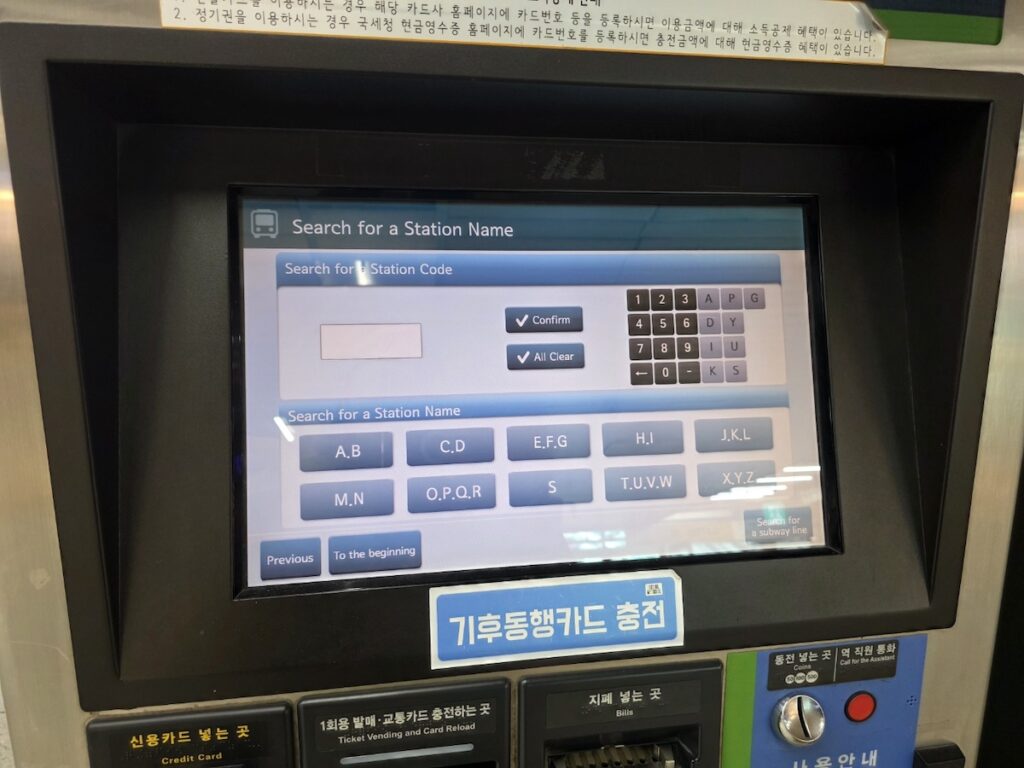
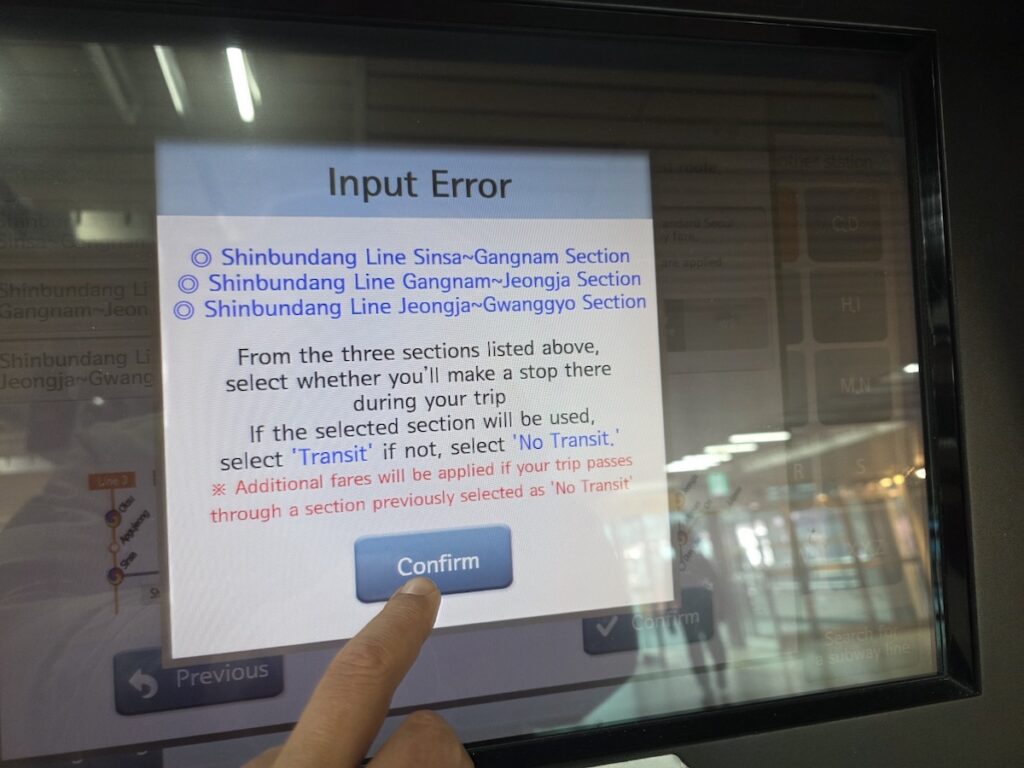
When you interact with the digital map on the kiosk, you might notice different fare totals for what seems like the same destination. This is usually due to the Shinbundang Line—a privately operated, high-speed line that charges a significant surcharge (approx. 1,000 KRW or $0.75 extra).
- The Systemic Trap: The kiosk will often ask if you intend to “Transit” (change lines). If you select the wrong option or fail to pre-pay the surcharge, your card will be flagged with an “Insufficient Funds” error at the exit gate.
- Tactical Advice: Before you pay, look at the route map provided by the machine. If you are on a budget, choose the “Blue” or “Green” line routes which are standard fare. If you choose the “Red” line (Shinbundang), ensure your ticket is issued with the “Transit Surcharge” included. This avoids the “Gate Trap” where you’re stuck behind a barrier with a machine that only issues error codes in a language you can’t read.
4. The Cash-Only Barrier: Managing Your Physical Liquidity
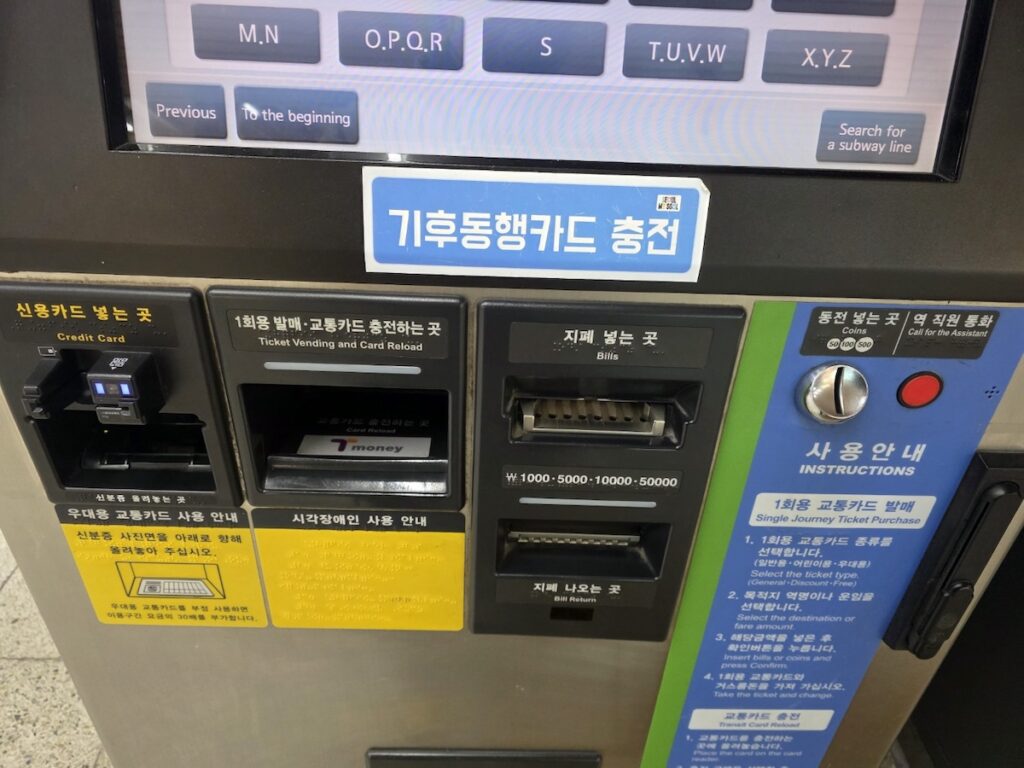
Korea is a global leader in cashless payments, but the subway kiosks are a curious stronghold for physical currency. Many travelers arrive with only a foreign credit card, only to find that the kiosks for T-money top-ups and single-journey tickets rarely accept non-Korean credit cards.
- The Financial Logjam: The machine’s bill validator is highly sensitive. Feeding a wrinkled 50,000 KRW note can result in the machine “locking” your session for several seconds of contemplation.
- The Tactical Backup: If you are “cash-poor” but “card-rich,” do not stand in line at the kiosk. Instead, walk 30 meters to the nearest convenience store (CU, GS25, or 7-Eleven) often found inside the station’s underground shopping area. These stores can often top up T-money cards using international credit cards, and they provide a much more stable digital interface than the outdoor kiosks. Always keep a 10,000 KRW bill tucked behind your phone case as your “Subway Emergency Fund.”
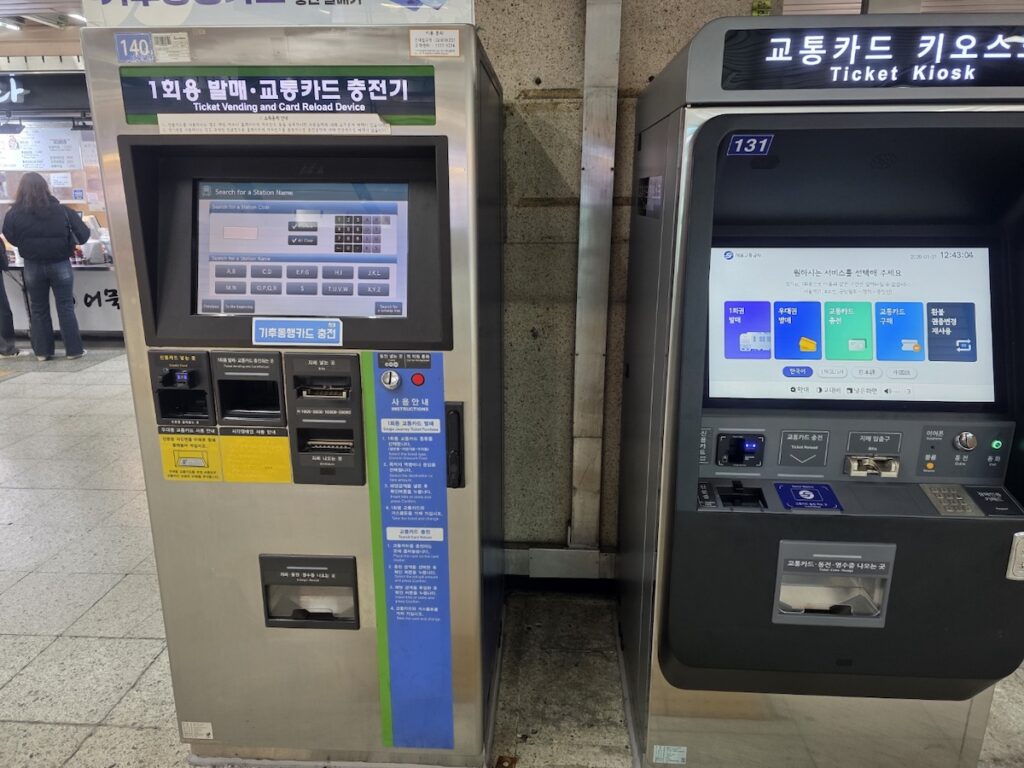
5. The “English” Interface Illusion: Beyond the Language Button
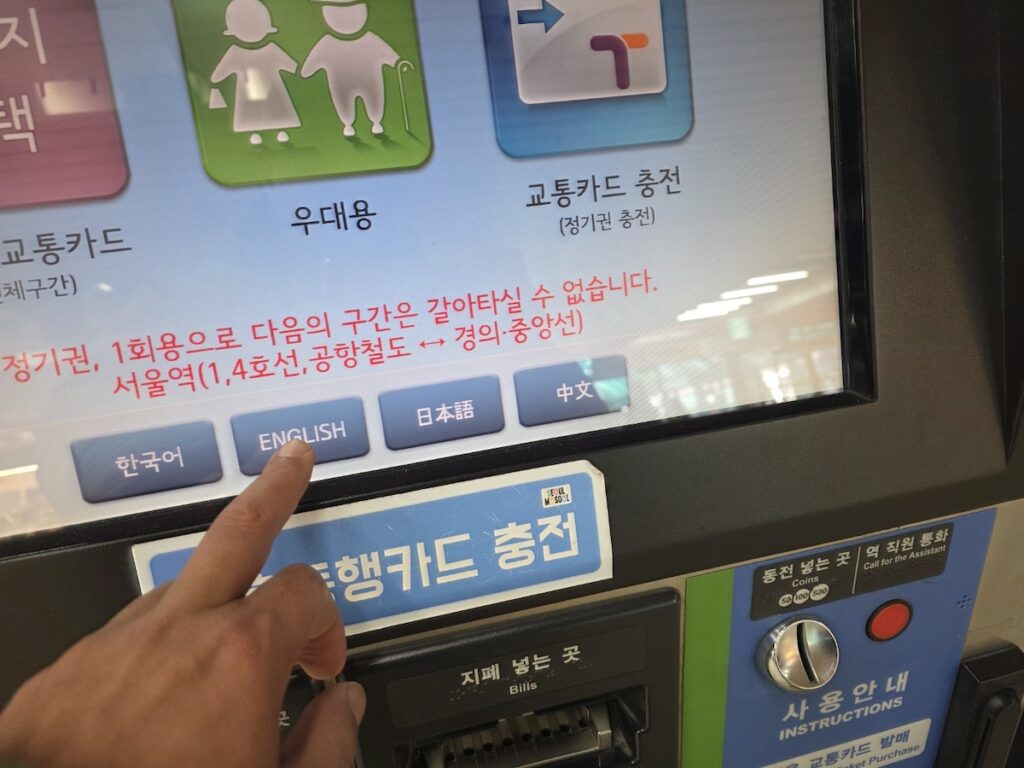
Pressing the “ENGLISH” button at the bottom of the screen feels like a relief. However, this is often a “partial translation.” Critical real-time warnings—such as “Line 4 is delayed due to maintenance” or “Elevator out of service”—frequently pop up in Korean-only windows.
- The Observational Protocol: If the kiosk refuses to accept your coins and displays a red-bordered pop-up window, stop immediately. Do not try to “force” the transaction by pressing random buttons. The machine is likely warning you that your chosen route is currently unavailable or that the station you’ve selected has been closed for a protest or event.
- The Final Defense: Use the “Assistant Call” button located on the right side of the kiosk. In Seoul’s transit culture, it is far more efficient to ask for help early than to try and “debug” a government machine yourself. Take a photo of the error message; even if the station worker doesn’t speak English, the visual proof will allow them to fix the system error for you in seconds.
Action Plan: Your Subway Financial Protocol
- Horizontal Orientation: Always insert your card into the slot horizontally, following the pictorial guide. Vertical insertion is the #1 cause of jammed machines.
- The Receipt Ritual: Always select “Issue Receipt” at the end of your transaction. If the machine swallows your money without issuing a card, this thermal paper is your only legal proof for a refund at the Station Office.
- Use the Side Gate: If you are traveling with large luggage or a stroller, don’t use the standard turnstiles. Look for the wide “Disabled/Stroller” gate and press the call button; the staff will open it to save you from a “Fatal $10 Mistake” of breaking a suitcase wheel in the turnstile.