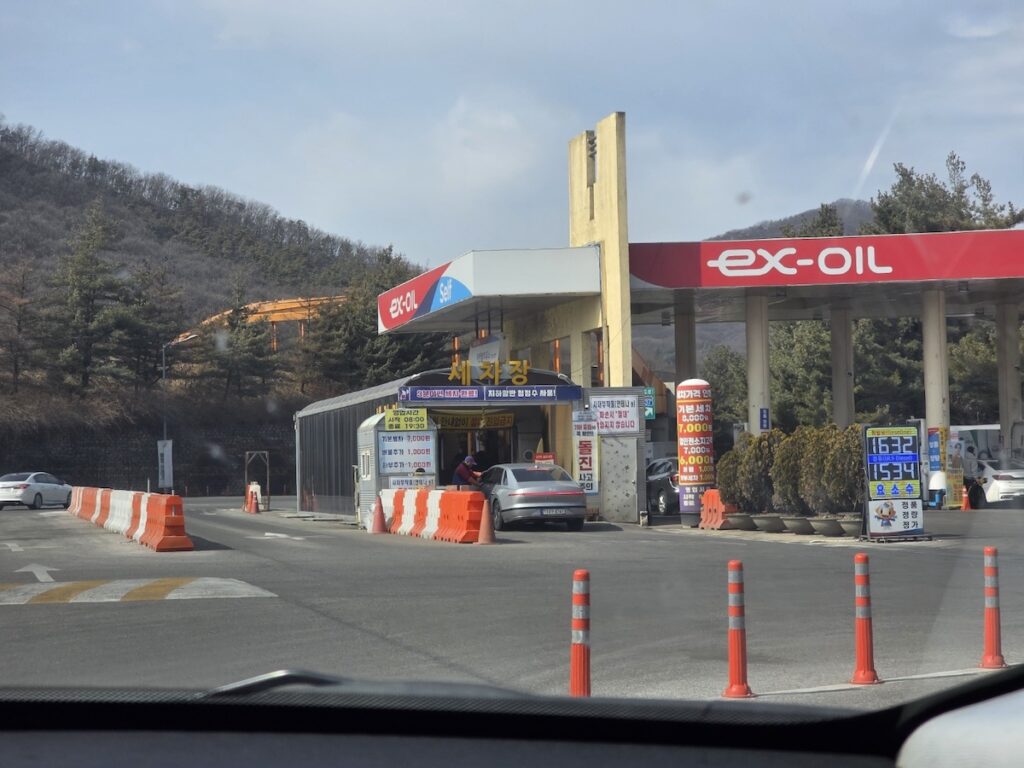
The South Korea Highway Gas Station Prices 2026 represent a fascinating paradox for the global traveler. While city centers in most countries offer competitive fuel rates, in South Korea, the asphalt veins of the expressway—specifically the Ex-Oil stations managed by the Korea Expressway Corporation—are where the real savings are found.
Navigating these stations, like the iconic Icheon Rice Rest Area (Icheon Hyugeso), is more than a logistical necessity; it is a high-tech ritual of efficiency and social consideration.
1. The Price Paradox: Why High-Speed Means Lower Cost (The ex-oil Advantage)
For the global traveler accustomed to the “Expressway Premium” found in most major economies, the reality of South Korea Highway Gas Station Prices 2026 is a welcome cultural shock. In South Korea, the highway is not where you are exploited for your lack of options; it is where the state-engineered stabilization of energy costs reaches its peak efficiency.
The Anatomy of the ex-oil Ecosystem
The blue and orange shield of ex-oil (Korea Expressway Corporation’s brand) is the ultimate signal of fiscal responsibility. This brand was created not for profit, but for “Price Leadership.” By operating under a “Low-Margin, High-Volume” model, ex-oil stations effectively cap the national fuel price index.
- Collective Purchasing Power: Unlike independent city stations that negotiate individually, the Korea Expressway Corporation (KEC) purchases fuel in massive, centralized batches directly from major refineries like SK, GS Caltex, and S-Oil. This scale of economy allows them to secure a wholesale rate that is simply inaccessible to a boutique station in the city center.
- The Rent Anomaly: In the high-density districts of Seoul, such as Gangnam or Jongno, a significant portion of your liter price—often up to 15%—is diverted to cover astronomical land taxes and lease costs. On the expressway, the land is owned by the state or the KEC, removing the “Real Estate Premium” from your fuel bill.
The Psychological and Economic Bridge: Seoul vs. the Expressway
Why do savvy Korean drivers—the “Al-tteul” (frugal) shoppers—deliberately wait until they hit the Gyeongbu or Yeongdong Expressway to fill their tanks? The data for 2026 shows a persistent gap that defies global trends.
| Metrics | Urban Premium Stations (Seoul) | ex-oil Expressway Stations |
| Liter Cost (Avg) | ₩1,780 – ₩1,850 | ₩1,640 – ₩1,690 |
| Price Stability | High Fluctuation (Weekly) | High Stability (Direct Gov. Sync) |
| Operational Focus | Service & Convenience | Speed, Safety & Cost-Efficiency |
The Fuel Tax Sentinel: Government-Direct Synergy
A critical factor in South Korea Highway Gas Station Prices 2026 is the government’s use of ex-oil stations as a “Price Sentinel.” When the South Korean government announces a temporary cut in fuel taxes (Traffic, Education, and Driving taxes) to combat global inflation, ex-oil stations are mandated to reflect these cuts within hours.
Private urban stations often lag behind, waiting to sell through their “expensive” inventory before lowering prices. However, on the highway, the flow of inventory is so rapid that the benefits of government tax cuts reach the traveler’s wallet almost in real-time. This makes the expressway the safest place to find the “Floor Price” of the day.
The Efficiency of the “Self-Service” Revolution
The lower price is also a reflection of the “Selt-peu” (Self-service) revolution. By automating the pumping process, ex-oil stations eliminate the labor costs of attendants. This savings is passed directly back to the driver. At the Icheon Rice Rest Area, for instance, the sheer volume of cars passing through a single pump in an hour is five times higher than at a city station, allowing the facility to thrive on a razor-thin profit margin of only a few won per liter.
2. The Icheon Protocol: A Self-Service Masterclass
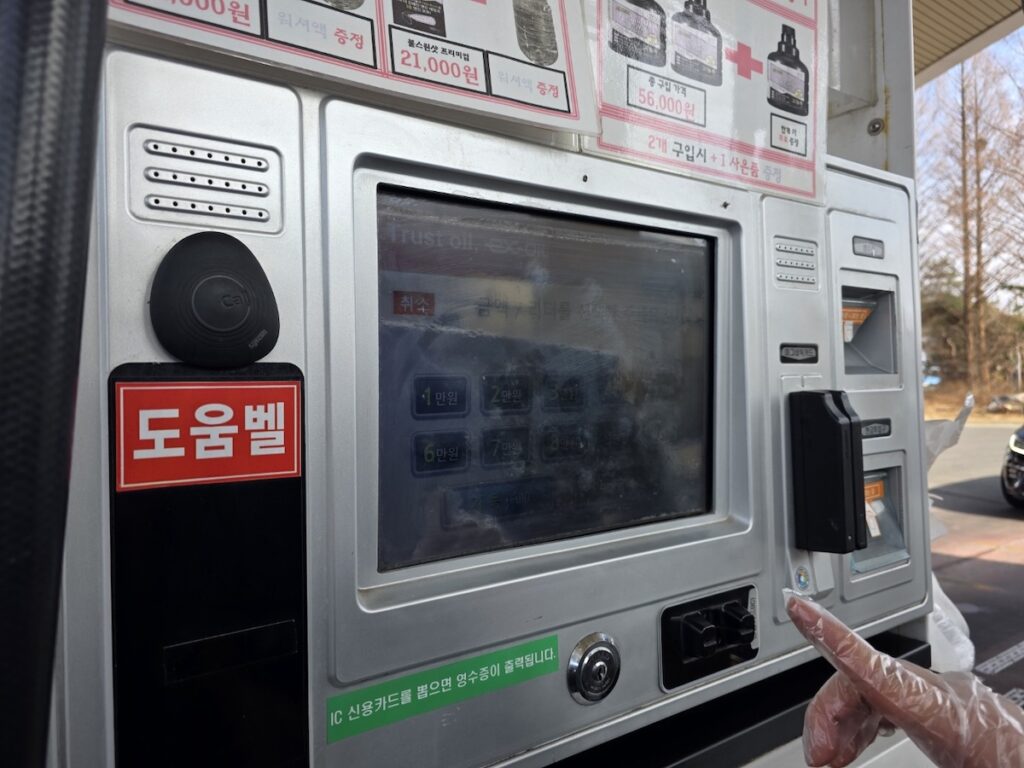
During a recent visit to the Icheon Rice Rest Area, the sophistication of the South Korean self-service (Selt-peu) system was on full display. For a foreigner, the machine may seem daunting, but the ritual is designed for clinical precision.
The Anti-Static Ritual (The Yellow Pad)
Before you even touch the nozzle, you will encounter a bright yellow circular pad. This is the Anti-Static Pad. In the dry winters of Korea, static electricity is a genuine safety concern. Touching this pad is the mandatory first step—a silent contract between the driver and the machine to ensure a spark-free environment.
The Hygiene Shield: Disposable Vinyl Gloves
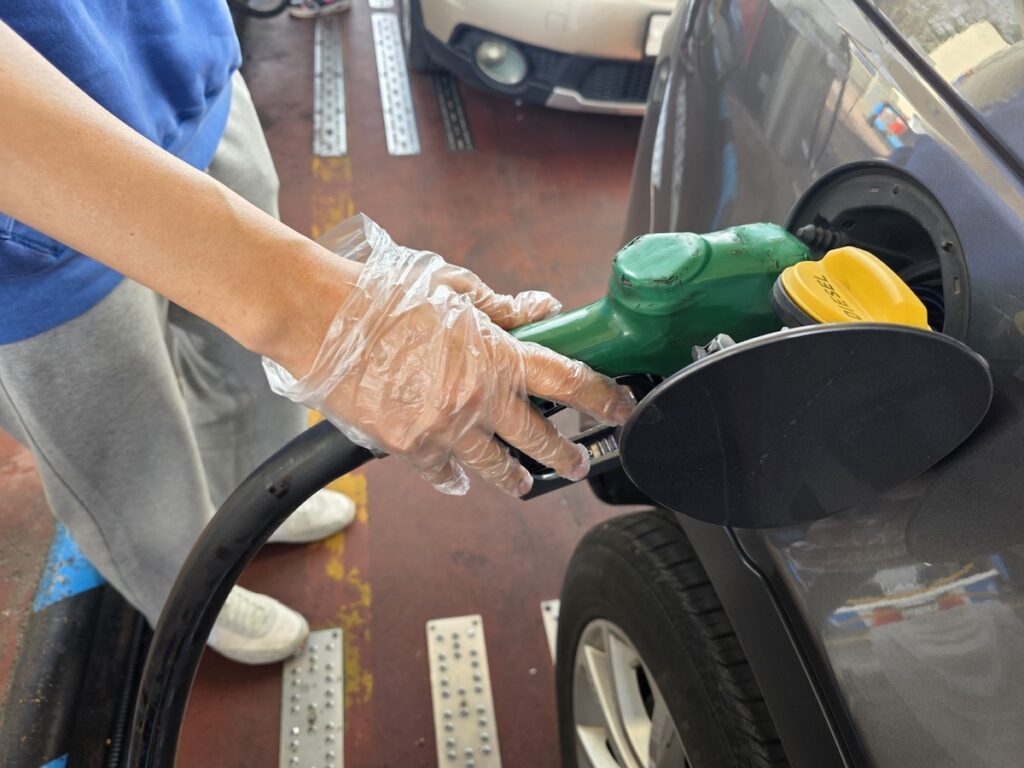
Next to the pump handle, you will inevitably find a box of disposable vinyl gloves. In the post-pandemic era, this has become a permanent fixture of the Korean fueling ritual. It keeps your hands free from the smell of petroleum and maintains the “Odorless Standard” we discussed in our previous guides.
Payment Flexibility: Cash, Cards, and “Oh My Card”
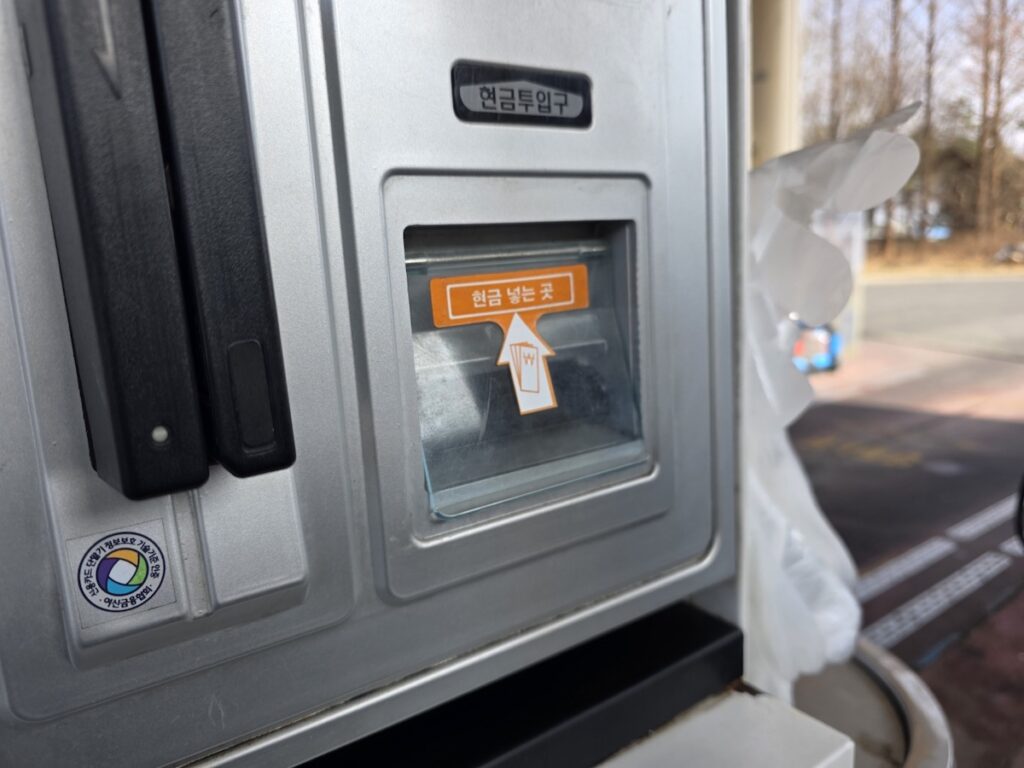
The payment terminals at stations like Icheon are hyper-adaptive. Whether you carry a physical credit card, Apple Pay, or even cold cash (KRW), the machines are equipped to handle all. Most machines now offer a simplified English interface, but the visual cues—inserting the card or feeding the bills—are universal.
3. Scientific Efficiency: The Physics of the Hollow Cylinder and Sensory Respect
The sophistication of South Korea Highway Gas Station Prices 2026 is not merely reflected in the digital display of the price per liter. It is embedded in the very hardware of the pump—specifically the Vapor Recovery System utilizing advanced Hollow Cylinder technology. For the global traveler, this is where South Korean engineering meets social etiquette.
The Hollow Cylinder: The Silent Guardian of Air Quality
When you lift the nozzle at a station like the Icheon Rice Rest Area, you are handling a piece of high-precision fluid dynamics. Most modern ex-oil pumps are equipped with a “Hollow Cylinder” nozzle design, a specialized dual-pathway system.
- The Science of Vapor Recovery: As liquid fuel flows down the center, the outer hollow sleeve acts as a vacuum. It captures the volatile organic compounds (VOCs) and gasoline vapors that would otherwise escape into the atmosphere.
- The Atmospheric Benefit: This is why, unlike gas stations in many other parts of the world, a busy Korean highway station doesn’t smell like a refinery. The hollow cylinder ensures that the “Odorless Standard” we value in Korean society is maintained even in an industrial environment.
The “Auto-Stop” Precision: Preventing the Spill
The efficiency of South Korea Highway Gas Station Prices 2026 also relies on preventing waste. The nozzles at ex-oil stations utilize a Venturi-effect sensor located within the tip.
- Fluid Dynamics at Work: As the fuel level reaches the nozzle, it cuts off the air displaced through a small sensing tube. This triggers an instant mechanical shut-off. In Korea, this system is calibrated to a hair-trigger sensitivity, ensuring that not a single drop—which you have paid for—is wasted or spilled onto the pavement. This precision is a metaphor for the broader Korean economic philosophy: Maximum output with zero waste.
Sensory Integration: Why Hygiene is Part of the Engineering
The technological efficiency of the pump is incomplete without the human element. The Icheon Protocol of using disposable vinyl gloves is a direct extension of this scientific approach.
- The Barrier Strategy: By providing high-density polyethylene (HDPE) gloves next to the hollow cylinder nozzles, the station ensures a “Zero-Contact” experience. This is not just about germs; it is about protecting the driver’s sensory environment. If gasoline molecules were to transfer to your hands, they would linger in your car’s cabin for hours, violating the “Sensory Respect” that is paramount in Korean social interactions.
- The Result: You can refuel a rental car in a bespoke suit or a luxury silk dress and step back into the vehicle as pristine as when you started. It is a seamless integration of mechanical engineering and social etiquette.
4. Digital Navigation and Network: The Logistics of Precision
In the landscape of South Korea Highway Gas Station Prices 2026, the physical act of refueling is inseparable from the digital infrastructure that guides it. South Korea does not rely on static billboards; it operates on a real-time, data-driven ecosystem that empowers the driver with absolute transparency.
The Navigation Duopoly: KakaoNavi and Tmap
While Google Maps may be the global standard, in the Korean peninsula, it is a dormant giant. To master the search for the best fuel rates, one must adopt the local “Digital Eyes”: KakaoNavi and Tmap.
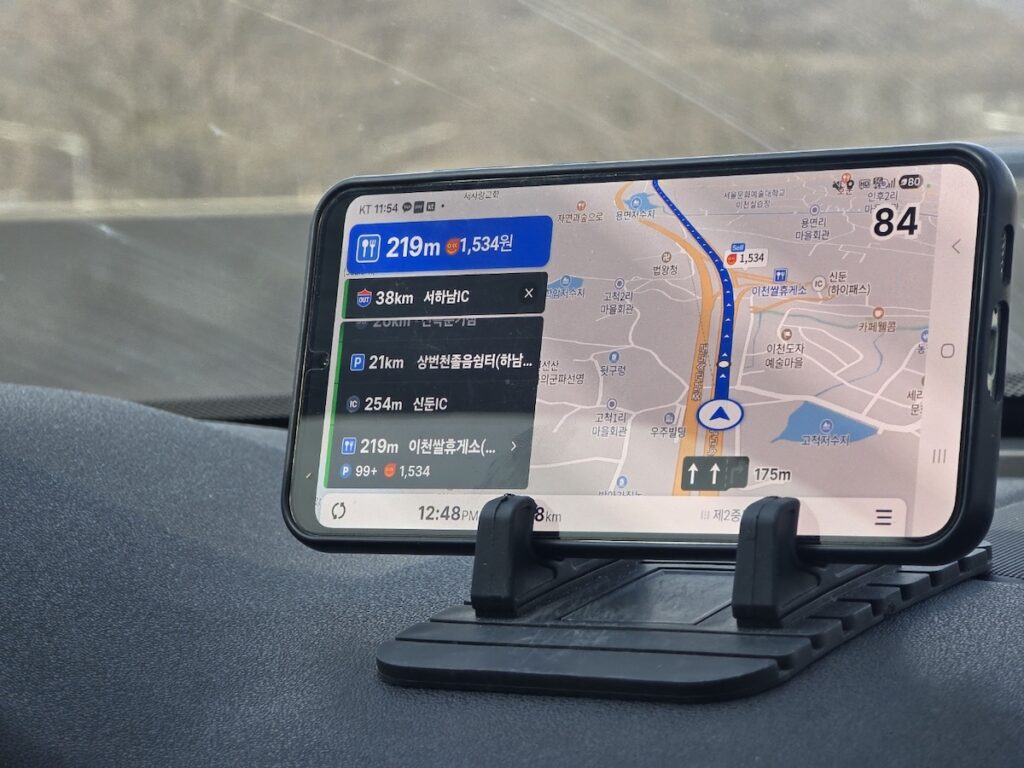
- Real-Time Price Transparency: These platforms are directly integrated with the Opinet (Korea National Oil Corporation) database. As you drive, the map displays the current price per liter hovering above each gas station icon. This allows for “On-the-Fly” economic decisions—if the station 10km ahead at the next rest area is ₩20 cheaper, the system will highlight it for you.
- Filter Intelligence: You can set your preferences to exclusively show ex-oil or “Al-tteul” (frugal) stations, ensuring that your journey aligns with the most cost-effective South Korea Highway Gas Station Prices 2026.
The Anatomy of the Expressway Network: Frequency and Density
The distribution of gas stations on South Korean expressways is not random; it is a calculated master plan designed to prevent “Range Anxiety,” even for the burgeoning fleet of electric and hydrogen vehicles.
Infrastructure Density Analysis (2026 Standards)
South Korea’s major arteries—the Gyeongbu (Route 1) and the Jungbu (Route 35)—boast some of the highest service station densities in the world.
- The Gyeongbu Expressway (Seoul to Busan): As the nation’s primary artery (approx. 416km), it hosts over 35 service areas (Hyugeso). Statistically, you will encounter a fueling opportunity every 15km to 25km. This high density is a strategic move to ensure that traffic flow is never compromised by fuel emergencies.
- The Jungbu Expressway: Serving the central logistics hub, this route maintains a consistent interval of approximately 25km to 30km between ex-oil hubs.
| Expressway Name | Approx. Distance | Service Stations (Estimated) | Avg. Interval |
| Gyeongbu (Route 1) | 416 km | 35+ | ~20 km |
| Jungbu (Route 35) | 117 km | 10+ | ~25 km |
| Yeongdong (Route 50) | 234 km | 15+ | ~30 km |
Strategic Planning: The 20km Rule
For the sophisticated traveler, the “20km Rule” is essential. Because South Korea Highway Gas Station Prices 2026 are so tightly regulated and monitored via KakaoNavi, there is no need to “panic buy” fuel. If a rest area like Icheon is too crowded, you can confidently skip it, knowing that another high-tech, cost-effective ex-oil station is exactly 20 minutes away. This geographical precision is what allows the Korean logistics system to maintain its world-class “Just-in-Time” efficiency.
Related Guides: Your Expressway Survival Kit
- Cost of Living in Korea 2026: The Ultimate “First Bill” and Payment Ritual Guide The digital transparency of the Icheon price board is your first lesson in the Korean cost of living. This guide expands that experience into a comprehensive masterclass on managing your first month’s expenses, from utility bills to the sophisticated payment rituals required in Seoul’s hyper-connected economy.
- Self Service Gas Station Korea: 2026 Price Guide & Tips Now that you know where to find the best rates, master the machine. This technical manual breaks down the touchscreen interface step-by-step, ensuring you can navigate the “Selt-peu” (self-service) ritual with the confidence of a local, even without a word of Korean.
- Gas Stations in Korea: Complete Guide to Fuel Types, Prices, and Self-Service Tips (2026) Don’t let a simple mistake ruin your rental engine. This comprehensive guide clarifies the critical distinctions between “Gaso-llin” (Regular) and “Gyeong-yu” (Diesel) in the Korean context, while offering a bird’s-eye view of the national fueling infrastructure.
5. Conclusion: The Logic of the Korean Highway Ritual
The South Korea Highway Gas Station Prices 2026 at hubs like the Icheon Rice Rest Area represent more than just a refueling stop; they are a masterclass in the integration of digital transparency and physical safety protocols. By prioritizing the ex-oil network, travelers can bypass the high-margin urban markets of Seoul and tap into a state-stabilized pricing system that rewards the “Al-tteul” (frugal) mindset.
Whether you are navigating the high-tech Duopoly of KakaoNavi and Tmap to scout real-time rates or participating in the silent safety contract of the Anti-Static Pad and Hollow Cylinder nozzle, you are engaging with a culture that values clinical precision and sensory respect. Mastering these rituals—from the mandatory vinyl glove to the seamless card-and-cash terminals—ensures that your journey through the Korean peninsula remains as efficient, clean, and cost-effective as the infrastructure itself.