1. The Golden Rule: Is Tipping Mandatory in Korea?
f you are planning a trip, understanding Tipping in South Korea is essential for a smooth experience. Many travelers ask, “Do I need to tip in Seoul?” This Tipping in South Korea guide for 2026 will explain why you don’t need to leave extra cash and how the local system differs from the USA or Australia.
If you are coming from the USA, Canada, or the UK, you might feel a constant “tipping anxiety.” In the West, tipping 15-25% is a social obligation. However, in South Korea, the answer is a resounding NO.
In South Korea, the price you see on the menu is exactly what you pay. Tax and service charges are already included in the final price by law. Tipping is not only unnecessary but can sometimes be seen as confusing or even offensive to the staff who pride themselves on providing fair service to everyone.
2. Global Comparison: Tipping in South Korea vs USA & Australia
To understand the Korean system, we must look at how it contrasts with the “Tipping Cultures” of the West. It’s not just about the money; it’s about the underlying economic structure.
- The USA & Canada (The “Wage Substitute” Model): In North America, the federal minimum wage for tipped employees is often significantly lower than the standard minimum wage. Tipping 18-25% is an unofficial social contract to ensure the server earns a living wage. If you don’t tip, you are essentially depriving the worker of their income.
- Australia & New Zealand (The “Appreciation” Model): While wages are higher here, tipping is still common as a “top-up” for great service. However, it is increasingly becoming digital and expected via card machines.
- South Korea (The “All-Inclusive” Model): In Korea, the law requires that the price on the menu includes all taxes and service fees. Waitstaff and taxi drivers are regular employees with fixed salaries and insurance. Therefore, the concept of a “service tip” doesn’t exist in the local accounting system.
Why the “Vibe” is Different: In the US, servers might be “overly friendly” to earn a higher tip. In Korea, service is often fast, efficient, and “silent.” This isn’t rudeness; it’s a cultural preference for Bbali-Bbali (hurry-hurry) efficiency. If you try to tip a server who is rushing between tables, it might actually disrupt their workflow and cause confusion.
3. The 2026 Controversy: The “Tip Box” Backlash {#controversy}
Recently, a few high-end cafes in Seoul and popular bakeries in Seongsu-dong and Hannam-dong attempted to introduce “Tip Boxes” or “Digital Tip Screens” similar to those found in New York or London.
- The Korean Reaction: It was a disaster. The Korean public reacted with extreme negativity. Local netizens took to social media, calling it “un-Korean” and “greed masquerading as global culture.”
- Why the hate? Koreans believe that high-quality service is a standard, not something you should pay extra for. The introduction of tip boxes was seen as a way for owners to shift the burden of labor costs onto customers.
- The Lesson for You: Even if you see a tip box, you are under zero pressure to pay. Locals walk past them without a second thought, and you should too.
4. Situational Guide: When “Might” You Give Money? {#situations}
While tipping isn’t a culture, there are very rare exceptions where a small gesture is appreciated:
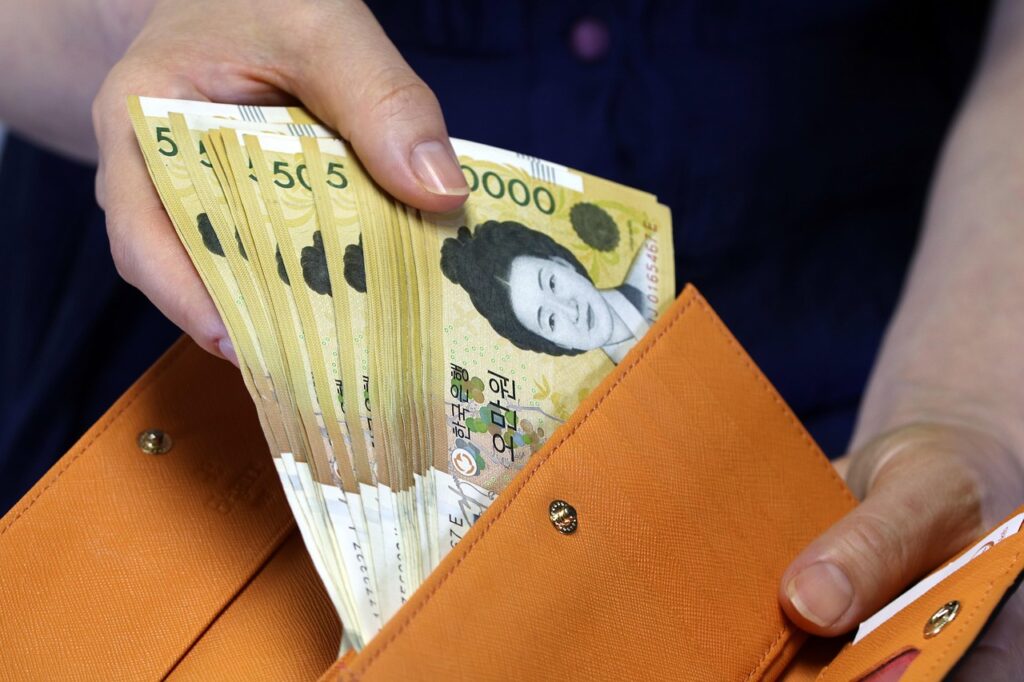
- Luxury Hotels (5-Star): If a bellboy goes above and beyond with heavy luggage, a small ₩5,000 to ₩10,000 note is acceptable but never demanded.
- Taxis: If you pay in cash and the change is small (e.g., ₩200 or ₩300), saying “Jandoneun gajiseyo” (Keep the change) is a friendly way to say thank you.
- Private Tour Guides: If someone spent 8 hours showing you hidden gems, a small gift or a 10% gratuity is a kind way to show your appreciation for their personal effort.
5. How to Handle Tipping in South Korea Without a Credit Card Option
For many travelers from the US or Australia, leaving a table without adding 20% feels physically uncomfortable. If your heart insists on showing extra gratitude, here is the professional way to do it in Korea.
The “No Digital Tip” Reality
One of the biggest shocks for Westerners is the Credit Card Machine (POS system).
- USA/Australia: When the waiter brings the card reader, it prompts you: “Add a tip? 15%, 20%, 25%?”
- South Korea: This function does not exist. The machine will only charge the exact amount on the receipt. There is no line to write in a tip on the paper receipt, and there is no button to add a percentage. The transaction ends the moment the base price is paid.
The Correct Way to Show Extra Gratitude
If you still wish to give something extra for exceptional service (like a 3-hour private BBQ session or a complex hair makeover):
- Cash is King: Since the card system doesn’t support tips, you must use cash.
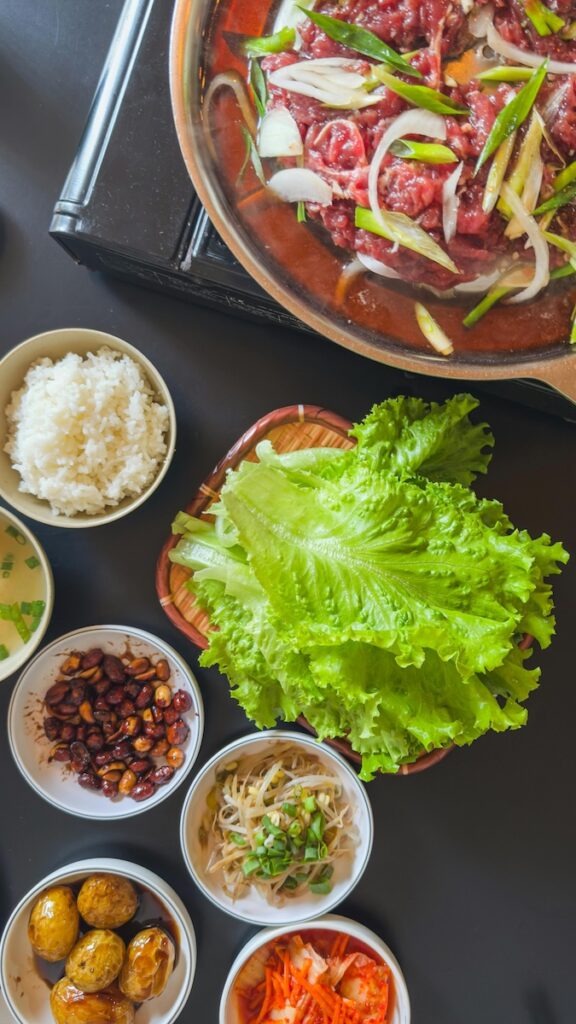
- The “Discreet” Method: Do not make a big scene. In Korea, giving money openly can sometimes feel like “charity” rather than a tip. Place a ₩5,000 or ₩10,000 note in an envelope or fold it neatly and hand it directly to the person while saying, “Thank you for the great service.”
- Buy a Drink/Snack: Sometimes, instead of cash, buying a small gift (like a premium canned coffee or a box of snacks from a convenience store) and giving it to the staff is seen as more “heartfelt” and culturally appropriate than a cash tip.
- The “Change” Gesture: If you are paying in cash and the change is a few hundred won (coins), simply waving your hand and saying “Gwaenchana-yo” (It’s okay) or “Jandoneun gajiseyo” (Keep the change) is the most common and comfortable way to “tip” in Korea.
6. Essential Phrases for “No Tipping” Situations {#phrases}
When you feel like you should give more because the service was so great, use these phrases instead of money:
- “Jal meogeot-seumnida” (잘 먹었습니다): “I ate well.” (Best for restaurants)
- “Gamsahamnida” (감사합니다): “Thank you.” (Standard for all situations)
- “Sugo-haseyo” (수고하세요): “Keep up the good work.” (Great for taxi drivers or shopkeepers)
“Still confused about Tipping in South Korea? Leave a comment below, and I’ll help you navigate the local etiquette!”