A few months ago, I found myself standing in front of a self-service kiosk at a small shopping mall near my home, holding my mother’s hand. We weren’t there to buy anything complex—just a simple snack. But for my mother, the glowing screen was a wall of confusion. As I guided her finger to the right buttons, I could feel her hand trembling slightly, not from age, but from the “Pali-pali” pressure of the people waiting behind us.
When she finally succeeded and the receipt printed out, the look of triumph on her face was more moving than any souvenir. That moment taught me a vital lesson: traveling to Korea with elderly parents isn’t just about the sights; it’s about navigating the gap between a high-tech society and the slower, more deliberate pace of the generation that built it.
The Digital Barrier: Why Patience is the Best Souvenir
South Korea is arguably the most digitized nation on earth. From ordering coffee to calling a taxi, everything has moved behind a screen. For seniors, this can feel like being illiterate in a familiar city.
The Strategy: Don’t let the kiosk be the “Final Boss” of your trip.
- Be the Proxy: Accept that you will be doing 90% of the digital interactions. Don’t force your parents to learn the apps unless they want to.
- Use Human-Led Services: Whenever possible, seek out the “Information” desks or physical ticket windows (창구). In 2026, major hubs like Seoul Station and Incheon Airport still maintain dedicated lanes for seniors and foreigners.
- The “Call Button” Rule: Many restaurants have a small bell on the table. Teach your parents to use this—it’s the one piece of “old-school” tech that still rules the Korean dining scene.
The Ultimate K-Medi Healing: Traditional Medicine & Massage
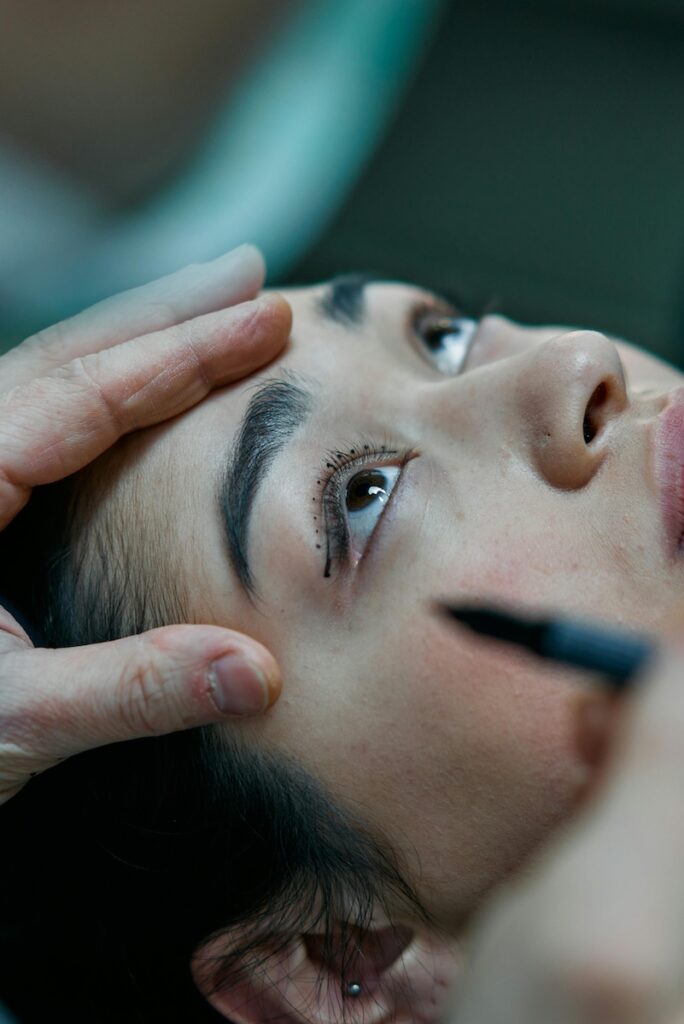
If your parents are feeling the fatigue of international travel, don’t just reach for painkillers. In Korea, we turn to Hanbang (Traditional Korean Medicine) to restore “Gi” (energy) and soothe aching joints. For many elderly visitors, a visit to a high-end oriental clinic is often the highlight of their trip—a blend of medical care and a deeply relaxing spa experience.
1. Acupuncture & Chuna: Relieving the “Traveler’s Back”
Long flights and walking on city pavement can be brutal on senior backs and knees.
- Acupuncture (침): Don’t be afraid of the needles. Korean acupuncture uses incredibly thin, sterile needles to stimulate blood flow and reduce inflammation. Most seniors find the sensation more “tingly” than painful.
- Chuna Manual Therapy (추나): This is a specialized Korean form of spinal manipulation. Unlike some aggressive Western chiropractic adjustments, Chuna is a gentle, hand-led therapy designed to realign the body and relieve muscle tension—perfect for parents who find traditional massages too intense.
2. The K-Medi Experience: Seoul K-Medi Center
If you want to experience the culture without a full clinical commitment, head to the Seoul K-Medi Center (Jegi-dong).
- Medicinal Foot Bath: Let your parents soak their feet in warm water infused with seasonal Korean herbs. It’s a low-impact, high-reward activity that rejuvenates tired legs instantly.
- Herbal Tea Tasting: Instead of a sugary cafe drink, try a cup of Ssanghwa-tang (Black herbal tea). It’s known as the “Immunity King” in Korea, often served with pine nuts and jujubes to boost strength and fight off cold symptoms.
3. Hanyak: The Gift of Vitality
You might see beautiful silk-wrapped boxes in pharmacies or clinics; these are Hanyak (Herbal Medicine).
- Consultation First: Many clinics in areas like Gangnam or Myeongdong offer English-speaking doctors who will check your parent’s pulse and “Sasang Constitution” (the four body types of Korean medicine).
- Travel-Friendly Options: In 2026, many clinics offer “Gongjin-dan” or “Kyung-ok-go”—small, gold-leaf-covered herbal pills that are easy to carry and provide an immediate energy boost during a busy day of sightseeing.
Tips for a Stress-Free Clinic Visit
- Check for English Support: Clinics like In Oriental Medical Clinic or Kyung-hee University International Medical Center are world-renowned for treating international patients with full English services.
- Aura of Calm: Remind your parents that an oriental clinic is a place of silence. It’s an environment designed for mental rest as much as physical healing.
- Communication: Always inform the doctor of any Western medications or chronic conditions (like high blood pressure or blood thinners) your parents currently have. Korean doctors are highly trained in “Fusion Medicine” and will adjust the treatment safely.
The Seat Search: Floor vs. Chairs
One of the biggest physical hurdles when traveling to Korea with elderly parents is the traditional seating arrangement. While modern Korea has largely moved to tables and chairs, many authentic hidden gems still require sitting on the floor (Jwasik).
- The Problem: For seniors with knee or hip issues, getting down to and up from the floor is a painful ordeal.
- The Solution: Always look for restaurants labeled “Chair-seating available” (의자 테이블 있어요). When booking through apps or concierges, explicitly request a table.
- The “Hotel Dining” Hack: If you’re tired of scouting, high-end hotels and large malls (like Shinsegae or Lotte) are guaranteed to have chair-only seating and wide, accessible aisles.
Mastering Public Transport: Respect and the “Golden Seats”
South Korea’s public transportation is world-class in efficiency, but it operates under a set of unwritten social rules. When traveling to Korea with elderly parents, understanding these nuances will not only make your commute smoother but also ensure your parents feel respected and comfortable.
1. The “Golden Seats” (Priority Seating)
Every subway car and bus in Korea has dedicated Priority Seats for the elderly, disabled, and pregnant women.
- On the Subway: You’ll find these seats at both ends of every carriage (usually in sets of 3 or 7). Even if the rest of the train is packed, younger Koreans will often leave these seats empty. However, your parents should feel 100% entitled to sit here. Locals will expect them to use these seats and may even feel uneasy if they see a senior standing while the priority seats are occupied.
- On the Bus: Look for yellow or pink-colored seats near the front and middle doors. These are reserved for those with limited mobility. It is standard practice to seat your parents here and move to the regular seats in the back yourself.
2. The Culture of Yielding Seats (Social Respect)
Rooted in Confucian traditions, respect for elders is a pillar of Korean society.
- If the priority seats are full and your parents are standing in the general area, don’t be surprised if a younger person stands up immediately to offer their seat.
- How to React: In some cultures, refusing a seat might seem polite, but in Korea, it’s best to accept with a slight bow and a clear “Gamsahamnida” (Thank you). Accepting the gesture with a smile is seen as the most respectful response to their kindness.
3. The “Stop Button” Strategy
Unlike some countries where buses stop at every station automatically, Korean buses require a proactive approach.
- Press to Stop: You must press the red “Stop” button located on the walls or poles before your stop. If no one presses the button, the driver may skip the station.
- Stay Seated Until the Stop: Korean buses are known for their speed and occasional sudden stops. Encourage your parents to stay seated until the bus has come to a complete halt. Don’t worry—the drivers usually wait for seniors to reach the door safely before closing it.
4. Safety First: “Mind the Gap”
At many older subway stations in Seoul, there is a significant gap between the platform and the train.
- When you hear the announcement “Caution: Gap” (Bal-ppajim-ju-ui), please hold your parent’s arm and guide their step. If they use a cane, be extra careful to ensure it doesn’t get caught in the gap.
Quick Tips for Senior Transport
- T-money is Key: Use a T-money card instead of cash. It’s faster, allows for free transfers between buses and subways, and saves your parents from fumbling with coins at the entrance.
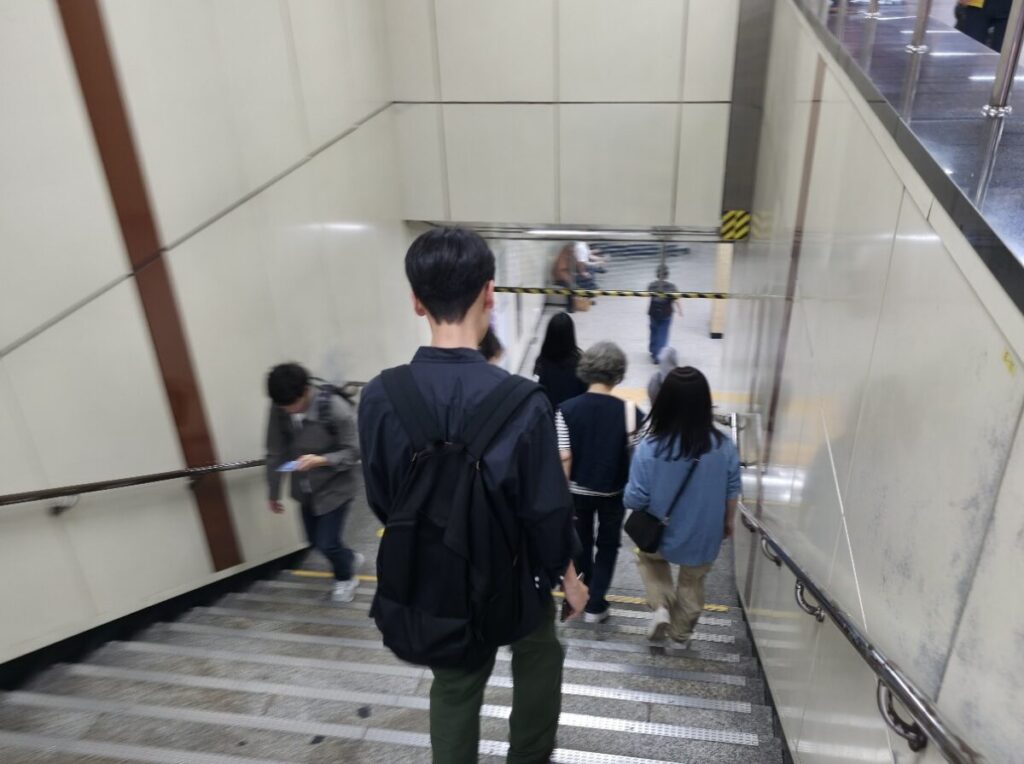
- Choose the Elevator: Almost every Seoul subway station is equipped with elevators for the “mobility impaired.” Look for the elevator icon on station signs rather than struggling with long escalators or stairs.
Walking Strategy: Minimizing the Steps
Seoul is a city of hills and stairs. A “short walk” to a local might include three flights of subway stairs and a steep incline.
- Ditch the Subway for Taxis: While the subway is efficient, the distance between platforms can be brutal for seniors. Use Uber/UT or Kakao T. For a few extra dollars, you get door-to-door service that saves your parents’ energy for the actual sightseeing.
- The “Luxury” Rest Stop: Korea’s cafe culture is your best friend. Plan a “30-minute sit-down” for every hour of walking. Look for cafes with elevators (common in larger buildings) or street-level entries.
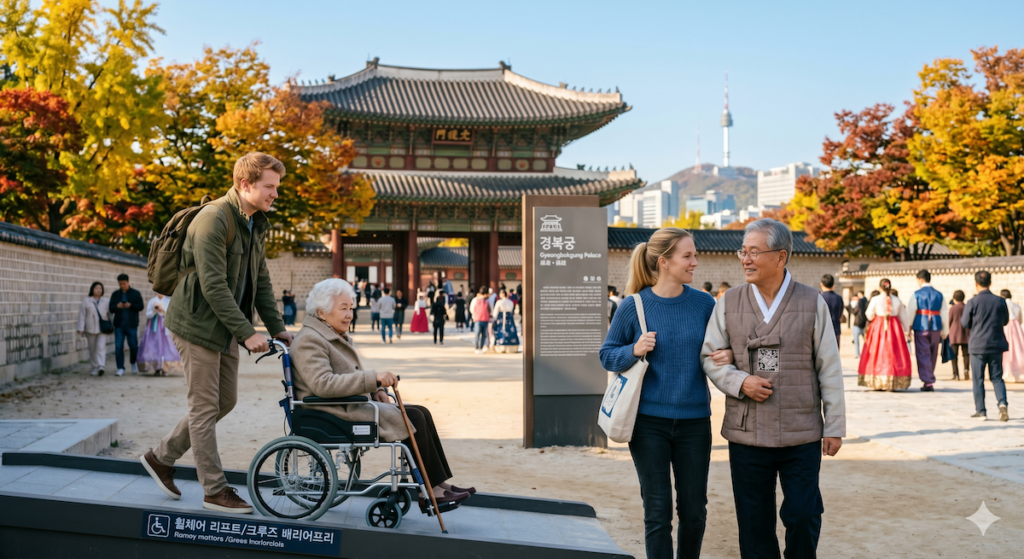
- Accessible Palaces: If you visit Gyeongbokgung or Changdeokgung, stick to the main courtyards. Most palaces offer free wheelchair rentals at the entrance—even if your parents can walk, having the chair as a backup for a 2-hour palace tour is a lifesaver.
Health and Comfort: The 24/7 Safety Net
The fear of getting sick abroad is magnified for seniors.
- The “Emergency” Pharmacy: As mentioned in our family guide, the Yak-guk (Pharmacy) is everywhere. For seniors, always bring a list of their current medications translated into Korean (or just take photos of the boxes).
- The 1339 Service: This 24/7 medical translation service is essential. If your parent feels dizzy or unwell, call 1339 before rushing to an expensive ER. They can tell you if a local clinic is sufficient.
Senior Travel Comparison: Comfort vs. Experience
| Feature | The “Modern” Route (Malls/Hotels) | The “Traditional” Route (Alleys/Markets) |
| Seating | 100% Chairs | Often Floor-based |
| Mobility | Elevators & Escalators | Stairs & Slopes |
| Digital | High (Kiosks) | Low (Cash/Human interaction) |
| Restrooms | Clean & Accessible | Varying quality |
Conclusion: Bridging Two Worlds with Patience and Love
Traveling to Korea with elderly parents is more than just a vacation; it is an act of deep respect and a bridge between generations. As we saw in the simple act of practicing a kiosk order with my mother, the beauty of Korea lies in the balance between its high-tech future and its traditional heart. While the digital barriers and the fast-paced “Pali-pali” culture can feel daunting at first, the infrastructure of Seoul is surprisingly well-equipped to welcome seniors who need a slower pace.
By prioritizing strategic rests in nature, utilizing the respectful “Golden Seats” on public transport, and embracing the healing power of K-Medi and restorative energy soups, you can turn potential travel stress into a journey of recovery and bonding. Korea is a place where a stranger will stand up to offer your father a seat and where a pharmacist will treat your mother’s travel aches like their own family’s.
The secret to a successful senior trip in Korea is simple: Don’t rush the city; let the city embrace you. Slow down, enjoy a bowl of Chueotang, share a chilled Makgeolli at sunset, and remember that every step you take with your parents is a memory that outlasts any souvenir. Seoul is ready to welcome your family with open arms and accessible paths—all you need to do is take the first step together.