Trying to buy or recharge Climate Card with foreign credit card options can turn into an unexpected headache at Seoul subway stations if you do not know the hidden payment quirks. You stand in front of the massive ticket vending machines at Seoul Station or Hongdae University Station, holding your physical Climate Card in one hand and your home country’s travel credit card in the other. The screen promises a seamless experience, but when you insert your card, a loud beep sounds, and a flashing red error message appears.
For many international visitors, this is the first real point of friction in an otherwise hyper-convenient city. Seoul’s public transit network is arguably the best in the world, and the Climate Card—offering unlimited rides on subways and buses—is a fantastic money-saver, but the payment gateway behind the automated ticket machines still lives in a slightly different reality than global banking standards.
When the city of Seoul first rolled out the Climate Card, the biggest complaint from locals and expats alike was that the automated ticketing kiosks only accepted physical cash for recharges. Fortunately, authorities updated the system to accommodate credit card payments. However, this upgrade was primarily built around domestic Korean credit cards, which utilize a highly specific, localized verification network. If you are relying purely on an international Visa, Mastercard, or American Express issued in Europe, North America, or parts of Asia, you are highly likely to encounter a transaction timeout or a vague denial. Understanding why these errors happen and knowing the exact niche workarounds can save you from getting stuck at the turnstiles during the hectic morning rush hour.
Quick Answer: Can You Use an Overseas Credit Card for the Climate Card?
Yes, you can use an overseas credit card to purchase and top up your transit pass, but success depends entirely on where and how you try to complete the transaction. While you can technically recharge Climate Card with foreign credit card choices at updated multi-language ticket vending machines inside Seoul subway stations (Lines 1 through 8), these automated kiosks frequently reject international cards due to missing domestic security protocols. To guarantee your card works without errors, your best alternative is to bypass the subway station machines completely and visit a major convenience store chain like GS25, CU, or 7-Eleven near major tourist hubs, as their retail point-of-sale terminals handle global credit cards far more reliably.
Why International Credit Cards Fail at Subway Kiosks
To understand why your travel card keeps getting spat out by the ticket machine, you have to look at how South Korea’s financial infrastructure processes automated payments. Domestic credit cards in Korea operate on a highly integrated localized Value-Added Network. When a domestic card is inserted into a subway kiosk, it instantly communicates with local security systems that often require specific corporate protocols or two-factor authentication tied directly to Korean mobile service providers.
When you insert an overseas credit card, the machine attempts to process the transaction through an international gateway. Many Western banks utilize a security layer known as 3D Secure or strict two-factor authentication for offline automated terminals that behave like online purchases. Because the subway ticket machine cannot display your bank’s specific secondary verification pop-up or trigger a push notification to your phone’s banking app, the transaction simply times out on the bank’s end. To the subway kiosk, it looks like a dead connection, resulting in a generic payment failure screen.
Furthermore, certain automated transit machines are programmed to only recognize cards with a traditional magnetic stripe or standard EMV chip configurations that strictly match domestic formatting. Prepaid international travel cards, which have become incredibly popular among global backpackers for their low exchange fees, are particularly susceptible to these kiosk rejections because their backend processing routing is categorized as a prepaid digital wallet rather than a standard credit or debit line.
Step-by-Step: How to Recharge Climate Card with Foreign Credit Card Kiosks
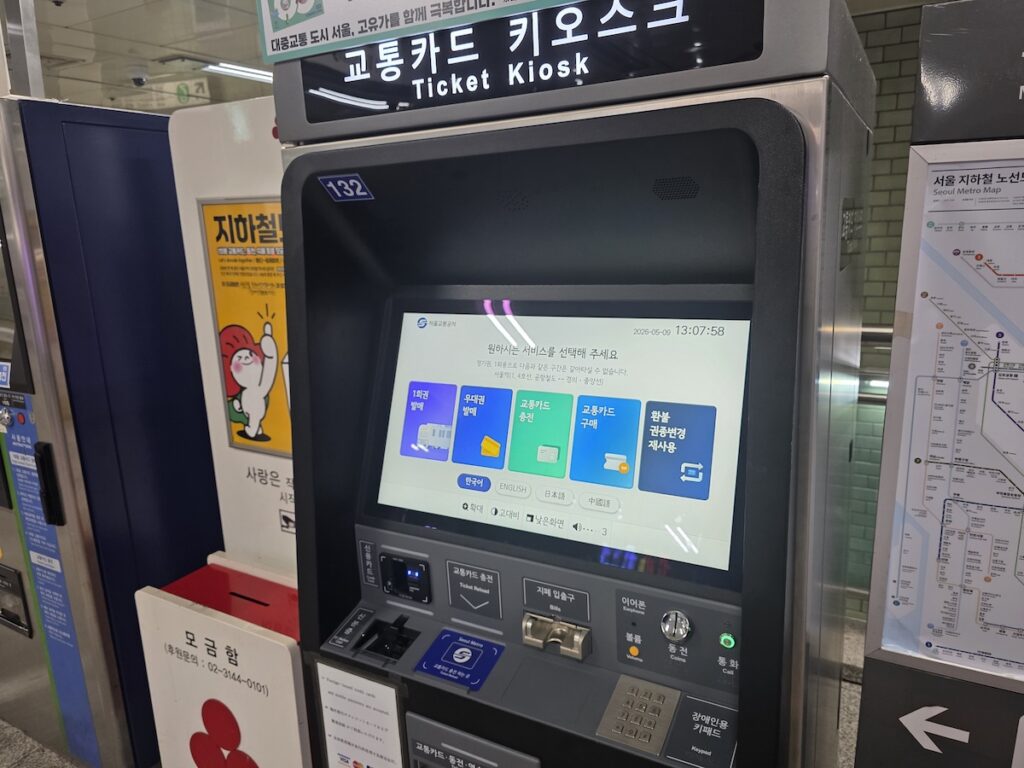
If you want to try your luck at the station kiosk, you need to follow a very specific path to minimize the chances of an automated system crash. The updated credit card-capable machines are usually the larger, modern ticket vending units located right next to the station turnstiles at major stops like Myeongdong, Dongdaemun History and Culture Park, or Anguk Station.
Selecting the Proper Terminal
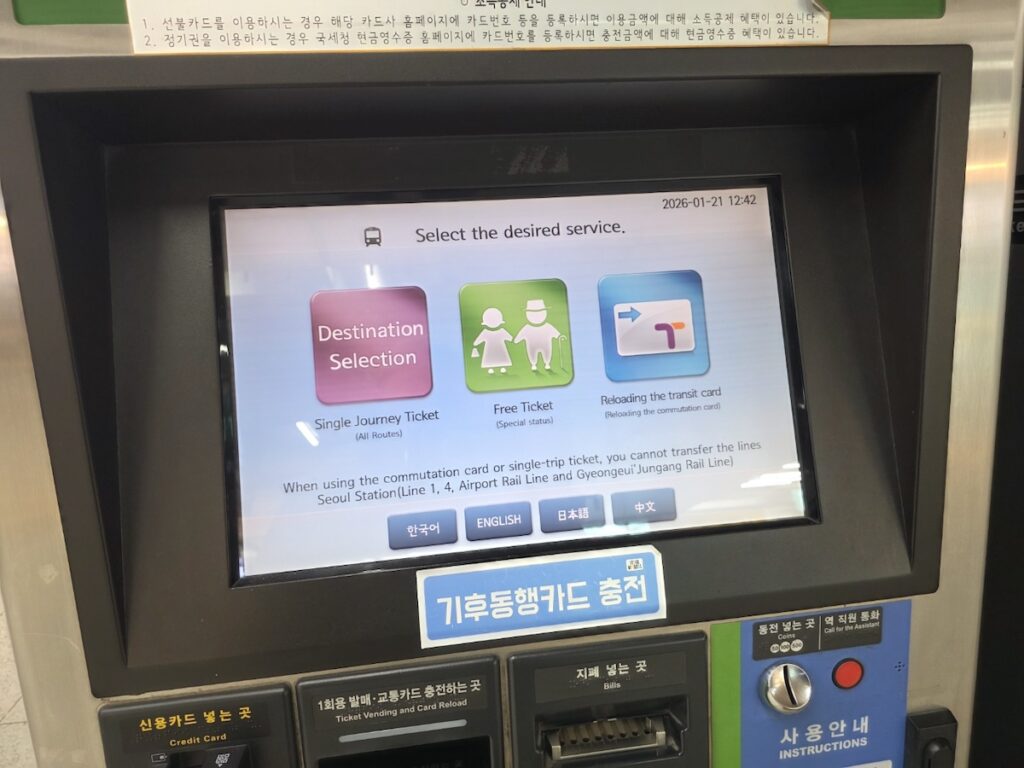
Not every machine inside a station supports credit cards for the unlimited transit pass. Look carefully at the top or sides of the machine for a dedicated credit card slot, which is separate from the traditional cash slot. The older, smaller machines that are strictly used for single-journey tickets or standard T-Money top-ups will not work for this process.
Navigating the Multi-Language Interface
Once you find the correct machine, the very first step is to change the language settings. Tap the English, Japanese, or Chinese button at the bottom of the main touch screen. Do not attempt to navigate the Korean menu even if you think you know the characters, as the international card processing protocols are sometimes tied specifically to the foreign language sub-menus to ensure the machine attempts an overseas network route.
Processing the Top-Up
Place your physical Climate Card onto the designated plastic cradle or sensor pad. The screen will read your card and display its current status, showing whether it is expired or empty. Select the option that reads “Recharge Transit Pass” or “Climate Card.” You will then be prompted to select your desired pass duration, such as the standard 30-day unlimited pass or the shorter tourist variants. When the payment screen appears, select the credit card option, insert your card firmly into the reader, and wait without touching the screen. If the machine successfully establishes a connection with your overseas bank, a receipt will print, and the data will be written to your card.
The Niche Workarounds for International Travelers
When the subway kiosk inevitably gives you an error message, you do not need to panic or go searching for an international ATM to pull out large amounts of paper cash. There are a few highly effective, lesser-known alternative methods to keep your transit pass active using your preferred foreign credit card.
The Convenience Store Backup Strategy
The absolute best workaround for a failed subway kiosk transaction is to walk out of the station exit and find the nearest convenience store. Chains like GS25, CU, 7-Eleven, and Emarket24 are scattered across every single block in Seoul. These commercial retail stores use heavily modernized point-of-sale systems designed to handle global tourist traffic. Their checkout counters easily process international Visa, Mastercard, and American Express cards because they route payments through mainstream commercial acquiring banks rather than specialized municipal transit networks.
Walk up to the counter, show the clerk your physical Climate Card, and say the word “Choong-jeon,” which means recharge, or simply point to the card and hand them your foreign credit card. The clerk will place your transit card on their counter scanner, select the amount on their screen, and swipe or dip your international card through their standard retail terminal. This method has a near-perfect success rate compared to the finicky subway station kiosks.
Utilizing Alternative Card Brands
If you carry multiple cards in your wallet, do not give up after the first failure. In Korea, Visa and Mastercard are processed through entirely different secondary networks at automated terminals. If your primary Visa card fails due to a security timeout, trying a Mastercard or an American Express card can often bypass that specific network block. Many travelers have noted that traditional credit cards issued by major legacy banks have a higher success rate at automated kiosks than newer digital-only fintech cards.
What to Do with Your Pass When Returning Home
A common question that trips up many travelers at the end of their vacation is what to do with their cards when they head to Incheon Airport to fly back home. Because international visitors often do not know when they will return to South Korea, leaving money sitting on a plastic card feels like a waste.
Keeping Your Card for the Next Trip
If you plan to visit Korea again within a few years, the best option for both the Climate Card and a standard T-Money card is simply to keep them in your wallet. The physical cards themselves do not have a rapid expiration date. The chip inside the card will remain perfectly functional for years.
For the Climate Card, the physical card is yours permanently. The unlimited pass feature simply becomes dormant once your pre-paid days (1, 3, 5, or 30 days) run out. When you return to Seoul a year or two later, you do not need to buy a new card; you can simply head straight to a convenience store or a working kiosk and recharge Climate Card with foreign credit card options to activate a fresh tourism pass for your new travel dates.
The Cash-Out and Refund Reality
If you want to clear out your balance before leaving, the rules differ drastically depending on which card you used during your stay.
For a standard T-Money card, cashing out is incredibly simple. If you have remaining cash balance stored on the card, you can walk into any major convenience store at the airport or in the city and request a refund. As long as the balance is under 20,000 KRW, the cashier can hand you the remaining balance in physical cash on the spot, minus a tiny processing fee of 500 KRW. Once cashed out, you can keep the empty card as a souvenir or give it to a friend who is visiting Korea later.
For the Climate Card, the situation is much tougher. Because the Climate Card operates as a time-based unlimited pass rather than a cash wallet, you cannot simply “cash out” a remaining balance at a convenience store counter. If you bought a 30-day pass and decide to leave Korea after 10 days, securing a refund for the remaining 20 days is an incredibly bureaucratic nightmare for short-term tourists. The refund process typically requires logging into a Korean website, inputting a domestic Korean bank account number, and holding a local digital identity verification. Subway station customer service desks generally cannot issue direct credit card reversals to overseas banks. Therefore, the golden rule for the Climate Card is to only load the exact number of days you actually need, as any unused days will simply evaporate once you board your flight home.
Comparing Your Climate Card Recharge Options
To help you plan your transit budget and avoid standing in long lines, it helps to understand how different payment methods perform across Seoul’s transportation ecosystem.
| Payment Location & Method | Success Rate for Foreign Cards | Speed of Transaction | Potential Pitfalls |
| Subway Kiosk via Foreign Credit Card | Moderate to Low | Fast if successful | High chance of timeout, confusing error codes, long lines at tourist hubs |
| Convenience Store via Foreign Credit Card | High | Medium | Must find a store that stocks the card system, potential language barrier with staff |
| Subway Kiosk via Physical Cash | Perfect (100%) | Very Fast | Requires carrying physical Korean Won paper bills, no credit card rewards |
Important Pitfalls and Transit Etiquette to Remember
Navigating Seoul’s transit system requires a blend of technological awareness and cultural etiquette. When you are troubleshooting payment issues, keeping a few local customs in mind will make your journey much smoother.
Avoid Blocking the Commuter Flow
Seoul’s subway stations operate with clockwork efficiency, especially during peak hours between 8:00 AM and 9:00 AM, or 6:00 PM and 7:00 PM around business districts like Yeoksam Station or Gangnam Station. If your foreign credit card fails twice at a kiosk, step away from the machine to diagnose the issue or check your mobile banking app. Standing at the terminal for ten minutes trying five different cards while a massive line forms behind you is considered highly discourteous to local commuters who are trying to catch their trains.
The Refund Dilemma for Overseas Card Users
One of the most critical reasons to be careful when attempting a recharge Climate Card with foreign credit card process is the absolute difficulty of securing a refund if something goes wrong. If you accidentally select the wrong pass date or realize you do not need the unlimited pass anymore, getting those funds reversed back onto an international credit card is an incredibly bureaucratic nightmare.
The customer service centers inside Seoul Metro stations are generally not equipped to issue card reversals to foreign banking entities. Refunds for the Climate Card typically require a physical cash payout at a designated station office, and the system often demands a domestic Korean bank account or charges processing fees that wipe out a significant portion of the remaining balance. Therefore, you should only initiate the recharge sequence when you are absolutely certain of your travel dates and pass selection.
Keeping Cash as a Final Safety Net
Despite the incredible digital advancements in South Korea, physical cash remains the ultimate failsafe for transit infrastructure. If you are traveling far outside the central tourist areas of Jung-gu or Jongno-gu into the quieter residential outer boundaries of the capital, carrying a crisp 50,000 KRW note in your wallet is always a smart decision. If a local convenience store’s card terminal goes down or a specific station machine refuses to communicate with your home country’s banking servers, cash will always ensure you can top up your card and make it back to your hotel without delay.
The Digital Wallet Blind Spot: Physical Cards vs. Mobile Contactless
Many modern travelers coming from hyper-cashless cities rarely carry physical wallets anymore, relying entirely on Apple Pay, Google Pay, or smartwatches for their daily expenses. If you expect to recharge Climate Card with foreign credit card privileges using the digital wallet on your phone, you will hit a hard infrastructure wall in Seoul.
Why Your Phone Won’t Work at the Gate or Kiosk
The automated ticket vending machines inside Seoul subway stations do feature contactless tap pads, but these are wired exclusively for domestic mobile transit networks, local RFID chips, and domestic Samsung Pay protocols. They completely lack the EMV contactless infrastructure required to read an international Apple Pay or Google Pay account. If you hold your iPhone or Apple Watch up to the kiosk scanner, the machine will simply ignore the signal or flash an immediate reading error.
The Convenience Store Policy Split
This digital blind spot extends to convenience stores as well, creating a confusing paradox for first-time visitors. While you can easily tap your foreign Apple Pay account at a GS25 counter to buy snacks, drinks, or cosmetics, the store’s point-of-sale software treats transit pass recharges as a completely separate, highly regulated financial service. The system structurally blocks mobile contactless payments for transit top-ups to prevent international chargeback fraud. To use your foreign card successfully at a convenience store counter, you must present the physical piece of plastic with the embedded EMV chip so the clerk can physically insert or swipe it through their terminal. Leaving your physical cards back in your hotel room under the assumption that your phone can handle everything is a guaranteed way to get stranded at the turnstiles.
Navigating Seoul with Confidence
Mastering the minor quirks of Seoul’s payment systems is a natural part of becoming an independent traveler in South Korea. While the automated subway kiosks can occasionally feel frustrating when they reject a perfectly valid international card, understanding the underlying network differences gives you the upper hand. By shifting your strategy toward neighborhood convenience stores or keeping a small reserve of local currency on hand, you can completely eliminate the stress of transit card errors. Once your card is successfully topped up, the entire capital region opens up to you, allowing you to seamlessly glide from the historic alleys of Insadong to the modern skyscrapers of Gangnam without ever having to worry about purchasing individual tickets again.