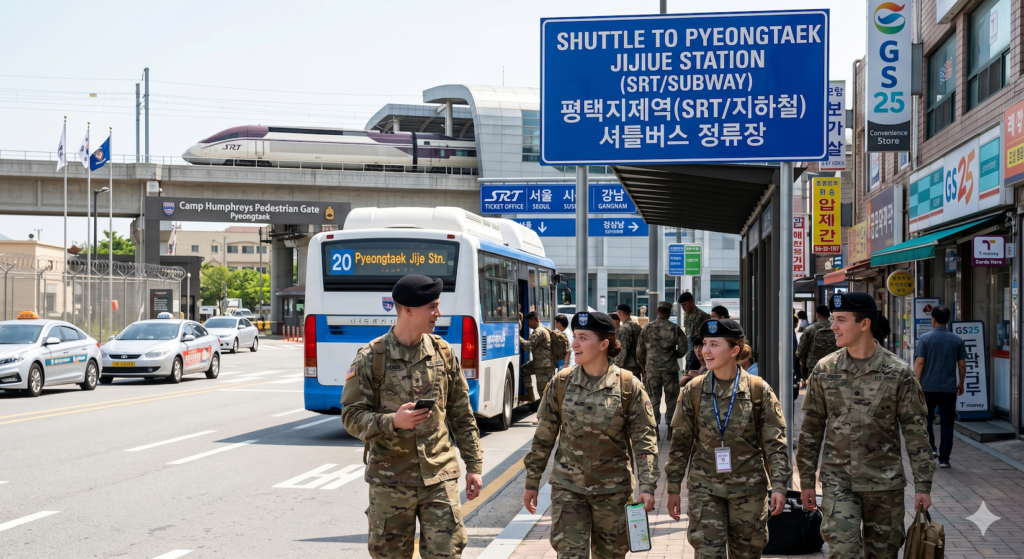
“Navigating the Korea bus fare transfer guide is the first step in mastering the high-velocity logistics of Seoul’s vertical infrastructure.”
In 2026, Seoul’s transit system is not merely a public service but a sophisticated financial ritual designed for maximum efficiency. For the expat executive or the global student, understanding the Korea bus fare transfer guide is essential for seamless mobility between the financial hubs of Yeouido and the educational belts of Songpa. Just as you would strategically manage your [2026 Guide: Private Health Insurance for Foreigners in Korea], optimizing your transit rituals is a key component of a successful life in the Vertical City.
🚏 1. The Financial Ritual of 2026 Transit Fares
Korea uses a distance-based fare system, meaning the farther you travel, the more you pay — but only slightly.
The basic fare in Seoul (as of 2025) is:
| Bus Type | Card Fare | Cash Fare |
|---|---|---|
| Local Green Bus (마을버스) | 1,400 KRW | 1,500 KRW |
| City Blue Bus (간선버스) | 1,500 KRW | 1,600 KRW |
| Express Red Bus (광역버스) | 2,800 KRW | 3,000 KRW |
You’ll save about 100 KRW per ride if you use a T-money card instead of cash.
💡 Tip: Always tap your card when you get on AND off the bus. This ensures your distance and free transfer are calculated correctly.
If you forget to tap out, the system assumes you traveled the longest possible route and may charge extra.
💳 2. T-money vs Climate Card: Which Saves More Money?”
The T-money card is a rechargeable transit card used across Korea — for buses, subways, taxis, and even convenience stores.
You can buy one at Incheon Airport, subway stations, or convenience stores (CU, GS25, 7-Eleven).
To recharge, just use a machine at any station or ask a cashier.
You can also use mobile versions via:
- Samsung Pay (Galaxy phones)
- Apple Pay (in supported areas)
- Google Wallet (coming soon)
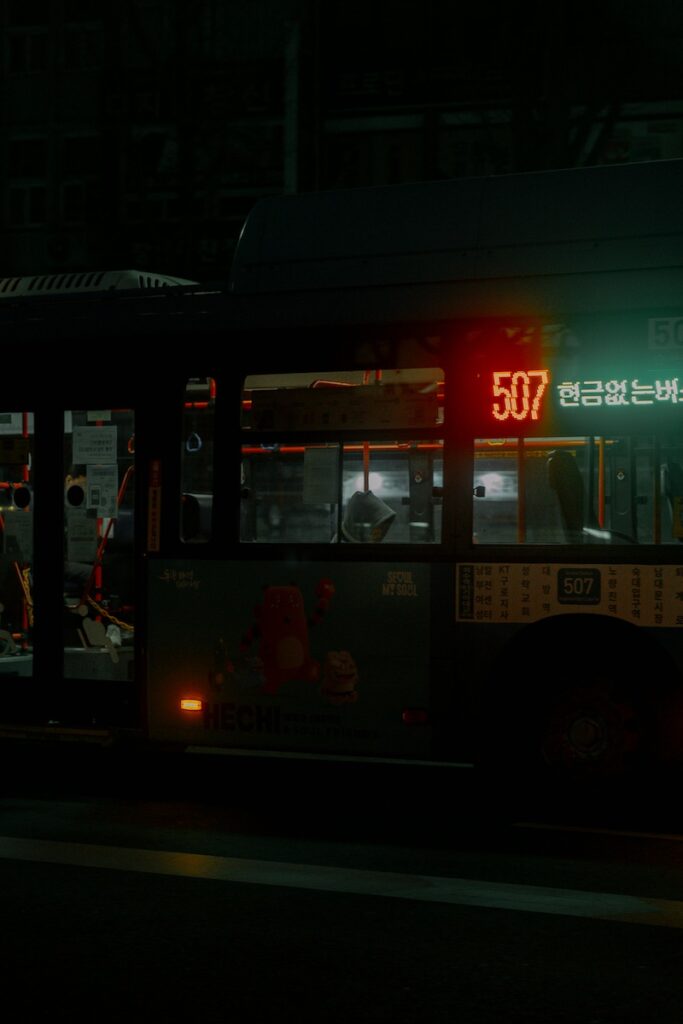
🔄 3. The Free Transfer System Explained
Here’s where Korea’s system truly shines.
You can transfer up to 5 times for free between buses and subways — as long as:
- It’s within 30 minutes (or 1 hour after 9 PM)
- You use the same T-money card
- You’re not taking the same bus line twice in a row
Example:
1️⃣ Take Bus 701 → 2️⃣ Transfer to Subway Line 2 → 3️⃣ Transfer to Green Bus →
💸 You only pay one base fare (1,500 KRW).
It’s a city-wide network designed for efficiency — connecting Seoul, Gyeonggi, and Incheon seamlessly.
“I couldn’t believe transfers were free!”
— Lucas, traveler from Germany
🚇 4. How Transfers Work Between Subway and Bus
Seoul’s subways and buses are fully integrated.
When you exit a subway station and board a bus within 30 minutes, your transfer is automatically recognized.
There’s no need to re-tap or scan anything special — just use the same card.
Common mistake: Many visitors forget to tap off when leaving the bus, causing the system to miss your transfer record.
Result: you get charged twice.
💡 Always look for the card reader at the rear exit of every bus before stepping off.
🧭 5. Real-Life Example Route: From Myeongdong to Hongdae
Let’s see how much you save with the free transfer rule.
Route:
Myeongdong → Subway Line 4 → Seoul Station → Transfer to Line 2 → Hongdae
- Basic Fare: 1,500 KRW
- Total Distance: 12 km
- Number of Transfers: 1
- Total Cost: 1,500 KRW (no extra charge)
If you had taken a taxi, it would cost around 15,000–18,000 KRW for the same trip.
So, yes — public transport isn’t just convenient. It’s also eco-friendly and wallet-friendly.
🧾 6. Short-Term Passes and Tourist Options
If you’re staying for a week or less, consider these:
- Korea Tour Card: Works like T-money, plus discounts at attractions.
- Discover Seoul Pass: Free entry to 70+ landmarks, includes unlimited transit for a set period.
- Seoul City Pass: Great for 1-day sightseeing.
🛑 7. Common Mistakes to Avoid
- ❌ Forgetting to tap off: You’ll lose your transfer discount.
- ❌ Sharing one T-money card: Each rider must use their own.
- ❌ Paying in cash: No free transfer benefit.
- ❌ Using expired cards: Some old cards may not support NFC transfers.
💬 “Once I learned to tap twice, everything made sense!”
— Mai, student from Vietnam
🕐 8. How Long Is the Free Transfer Window?
- Standard hours: 30 minutes after alighting.
- Late night (9 PM – 7 AM): 1 hour.
- Note: Time counts from tap-out to next tap-in.
This system ensures that short-distance transfers (like Seoul Station ↔ City Hall ↔ Myeongdong) remain effectively “one ride.”
🌐 9. Transfers Beyond Seoul — Gyeonggi & Incheon
Good news — the same system applies in neighboring regions.
You can use your T-money card from Incheon Airport all the way to Suwon and still get transfer discounts.
- Gyeonggi buses are marked Red (Express) or Green (Local)
- Incheon buses integrate with Seoul Metro
- Fare differences adjust automatically via distance tracking
💬 10. Voices from the Road — What Foreigners Say
“In my country, you pay every time you transfer. Here, it feels like a smart city.”
— Daniela, traveler from Brazil
“Even when I don’t speak Korean, the system is easy. Everything is color-coded.”
— Kenji, exchange student from Japan
“I never need to think about fares anymore — I just tap and go.”
— Sara, expat in Seoul
🏁 Conclusion: The City That Moves Together
Seoul’s bus and subway network is more than infrastructure — it’s a philosophy of efficiency and care.
The free transfer system reflects how Korea designs convenience into daily life: clear rules, affordable costs, and inclusivity for all.
So next time you board a bus or subway, remember — one tap connects an entire city.
“Seoul moves smart, and you can too.”
Action Plan: Your Transit Strategy
- Download T-Locker: Use this app to find storage for your bags so you can ride the bus hands-free.
- Check Balance with BUKKE: A simple app to scan your T-money card via NFC to ensure you aren’t caught short at the terminal.
- The Double Tap: Always tap your T-money card on the reader when boarding and when exiting to unlock free transfers within 30 minutes.