“Understanding the Korean Exfoliating Mitt, or the famous Italy Towel, is the first step to achieving celebrity-level ‘glass skin’ at home.”
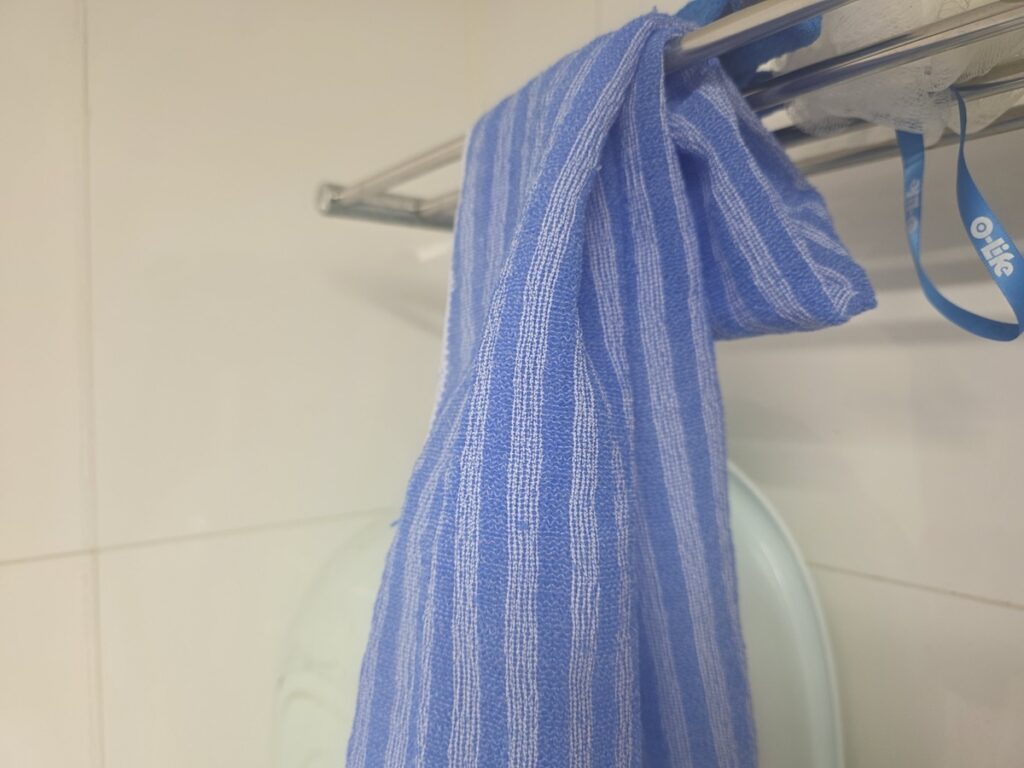
1. Why is it Called “Italy Towel”? (And Where to Buy One)
The first thing you’ll notice is the name. Why does a quintessential Korean beauty tool carry the name of a European country?
- The Origin Story: In the 1960s, a Korean inventor named Kim Pil-gon found a specific type of viscose rayon fabric imported from Italy. This fabric was too rough for clothing but perfect for gripping dead skin cells. Thus, the “Italy Towel” was born in Busan, Korea. It became an instant national sensation and remains a household staple today.
- Where to Buy in Korea:
- Olive Young (올리브영): The best place for tourists. Look for the “Beauty Tools” section. You’ll find modern, high-quality versions from brands like Fillimilli.
- Daiso (다이소): For the most affordable options ($1-$2). They carry various colors and shapes.
- Traditional Markets & Convenience Stores: You can find the classic green version almost anywhere, even at a small GS25 or CU.
- What to Look For: Ask for “I-tae-ri Ta-ol” (이태리 타올) or “Tte-mil-i” (때밀이). If you have sensitive skin, look for “Soft” or “Microfiber” versions.
2. The Celebrity Obsession: From Matt Damon to Conan O’Brien
The world’s fascination with the Korean scrub isn’t just a trend; even Hollywood’s elite have braved the “scrubbing table.”
- Conan O’Brien & Steven Yeun: Their viral visit to a Korean sauna showed the world the “painful pleasure” of the professional scrub. While it started as a comedy, they were genuinely shocked by the “gray noodles” (dead skin) that left their skin glowing.
- A Hidden K-Beauty Secret: Many models and actors traveling to Seoul secretly visit high-end spas to get this full-body exfoliation before major red carpet events.
🏛️ 3. The Science Behind the Korean Exfoliating Mitt Grit Colors
The effectiveness of the Italy Towel is not just a placebo; it is a sophisticated combination of dermatology and physical friction.
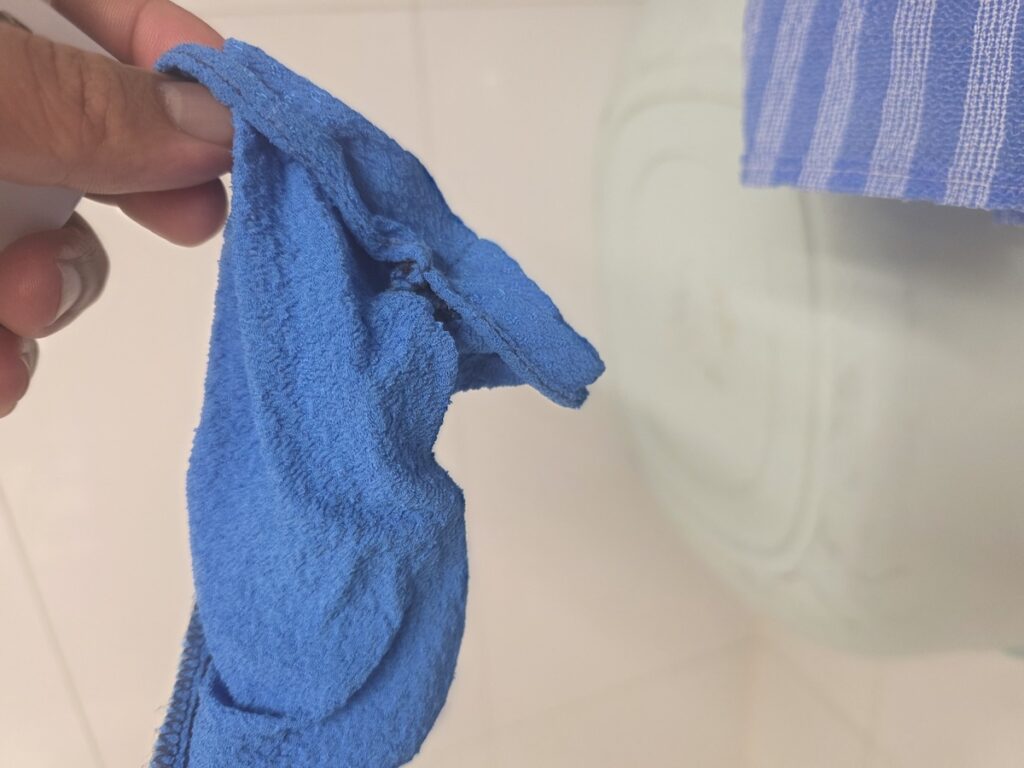
- Mechanical Friction and the Stratum Corneum: The stratum corneum (the outermost layer of the skin) protects us, but accumulated dead cells can lead to dullness and breakouts. The viscose rayon fabric of the Italy Towel shrinks when wet, creating a high-friction surface that physically grips and lifts away these dead cells. Think of it as a professional “mechanical scaling” for your body, more thorough than any chemical peeling.
- The Phenomenon of “Gray Noodles”: What Koreans call “Tte” (dead skin) is a mixture of dead skin cells, sebum, and fine dust particles clumped together by friction. Removing this allows your pores to “breathe,” immediately improving oxygen supply to the skin and resulting in an instant brightening effect.
- The Color-Coded Grit System (Advanced Guide): The colors represent the weaving density and the resulting grit intensity.
- Yellow (Soft – approx. 200 Grit): Designed for children or very thin skin. This is the most recommended starting point for Western users or those with sensitive skin.
- Green (Standard – approx. 150 Grit): The classic “Korean Standard.” It is ideal for areas with medium skin thickness, such as the back, arms, and legs of an average adult.
- Red (Hard – approx. 100 Grit): This is comparable to sandpaper. It is strictly for calloused areas like heels or elbows and should be avoided by beginners to prevent skin abrasions.
- Lymphatic Drainage and Circulation: The vigorous friction stimulates the capillaries beneath the skin, boosting blood circulation. This promotes lymphatic drainage, which helps reduce body swelling and explains that “light, refreshed” feeling you get after a traditional Korean bath.
💡 Hungry after your deep scrub? A professional body scrub can be exhausting! Once you’ve achieved that glowing skin, you’ll need a quick and hearty meal to recharge. Discover how locals handle their busy schedules in our guide: [Pali-Pali Culture: A Guide to the 10-Minute Korean Office Lunch].
🏛️ 4. Professional “Post-Scrub” Care: Locking in the Glow
While your skin feels like a “newborn baby” after scrubbing, it is also in its most vulnerable state as the protective barrier has been temporarily removed. This stage determines whether you get “Glass Skin” or skin irritation.
- Step 1: The “Cica” Emergency Soothing: Immediately after a scrub, your skin may experience micro-inflammation from the friction. Apply a soothing gel containing Centella Asiatica (Cica) or Aloe Vera first. This rapidly lowers the skin temperature and calms the surface.
- Step 2: Rebuilding the Lipid Barrier (Ceramides): Scrubbing causes a spike in Transepidermal Water Loss (TEWL) as moisture evaporates from the newly exposed layers. To counter this, products containing Ceramides—the building blocks of the skin barrier—are mandatory.
- Top Recommendations: Illiyoon Ceramide Ato Lotion or Aestura Atobarrier 365 Cream (both bestsellers at Olive Young) provide powerful barrier recovery without feeling greasy.
- Step 3: The “Glass Skin” Sealing (Oils): Once the lotion is absorbed, apply a thin layer of Body Oil. This acts as a “lid,” sealing the moisture inside. A pro tip is to mix your lotion and oil in a 3:1 ratio for a long-lasting, radiant glow that stays throughout the day.
- Step 4: Sun Protection and Avoidance of Irritants: Since your skin is fresh and thin, it is more sensitive to UV rays; ensure you apply sunscreen to exposed areas. Also, avoid heavy perfumes or alcohol-based body mists for 24 hours, as they may cause a stinging sensation on the newly exfoliated skin.
🔮 Explore more K-Mysticism: Now that you’ve mastered the physical “reset” of an Italy Towel, why not try a spiritual “reset”? Many Koreans visit fortune-tellers to gain clarity for the future. Dive into the world of destiny with: [K-Mysticism 2026: Saju and Tarot in Seoul – A Foreigner’s Guide].