1. The Night I Missed the Last Train at Gangnam Station
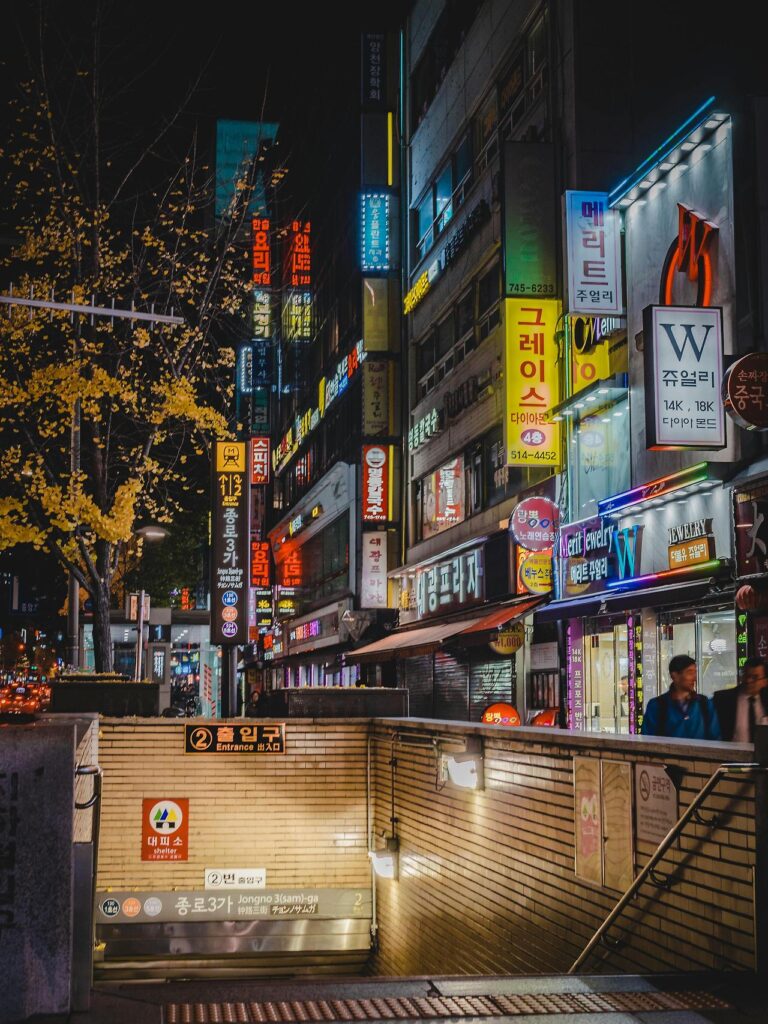
Last week, my friends and I were having the time of our lives at a pub near Gangnam Station. As the energy peaked, we realized it was nearly midnight. Assuming we had plenty of time, we dashed toward the Green Line (Line 2) entrance, laughing and breathing hard. But when we reached the gate, the lights were dimming—the last train had already left.
We made a classic mistake: We forgot that it was a weekend. In Seoul, while the city never sleeps, the subways definitely have a bedtime. My personal “fail” taught me that relying on your gut feeling instead of a schedule in Seoul can lead to a very expensive taxi ride home.
2. The Critical Difference: Weekdays vs. Weekends (Detailed)
The most common trap for travelers is assuming the subway follows a 24/7 schedule like New York or London. In Seoul, the “closing time” is a moving target.
- Weekdays (Mon-Fri): Most major lines (Line 1-9) operate until approximately 1:00 AM the following morning. However, this “1 AM” is the time the train reaches its final destination. If you are at a station in the middle of the line, your last train might pass by at 12:20 AM or 12:40 AM depending on where it’s headed.
- Weekends & Public Holidays: This is where I failed. On Saturdays, Sundays, and national holidays, the subway system closes one hour earlier, typically around midnight (00:00). The logic is to allow for deeper maintenance during the night when the city is slightly less congested.
- The “Destination Trap”: You must look at the digital signs. A train marked for “Seongsu” or “Hongdae” might be the last train, but it won’t take you all the way to “Jamsil” or “Gangnam” if those stations are further down the line. Always verify if the train is a “Full-course” or a “Short-course” train.
3. Exceptions: Lunar New Year, Chuseok, and Special Events
Korea’s two biggest holidays—Seollal (Lunar New Year) and Chuseok (Thanksgiving)—are the only times the city officially “stays up late” for the masses.
- 2 AM Extension: During these peak travel periods, the Seoul Metropolitan Government usually extends both subway and bus operations until 2:00 AM for two consecutive nights. This is to help people returning from their hometowns or visiting relatives late at night.
- New Year’s Eve: On December 31st, for the “Bosingak Bell-Ringing Ceremony” near Jongno, schedules are also extended.
- Warning: Don’t assume this happens for every concert or festival. Even after a massive K-pop concert at KSPO DOME, the subway usually sticks to its regular schedule unless a special announcement is made by the organizers.
4. Buses: Regular, Owl, and the Final Connection
When the subway gate shuts in your face, the bus is your second line of defense, but it requires much more strategy.
- Blue and Green Buses: Most regular buses start their engines at 4:00 AM or 4:30 AM. Their last runs typically end between 11:00 PM and 11:30 PM at their starting points, meaning they pass through central Seoul until about 12:30 AM.
- N-Buses (The Owl Bus): This is the “Late Night Savior.” There are specific routes marked with an “N” (like N13, N61, N26) that run from midnight to 5:00 AM. They connect major hubs like Gangnam, Hongdae, and Dongdaemun.
- The Reality Check: N-Buses have longer intervals (often 30–40 minutes). If you miss one, you might be waiting in the cold for a long time. They are also incredibly crowded with other “midnight runners” like us.
5. Must-Have Apps: The Local’s Secret Weapon
In 2026, nobody in Seoul “guesses” the bus time. We use data.
- Naver Maps: The gold standard. It provides the most accurate “Last Call” information. If you enter your destination after midnight, it will automatically suggest N-Bus routes or tell you if no public transport is available.
- Kakao Subway: My favorite for its simplicity. It has a “Last Train” toggle button. When you click it, it shows you exactly which train you need to catch to make it home, including any transfers.
- Kakao Taxi (Kakao T): If all else fails, this is your emergency button. In Seoul, “hailing” a taxi on the street at 1 AM in Gangnam is nearly impossible. You must use an app to call one, especially on Friday nights when the demand is at its peak.