The Korean countryside near Seoul is closer than most foreign travelers think. One subway line, one transfer, and ninety minutes — that is the whole journey.
I had finished lunch at a small village restaurant. The kind of place with plastic chairs in front, a vending machine on the wall, and a hand-written sign in Korean only. I walked outside, looked at the plastic chair where I planned to sit, and saw white splatter across the seat.
Bird droppings. A lot of them.
My first thought was the one you would expect. Dirty. My second thought, half a second later, was different. I looked up.
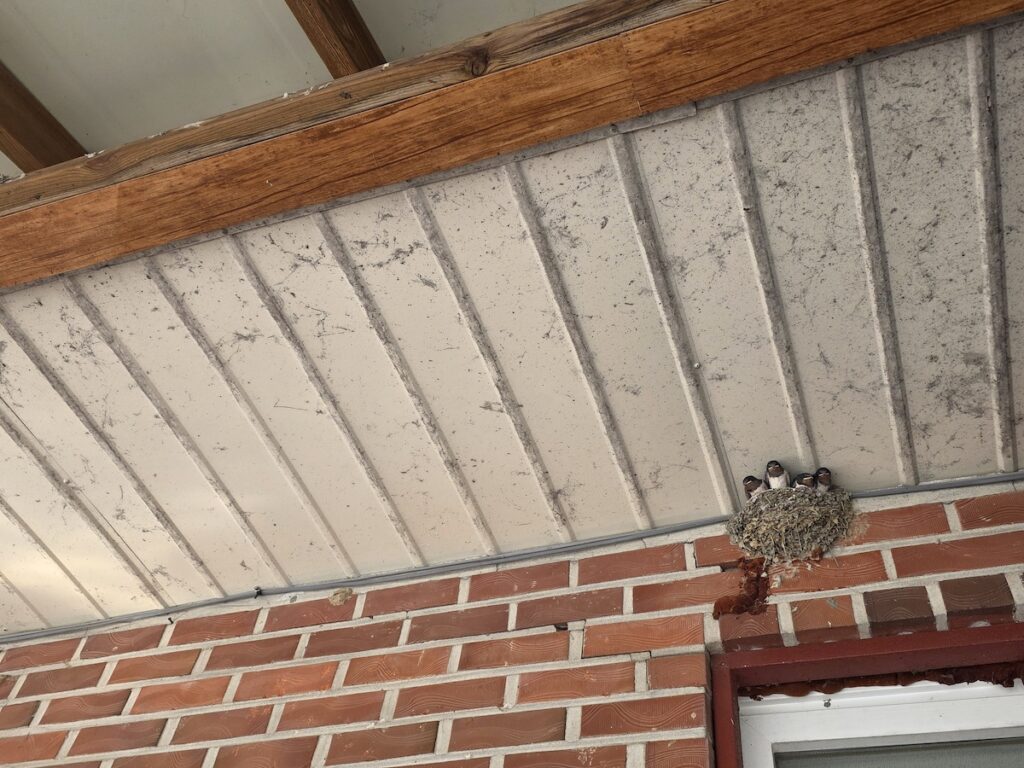
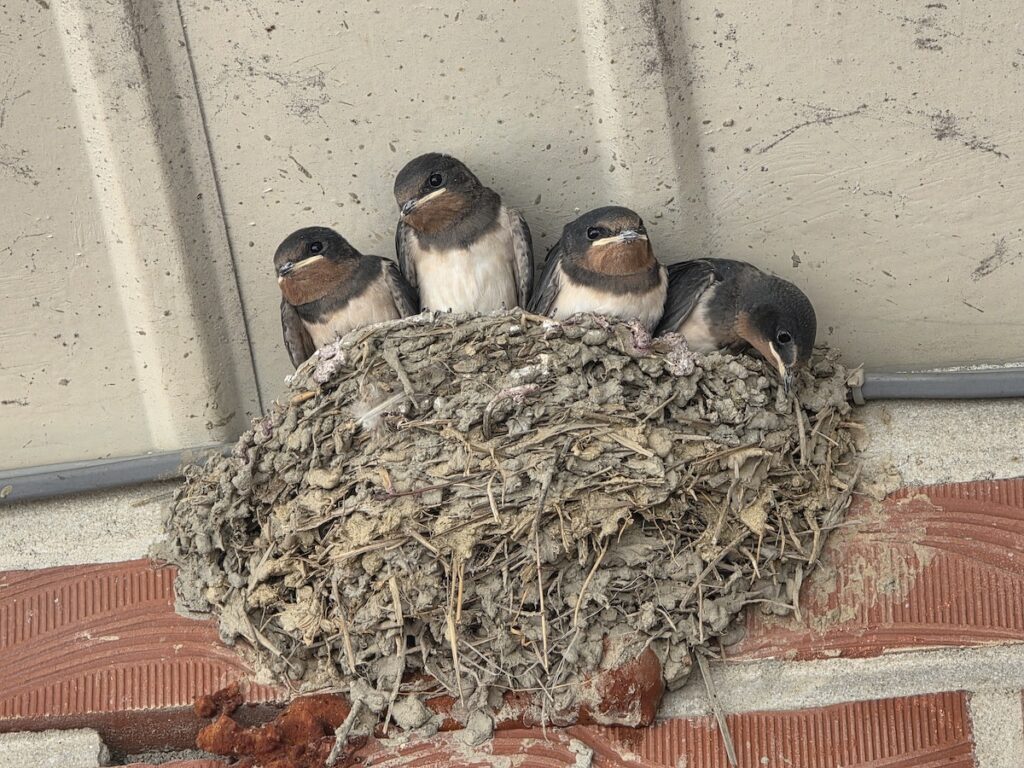
Four baby swallows were staring back at me from a mud nest tucked under the eave.
Quick Answer: Korean countryside near Seoul is reachable in 60 to 120 minutes by subway. The Gyeongui-Jungang Line, Jungang Line, Gyeongchun Line, and Line 1 all extend from central Seoul into rice fields, small villages, and rural restaurants. You only need a T-money card, a phone, and a willingness to step off at a station whose name you do not recognize. Convenience stores work everywhere. Credit cards work everywhere. What you find at the end of the line is not a tourist destination. It is a quieter version of the same country, with details — like a swallow’s nest above your chair — that the city long ago paved over.
The chair, the splatter, the looking up
The droppings were not subtle. Eight or nine white streaks across the blue plastic, dried into the surface. A foreigner walking past that chair would have moved to a different one immediately, and reasonably so.
I almost did the same. Then I looked up.
The nest was about a meter above the chair, wedged into the corner where the eave met the wall. Four chicks sat in a row, all facing forward, their yellow beaks slightly open, watching me with the steady black eyes of birds that had decided I was not a threat.
I stood there for maybe twenty seconds. Then I noticed I was smiling.
That is the moment this article is really about. Not the village. Not the food. Not the train ride. The half-second where my reaction shifted from this is unsanitary to this is good, before I had thought through why. A foreign visitor standing where I was standing would have stayed at unsanitary. Most foreign guidebooks would have either avoided the chair entirely or warned you about the chair. Neither version would have looked up.
The looking up is the whole article. I want to spend a few pages explaining what it sees.
Why a Korean adult sees baby swallows and smiles
There is a story almost every Korean child learns before they are seven. It is called Heungbu and Nolbu, and it has been told in this country for so long that nobody can fix its origin date — it pre-dates modern Korea, was preserved as a pansori song, and is still printed in elementary school readers today.
The plot, very short: two brothers. The older one, Nolbu, is greedy and cruel. The younger one, Heungbu, is poor and kind. Heungbu finds a swallow with a broken leg, mends it, nurses it through the winter. The next spring the swallow returns with a single seed, which grows into an enormous gourd. When Heungbu cuts the gourd open, treasure pours out. The greedy brother, hearing the news, breaks a swallow’s leg on purpose to force the same outcome. His gourd, when cut, releases goblins and disaster.
The lesson, as Korean children learn it, is moral. Kindness rewarded, cruelty punished. But the byproduct of telling this story to every Korean child for centuries is something the moral does not explain. It is this: the image of a swallow, especially a young one, is wired in Korean adults to the concept of incoming good fortune.
That is what I felt under that eave. Not the conscious thought “this is lucky.” Something older and quieter than that — the half-second of recognition that runs before language. I was happy because a Korean adult standing under four baby swallows is, at a level below thinking, standing under the possibility of a gourd full of treasure.
A foreign visitor standing in the same spot has the same eyes, the same nose, the same body. What they do not have is the wiring. That is what makes the moment I am describing untranslatable, except by writing about it carefully.
The swallows still live in our daily designs
Here is the part that surprised me when I first noticed it. The wiring does not stay inside the folktale. It is sitting in plain sight, all over the country, on objects you walk past every day.
Korea Post uses a swallow as its corporate symbol — the small red and blue logo on every mailbox, every postal truck, every post office sign across the country. The reason, according to the Korean government’s own cultural site, is that the swallow is a messenger of good news. The bird that brought Heungbu his gourd is the bird now bringing you your packages.
I had walked past Korea Post signs for thirty years without registering this. It took looking up at the nest to also look at the logo.
The folktale itself has traveled, too. Heungbu and Nolbu appears in American elementary textbooks under titles like Literary Place 2, 3 — a quiet sign that the story is robust enough to survive translation. The reward-and-punishment moral does the heavy lifting in English. The swallow-as-lucky-omen part is harder to ship.
Which is fine. I am not writing this so foreign readers will start feeling Korean things in their bodies. That is not how culture works. I am writing so that the next time you stand in front of a rural plastic chair with white streaks on it, you will at least know there is a reason a Korean person standing next to you might smile before they think.
This is what Korean countryside near Seoul actually means
When most foreign articles use the phrase Korean countryside, they mean Gimje. Or Jeonju. Or somewhere in Jeollabuk-do where you take a KTX for two hours and arrive at rice paddies the size of small countries. Those places are real, they are worth going to, and we have written about the full countryside experience in Gimje for travelers who want the long version.
This article is about something narrower. The countryside that starts when the subway map runs out.
Seoul sprawls. Its metropolitan area covers roughly 12,000 square kilometers and holds about half the country’s population. But the same metro system that gets you from Gangnam to Hongdae also extends in four directions into farmland. The Gyeongui-Jungang Line runs west toward Munsan, threading through fields almost from the moment it leaves the city. The Jungang Line runs east, past Yangpyeong, deep into river valleys. The Gyeongchun Line heads northeast toward Chuncheon. Line 1 runs south past Suwon and keeps going.
You can be in a rice field within an hour. You can be at a station where you are the only person getting off in ninety minutes. The villages near those stations are not curated for visitors. There is no English signage, no folk village staff in costume, no admission gate. The food is whatever the one or two restaurants happen to serve that day. The chairs are plastic, and sometimes the chairs have swallow nests above them.
Foreign travel writing has a particular blindness here. It treats Korean countryside as a destination that requires a major expedition. But for the people who live in this country, the countryside is something you can decide to visit at 9 AM on a Sunday and be home for dinner. That is the version this article is about — accessible, ordinary, and worth the small effort to find.
How to actually get there — without leaving the metro card behind
The good news is that you do not need any special preparation. The same T-money card that pays for your Seoul subway works on every line listed below, and the cost of a one-way trip to the countryside is usually under 3,000 KRW.
Here is the practical map.
| Line | Direction from Seoul | Where countryside starts | Travel time |
|---|---|---|---|
| Gyeongui-Jungang | West, toward Munsan | After Daegok Station | 50–90 min |
| Jungang | East, toward Yongmun | After Paldang Station | 60–90 min |
| Gyeongchun | Northeast, toward Chuncheon | After Maseok Station | 60–100 min |
| Line 1 | South, toward Sinchang | After Osan Station | 70–120 min |
The Gyeongui-Jungang is the most accessible from central Seoul — it passes through Yongsan, Hongdae, and Gajwa before reaching open fields. The Jungang Line, which used to connect at Yongsan and now branches at Cheongnyangni, is the most scenic — once you pass Paldang Station the train runs along the Han River for a long stretch before veering into rice country.
The Gyeongchun Line, if you continue all the way to Chuncheon, can be combined with the Yongmunsa temple day trip at Yongmun Station on the Jungang Line if you want to add a cultural stop to the countryside walk.
The simple version of getting there: pick a line, pick a station whose name you do not recognize, get off. That is the entire method. Korean rural stations are usually walking distance from at least one small village, and the village will have at least one restaurant and at least one convenience store. You will not be stranded.
What to bring: a phone with a Korean map app (Naver Map or KakaoMap, both have English settings now), a T-money card with at least 10,000 KRW loaded, water, sunscreen if it is summer, and a willingness to walk for thirty to ninety minutes without a guided route. That is the whole equipment list.
What changes when you get off the subway
The first thing you notice is the silence. Not absence of sound — there are birds, sometimes a tractor, often the wind through rice. But the absence of city sound. No traffic. No construction. No background hum of ten million people existing nearby. The quiet hits before anything visual does.
The second thing is the crops. If you arrive in late May, the rice has just been transplanted, and the paddies are mirrors — every cloud doubled, every passing crane reflected back. In July and August the same paddies are a flat green that goes on as far as you can see. In October the green has turned to gold and the air smells like dry grain. In December the fields are bare, frozen, and somehow more beautiful than at any other time.
Korean people read seasons through these crops the way some people read seasons through fashion or weather apps. A friend who grew up in Gimje can tell you within a week what time of year it is just by glancing at a paddy. I cannot do it that precisely, but I notice enough to know spring planting from summer growth from autumn harvest. After a few visits you will start noticing too. The crops become a calendar.
The third thing is more practical, and worth saying because foreign visitors often worry about it. Convenience stores work in the countryside. I have never been to a rural village near Seoul that did not have at least a GS25, a CU, or a small family-run shop. They sell water, snacks, kimbap, beer, sunscreen, batteries, and instant noodles. They take credit cards. They have bathrooms.
Credit cards work everywhere. I cannot remember the last time a rural Korean restaurant refused my card. The country runs on plastic and phone payments down to the smallest village shop. If you are coming from a country where rural areas often go cash-only, this is the part you can let go of. Bring a card. It will work.
The fourth thing is the people. Rural Korea is older. Most of the people you will see at the village restaurant are in their sixties, seventies, sometimes eighties — the generation that did not move to the city. They will probably stare at you for a moment. They will almost certainly smile. They may try to talk to you in Korean. None of this is hostile. It is curiosity, in a part of the country where foreign visitors are still uncommon enough to be interesting.
A few real things to know before you go
This is the section I would have wanted to read before my first independent rural day trip, written without sugar.
Trains slow down on weekends. The Gyeongui-Jungang and Jungang Lines, especially, have reduced frequency on weekends. A train that runs every 12 minutes on a Tuesday afternoon might run every 25 minutes on a Sunday. Check the schedule on your map app before you leave a rural station, or you will be standing on a platform for half an hour.
Restaurants close earlier than you expect. Many village restaurants stop serving lunch by 2 PM and dinner by 7 PM. If you plan to eat in the countryside, aim for 11:30 AM to 1 PM, or 5:30 to 6:30 PM. Outside those windows you may need to fall back on a convenience store. Which, as discussed, is fine.
English is sparse. Once you leave the metropolitan border, English signage and English-speaking staff drop quickly. The map app handles most of what you need. For the rest, a translation app on your phone covers the gap. I have rarely seen a rural interaction that could not be solved by holding up a phone with a translated sentence on it.
The wildlife is real. Rural Korea has snakes (mostly harmless, occasionally not), wasps, hornets, and in some areas wild boar. The risk is low if you stay on paths and out of tall brush, but it is not zero. If you see a snake, walk the other way. If you see a wild boar, walk the other way more decisively. None of this is reason to avoid the countryside. It is reason to be slightly more aware than you would be in Hongdae.
And, of course, the swallows. They nest in late spring and early summer, usually under the eaves of rural buildings — restaurants, bus stops, the entrances of small shops. If you see white streaks on the ground, look up before you walk away. There is a reasonable chance you will see a nest. There is a smaller but real chance you will see chicks. And now, because of this article, you know what to feel.
What the swallow taught me about my own country
I had been visiting rural Korea for years before that lunch in that small village. I had walked under hundreds of nests without registering any of them. The reason I noticed this one — the four chicks above the streaked chair — is that I happened to be in a quieter mood that day, and I happened to look up.
What I took home from the trip was not a memory of the village. I cannot fully remember the village’s name now. What I took home was a small embarrassment about my own country. I had been Korean my whole life and I had never once articulated to myself why I felt good looking at a swallow. The feeling had been running in the background, quietly, since I was old enough to listen to a bedtime story.
The Korean countryside near Seoul is full of these moments. It is not a destination. It is not a checklist. It is a thinner version of the country where the wiring of the culture sits closer to the surface, and where a foreigner with the patience to look up can sometimes see things even Koreans have stopped seeing.
You will not get the wiring just by visiting. You will not feel what I felt under that eave. But you will come back with a question or two — about the postal logo, about the chair, about why your Korean friend laughed quietly when you mentioned the trip. The questions are worth more than the answers. The questions are the reason to go.
And the train fare, one way, is under 3,000 won.