Why Koreans don’t split the bill is something many foreigners quietly notice after spending time in Korea.
At first, it can feel confusing.
You finish dinner.
The bill arrives.
And before anyone even reaches for their wallet:
Someone already pays.
Fast.
Almost aggressively.
Sometimes people even argue about it.
Not because they do not want to pay.
But because they do.
For many foreigners, this can feel strangely uncomfortable.
Or unfair.
Why not simply split the bill?
Wouldn’t that be easier?
Fairer?
More logical?
Honestly, I used to think less about this too.
Until I became older.
And strangely:
Until I started earning more money.
One thing I did not expect after becoming a team leader at work?
My salary increased.
But somehow, my spending increased too.
Especially on meals.
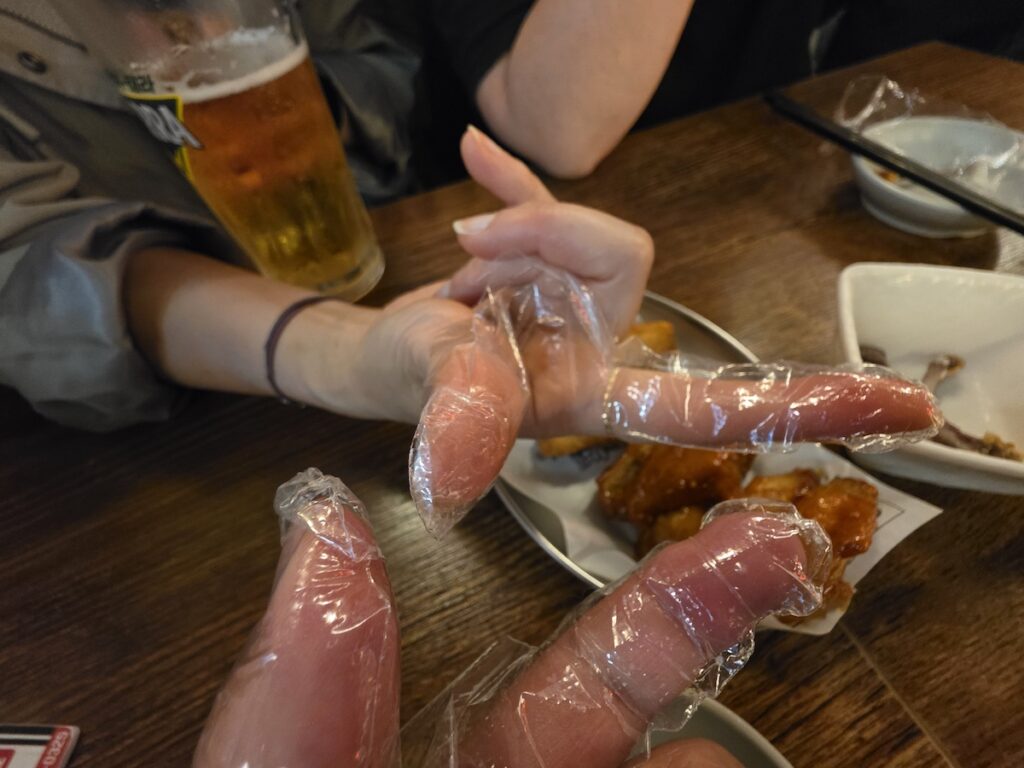
A dinner with junior coworkers.
Chicken and beer after work.
Then later this week:
Dinner with university juniors.
Four people.
Probably samgyeopsal.
Drinks included.
Without even checking prices, I can already roughly guess:
somewhere between 150,000 and 200,000 won.
And before the meal even begins, part of me already expects:
I will probably pay.
Not because anyone directly asked.
Not because someone forced me.
But because in Korea, paying for meals sometimes feels quietly connected to age, responsibility, and relationships.
Why Koreans Don’t Split the Bill in Korea: Quick Answer
Koreans do split the bill sometimes, especially among younger people or casual friend groups. However, in many situations, one person often pays for the entire meal first. This may happen because of age hierarchy, workplace culture, seniority, generosity, or the expectation that someone else will pay next time. In Korea, relationships often matter more than exact mathematical fairness, which can feel confusing to foreigners at first.
Why Koreans Don’t Split the Bill Can Feel Confusing to Foreigners
For many foreigners, splitting the bill feels normal.
Simple.
Everyone pays for what they ordered.
Or the total gets divided equally.
No awkwardness.
No guessing.
No invisible expectations.
But in Korea, dining culture often feels different.
Especially in group settings.
Younger people may quietly expect older people to pay.
Junior coworkers may hesitate to reach for their wallet.
University juniors often wait to see what seniors do first.
And strangely enough:
Nobody always says this out loud.
The expectation simply exists.
Quietly.
In the background.
This is one reason foreigners sometimes feel confused.
Because nobody explains the rules.
You just suddenly notice:
someone always seems to pay.
Why Koreans Don’t Split the Bill: Paying Feels Like Responsibility
In Korea, paying the bill is often not only about money.
It can feel like social responsibility.
Especially as people become older.
Or more financially stable.
Sometimes becoming a senior person means something unexpected:
your meals become more expensive.
Promotion.
Marriage.
Higher salary.
Older age.
All of these things sometimes quietly come with social expectations.
You buy coffee for junior coworkers.
Pay for drinks.
Cover dinner.
Treat younger relatives.
Not perfectly.
Not always.
But often enough to feel normal.
For many Koreans, generosity quietly becomes part of relationships.
Almost like saying:
I’m taking care of this.
Or:
I appreciate our relationship.
To foreigners, this can sometimes look financially irrational.
But emotionally?
The meaning often feels different.
Why Koreans Don’t Split the Bill in Korean Dining Culture
One thing many foreigners misunderstand is this:
Korean dining culture is not always based on exact fairness.
Instead, it often works through reciprocity.
Not:
“You owe exactly 23 dollars.”
But more like:
“I’ll get this one.”
“You get the next one.”
This happens all the time.
Dinner today.
Coffee later.
Drinks next week.
Over time, the balance quietly evens out.
Not mathematically.
Relationally.
And perhaps this is why many Koreans feel surprisingly uncomfortable splitting every single meal exactly.
Sometimes, it can even feel slightly distant.
Or transactional.
Especially among close relationships.
Korea vs Other Countries: Paying for Meals
| What Some Foreigners Expect | What Often Happens in Korea |
|---|---|
| Everyone pays equally | One person often pays first |
| Exact fairness matters | Relationship balance matters |
| Split immediately | “I’ll get next time” culture |
| Paying separately feels normal | Paying can reflect care or seniority |
| Less hierarchy | Age and status sometimes matter |
Neither system is necessarily better.
Just different.
But understanding this difference often makes Korean dining culture feel much less confusing.
Who Pays When Koreans Don’t Split the Bill?
One of the biggest questions foreigners have is:
So… who actually pays?
The honest answer?
It depends.
But there are patterns.
And once you understand them, Korean dining culture starts making much more sense.
Often:
- older people pay for younger people
- seniors pay for juniors
- managers pay for teams
- parents pay for children
- someone invites → someone pays
Of course, this is not a strict law.
Younger Koreans split the bill more often now.
Friend groups frequently use apps to transfer money.
And many people prefer fairness.
Still, hierarchy quietly matters.
Especially in workplace culture.
If a manager invites junior coworkers to dinner, it often feels natural for the manager to pay.
Sometimes even expected.
Not because junior employees are trying to take advantage.
But because paying can quietly symbolize care, leadership, or generosity.
Why Koreans Don’t Split the Bill During Korean Drinking Culture
Things become even more interesting after drinks.
Especially in Korean social gatherings.
A typical night may go like this:
Dinner.
Then drinks.
Then maybe another place.
Someone pays for the meal.
Someone else buys drinks.
Another person covers coffee later.
Instead of splitting every bill exactly, people often take turns.
Over time, things balance out.
At least in theory.
Of course:
Sometimes the senior person ends up paying more.
Much more.
And honestly?
Many Koreans quietly feel this pressure too.
Especially as they get older.
One thing foreigners may not immediately notice is this:
In Korea, generosity can sometimes feel tied to maturity.
Or responsibility.
Sometimes even success.
This is partly why people joke:
Getting promoted means your wallet gets thinner.
Why Younger Koreans Sometimes Split the Bill Instead
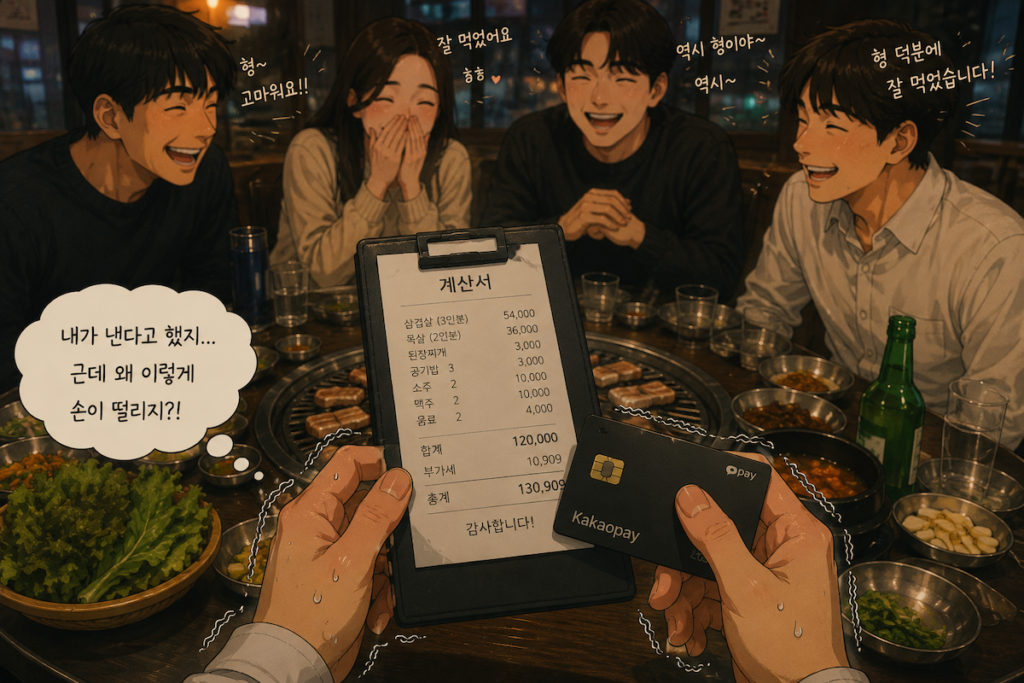
In Korea, group meals can feel warm and stressful at the same time — especially when you already know the bill might be yours
At the same time, Korean culture is changing.
Especially among younger generations.
University students.
Young professionals.
International friend groups.
Today, splitting the bill happens much more often than before.
Sometimes evenly.
Sometimes through apps.
Sometimes by calculating exactly who ordered what.
And yes:
Many Koreans now casually say:
N-bbang (엔빵)
Meaning:
everyone splits the cost equally.
For younger people, this often feels practical.
Less pressure.
Less awkwardness.
More financially realistic.
Still, even younger Koreans sometimes avoid splitting perfectly in close relationships.
Especially if someone invited the group.
Or if age differences exist.
The older pattern has not disappeared.
It simply changed.
How Koreans Split the Bill Later With KakaoPay
One thing that surprises many foreigners?
Nobody necessarily pays immediately.
At least not equally.
Often, one person pays first.
Then later:
A message appears.
Money gets transferred.
Quietly.
Through apps like:
KakaoPay
Toss
Bank transfer
No awkward moment at the restaurant.
No complicated calculations at the table.
This flexibility quietly changed Korean dining culture.
Because now:
Someone can pay first.
And people can settle later.
Which makes group meals feel smoother.
Especially in busy social settings.
Korea vs Other Countries: Splitting the Bill
| What Some Foreigners Expect | What Often Happens in Korea |
|---|---|
| Everyone pays equally | One person often pays first |
| Split immediately | Payment may happen later |
| Exact fairness matters | Relationship balance matters |
| Dining feels individual | Dining feels relational |
| Little hierarchy | Age and status may matter |
Neither system is perfect.
And honestly?
Neither system always feels fair.
Even Koreans sometimes feel pressure around paying.
Especially as they become older.
Or financially stable.
But understanding the emotional logic behind it often makes Korean dining culture feel less confusing.
Practical Advice for Foreigners Dining in Korea
If you are eating with Koreans and feel unsure:
Watch what happens first.
If someone older insists on paying?
Do not aggressively fight them.
But showing appreciation matters.
You can offer sincerely once or twice.
Then perhaps say:
“I’ll get coffee next time.”
Or:
“Next meal is on me.”
That often feels much more natural.
And if everyone suddenly starts transferring money afterward?
Do not panic.
That is normal too.
Sometimes, Korean dining culture feels less about splitting fairly and more about maintaining relationships comfortably.
Final Thoughts
At first, why Koreans don’t split the bill can feel genuinely confusing.
Especially if you come from cultures where fairness means everyone paying equally.
You may wonder:
Why is someone always paying?
Why are people fighting over the check?
Why does money suddenly feel awkward?
But over time, the system starts making more sense.
In Korea, meals are often not only about food.
They are also about relationships.
Care.
Hierarchy.
Responsibility.
And sometimes, strangely enough:
Getting older means quietly learning that promotions may improve your salary —
while making dinner a lot more expensive.