Why Koreans ask your age is one of those questions that quietly confuses almost every foreigner at some point in Korea.
You might be sitting at a dinner table in Seoul, talking casually with someone you met twenty minutes ago, when suddenly the conversation shifts.
Not to hobbies.
Not to work.
Not even to where you’re from.
Instead, someone asks:
“How old are you?”
And somehow, after that single answer, everything changes.
The atmosphere shifts.
The way people speak changes.
Someone suddenly says:
“Call me noona.”
Or:
“I’m your hyung now.”
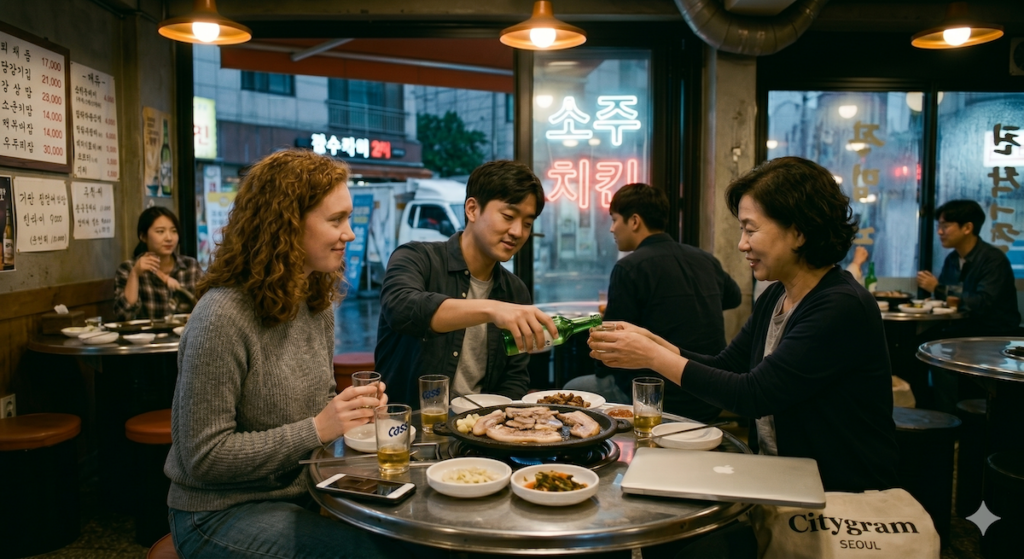
At the dinner table, the younger person pours drinks first. Someone politely uses two hands to receive alcohol. Another person suddenly starts speaking more casually.
If you’re not Korean, the whole thing can feel surprisingly fast.
Maybe even a little uncomfortable.
I remember noticing this pattern while watching TV shows about foreign students living in Korea. People from completely different countries would meet for the first time, sit down for food or drinks, and within minutes, age somehow became one of the most important details in the room.
What felt especially interesting was how quickly relationships changed afterward.
Someone older became hyung.
Someone younger became the person pouring drinks.
And suddenly, there seemed to be invisible social rules everyone somehow understood.
Watching it as an outsider, I found myself wondering:
Why does age matter so much in Korea?
And maybe more importantly:
Do foreigners actually need to follow these rules too?
If you’ve ever felt confused when Koreans ask your age surprisingly early, you’re definitely not alone.
Because in Korea, asking age is usually not about curiosity.
It is often about understanding how to relate to you.
Quick Answer: Why Do Koreans Ask Your Age So Quickly?
In Korea, age helps people quickly understand social relationships, language level, and etiquette. Unlike many Western countries where age feels private, Koreans often ask age early because it affects how people speak, what titles they use (hyung, noona, oppa, unnie), and even drinking or dining etiquette. For foreigners, this can feel surprisingly personal at first, but in Korea, it is often a practical social shortcut rather than an intrusive question.
The First Culture Shock: Why Is Everyone Asking My Age?
For many foreigners, this moment feels oddly personal.
Especially if you come from places where asking age too early feels rude.
In countries like the US, UK, Canada, Australia, or parts of Europe, age is often treated as private information.
People may avoid asking directly.
Or wait until much later.
Sometimes it is even considered impolite.
In Korea, though, the feeling is completely different.
You might hear:
“What year were you born?”
only ten minutes into a conversation.
Not because someone is judging you.
Not because they are obsessed with numbers.
But because your answer helps explain something Koreans care deeply about:
How should we relate to each other?
This is one of the biggest cultural differences foreigners notice after arriving in Korea.
In many Western cultures, relationships often begin as relatively equal.
People simply talk.
In Korea, social comfort sometimes comes from understanding where everyone stands.
Not in a rigid or overly formal way.
But in a practical way.
Age helps people understand:
- Which language style feels appropriate
- Whether honorific speech is needed
- What titles to use
- How formal or casual the interaction should feel
- Social expectations during meals or drinking
To many Koreans, asking age early feels efficient.
To many foreigners, it feels unexpectedly personal.
Neither side is wrong.
They are simply working from different social assumptions.
Why Koreans Ask Your Age Before Building Relationships
This is the part that surprises foreigners the most.
In Korea, answering the age question can quietly change the entire interaction.
Before age is known, conversations often stay neutral.
People may speak politely.
Keep some distance.
Avoid assuming too much.
Then suddenly:
“Oh, you’re older than me.”
Everything shifts.
Someone begins using more respectful language.
Or suddenly becomes more relaxed.
Someone might laugh and say:
“Okay, I’ll call you hyung.”
Or:
“You can speak comfortably.”
At first, this can feel strange.
Especially if you’re not used to relationships changing so quickly.
But in Korea, age often acts like a social shortcut.
Instead of slowly figuring out relationship dynamics over months, Koreans sometimes establish the basic structure quickly.
Here’s a simple comparison:
| Before Age Is Known | After Age Is Revealed |
|---|---|
| Neutral interaction | Defined relationship |
| Formal or careful speech | Speech level may change |
| First names | Hyung, noona, oppa, unnie |
| Social uncertainty | Clear expectations |
This is one reason Korean friendships can feel unexpectedly fast once the age dynamic is understood.
What initially feels formal can suddenly become warm.
Especially when someone says:
“You can speak casually with me.”
That small sentence often signals trust.
How Age Changes Korean Titles Like Hyung and Noona
This is probably one of the biggest moments of confusion for foreigners.
Because suddenly, people stop using names.
Instead:
“Hyung.”
“Noona.”
“Oppa.”
“Unnie.”
At first, many foreigners assume these are only family terms.
Technically, yes — they originally refer to older siblings.
But in Korean social life, they often expand beyond family.
They become relationship words.
A younger male may call an older male:
Hyung
A younger female may call an older female:
Unnie
And depending on gender combinations:
Noona or Oppa
These titles are not always about authority.
Sometimes they simply create closeness.
Warmth.
A sense of social belonging.
In fact, many Koreans feel awkward using first names too quickly.
Especially when the age gap becomes clear.
For foreigners, though, this can feel sudden.
You just met someone.
And now:
“Call me noona.”
It can feel strangely intimate.
Or even confusing.
Especially when Korean dramas sometimes make words like oppa seem overly romantic.
Real life is usually much less dramatic.
Most of the time, these terms simply help organize relationships in a socially comfortable way.
Why Foreigners Sometimes Feel Uncomfortable About It
This discomfort is actually very understandable.
Because from an outside perspective, Korean age culture can sometimes feel overly structured.
Questions foreigners often have include:
Why does my age suddenly matter?
Why do I have to speak differently?
Why does being younger suddenly change expectations?
Why does someone I just met want me to call them hyung?
Sometimes it can even feel unfair.
Or overly hierarchical.
And honestly?
That reaction makes sense.
Especially if you grew up in cultures where equality between adults feels automatic.
But what many foreigners slowly realize after spending time in Korea is this:
The system is not always about power.
Very often, it is about reducing social awkwardness.
Once age is known, people understand:
How formal should I be?
What tone feels respectful?
How can we interact comfortably?
In a strange way, what initially feels restrictive can sometimes make relationships smoother.
At least in Korean social logic.
Still, one big question remains:
Do foreigners actually have to follow these rules too?
And this is where things become especially interesting.
So… Do Foreigners Actually Have to Follow Korean Age Rules?
This is probably the biggest question many foreigners quietly wonder about.
After someone suddenly becomes your hyung, unnie, or noona, and the social atmosphere subtly changes, the next thought is often:
Wait… am I expected to follow all of this too?
Do I need to pour drinks first?
Do I have to speak differently?
Do I need to call someone oppa?
What if I feel awkward?
The short answer?
Not completely. But understanding the effort matters.
This is one of those areas where Korea can feel surprisingly flexible.
Many Koreans understand that foreigners did not grow up inside this system.
Most people are not expecting perfection.
Especially if Korean is not your first language.
But what many Koreans usually appreciate is simple awareness.
Not mastery.
Just effort.
You do not need to suddenly transform into someone perfectly following every social rule.
But understanding why those rules exist often makes interactions smoother.
And honestly, less awkward.
Why Drinking Culture Makes Age Matter Even More
If Korean age culture feels confusing in daily life, it becomes much more obvious during meals and drinking.
Especially university life.
Or company dinners.
This is often where foreigners first notice invisible social rules in action.
Imagine this:
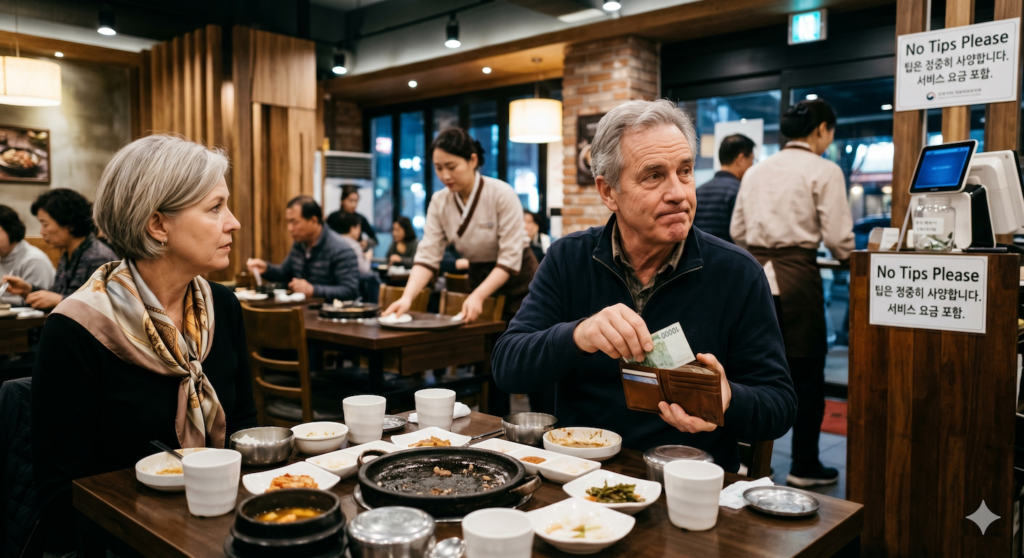
You are sitting at a restaurant near Hongdae after class.
Everyone is laughing.
Someone orders samgyeopsal.
Beer arrives.
Then suddenly, a small social choreography begins.
The younger person pours drinks first.
Someone receives alcohol using two hands.
Another person subtly turns their face away when drinking in front of someone older.
Nobody announces the rules.
Nobody explains them.
People just… know.
For foreigners, this can feel strangely formal.
Or even intimidating.
Especially when nobody tells you what is happening.
Why Younger People Often Pour Drinks First
This surprises many foreigners.
In Korea, age can influence small gestures of politeness.
One common example:
The younger person often pours alcohol for someone older.
This is not necessarily about obedience.
Or superiority.
It is more about showing social respect.
In Korean culture, small gestures often matter.
Respect tends to appear in behavior rather than dramatic words.
But here is something important:
Foreigners are rarely expected to perform this perfectly.
Most Koreans are surprisingly forgiving.
In fact, trying too hard can sometimes feel more awkward than simply being relaxed.
Usually, a small effort goes a long way.
If someone pours your drink?
Pour theirs back later.
If everyone uses two hands?
You can casually do the same.
Nobody expects cultural perfection.
What people usually notice is sincerity.
The Two-Hand Rule (And Why People Care About It)
One detail foreigners notice quickly:
Why is everyone suddenly using two hands?
Receiving a drink.
Passing something.
Pouring alcohol.
At first, it can feel strangely ceremonial.
Historically, using two hands became associated with politeness and respect, especially toward someone older.
Younger people often lightly support one arm while pouring or receiving drinks.
Do you absolutely need to do this?
No.
Will some older Koreans appreciate the gesture?
Probably.
But again, context matters.
Among younger Koreans in Seoul today, things are often much more relaxed than foreigners expect.
Especially in casual settings around areas like Hongdae, Seongsu, or Itaewon.
The version of Korean etiquette you see in dramas is often more formal than reality.
Real life is usually somewhere in the middle.
Do You Have to Call Someone Hyung, Noona, or Oppa?
This one makes many foreigners nervous.
Especially after hearing:
“You can call me hyung.”
Or:
“Just call me noona.”
You may wonder:
Is this mandatory?
Not really.
But there is nuance.
If you become genuinely close with Korean friends, these terms can feel surprisingly natural over time.
Especially in university settings.
Or close social groups.
Sometimes, using hyung or unnie creates warmth.
It signals closeness rather than hierarchy.
But if it feels uncomfortable?
Most Koreans will understand.
Especially if Korean is not your native language.
Many foreigners simply use names.
Or name + ssi (씨).
Some people naturally adopt Korean terms later.
Others never do.
Both are usually fine.
The bigger thing Koreans often notice is your attitude.
Are you trying to understand the culture?
Or dismissing it immediately?
That difference matters much more.
→ This article is part of our complete guide: [Korean Social Culture for Foreigners]
What Foreigners Often Misunderstand About Korean Hierarchy
Here is something interesting many foreigners realize after spending more time in Korea:
Age culture is not always as rigid as it first appears.
Yes, hierarchy exists.
But relationships are often warmer than outsiders initially assume.
Older friends often pay for meals.
Offer help.
Take responsibility.
Give advice.
Sometimes, age hierarchy in Korea works less like strict authority and more like social responsibility.
Of course, not every experience is positive.
Some people dislike it.
Even some Koreans find age culture frustrating.
Especially younger generations.
But understanding the system makes daily life easier.
Because once you understand the social logic, interactions stop feeling random.
Suddenly, things make sense.
Why someone asked your age.
Why speech changed afterward.
Why the group dynamic shifted.
What once felt awkward becomes easier to read.
What Koreans Actually Want From Foreigners
This may be the most reassuring thing to hear.
Most Koreans are not expecting foreigners to become culturally perfect.
Nobody expects you to magically understand every social cue.
Especially when you are new.
What many people appreciate instead is curiosity.
Effort.
Respect.
Even something simple like saying:
“I’m still learning Korean culture.”
often changes the entire atmosphere.
People usually become more understanding immediately.
Sometimes even excited to explain things.
And surprisingly often, Koreans themselves may tell you:
“Don’t worry too much.”
Because modern Korean society is changing too.
Younger Koreans are often more flexible than stereotypes suggest.
Many people adapt depending on the person, age, workplace, or international environment.
Korea is not one fixed social rulebook.
It is much more layered than that.
Final Thoughts
At first, why Koreans ask your age can feel strange.
Even intrusive.
Especially if you come from a culture where age feels personal or irrelevant.
But in Korea, age is often less about numbers and more about relationships.
People are usually not trying to judge you.
They are trying to understand how to comfortably connect with you.
Should they speak formally?
Can they joke casually?
Would hyung, noona, or unnie feel appropriate?
Should they pour your drink first?
Once you understand that, the question:
“How old are you?”
starts feeling much less uncomfortable.
And strangely enough, after spending enough time in Korea, you may even find yourself asking it too.
Not to judge someone.
But simply to understand the relationship a little better.
Because in Korea, age often becomes the shortcut to social comfort.