Why Koreans ask personal questions is one of the fastest ways foreigners experience culture shock in Korea.
You meet someone.
Maybe five minutes pass.
Then suddenly:
“How old are you?”
“Are you married?”
“Where do you live?”
“What do your parents do?”
“What do you do for work?”
If you come from places where privacy matters deeply, this can feel surprisingly personal.
Sometimes even rude.
I remember thinking about this difference after living overseas and noticing how differently casual conversations work depending on the country.
In Australia, for example, I often walked down the street and casually heard:
“How’s it going?”
People smiled.
Made eye contact.
Sometimes chatted briefly.
But strangely enough, the conversation rarely went deeper.
The friendliness felt warm.
But also light.
The question itself often felt more like social rhythm than real curiosity.
In Korea, the experience feels almost reversed.
People may not greet strangers casually on the street.
But once conversation begins?
Things can become surprisingly personal — surprisingly fast.
Age.
Family.
Jobs.
Relationships.
Sometimes even salary.
At first, it can feel intrusive.
But after spending enough time in Korea, I slowly started wondering if these questions meant something different here.
Maybe Koreans are not trying to cross boundaries.
Maybe they are trying to remove them.
→ This article is part of our complete guide:
[Korean Social Culture for Foreigners]
Quick Answer: Why Do Koreans Ask Personal Questions So Early?
Koreans often ask personal questions early because relationships tend to develop through understanding personal context quickly. Questions about age, family, work, or relationships are often used to understand how to speak, relate, or connect comfortably. While foreigners may experience these questions as invasive, many Koreans see them as normal ways to reduce distance and build familiarity. In many cases, people asking personal questions are also willing to share similar information about themselves.
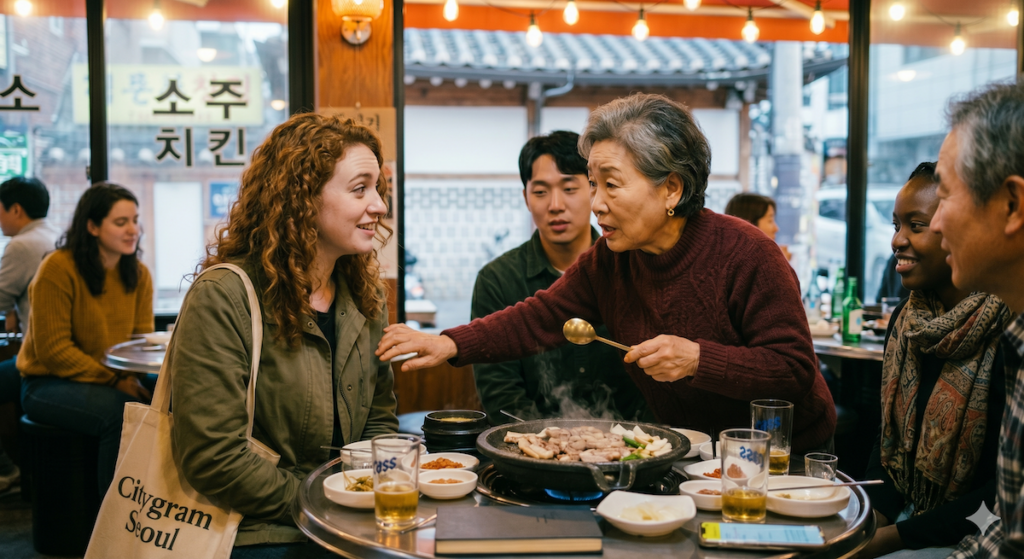
Why Koreans Ask Personal Questions So Early in Conversation
For many foreigners, the speed feels surprising.
You barely know someone.
And suddenly, the questions begin.
Not only:
“What do you do?”
But:
“How old are you?”
“Do you have a boyfriend?”
“Where do your parents live?”
“What area do you live in?”
Sometimes, foreigners quietly think:
Why are they asking this?
In Korea, however, these questions are often less random than they seem.
Very often, they help answer a bigger social question:
How should we relate to each other?
This connects closely to many things foreigners notice in Korea:
- why age matters
- why speech changes
- why social dynamics feel structured
- why relationships sometimes move carefully
Personal information often helps people understand social comfort.
Not necessarily personal judgment.
For example:
Age helps determine language.
Occupation creates context.
Relationship status can shape conversation topics.
Hometown sometimes creates instant connection.
Instead of:
“Tell me about yourself if you want.”
Korean conversations sometimes feel more like:
“Let me understand where you are in life.”
That difference matters.
Why Koreans Ask Personal Questions But Also Share Their Own
This is something foreigners sometimes miss.
Because from the outside, the questions can feel one-sided.
Almost like an interview.
But often, Korean conversations work differently.
Many Koreans asking personal questions are also willing to share their own answers.
You reveal your age.
They reveal theirs.
You mention work.
They explain theirs too.
You talk about family.
They often do the same.
In many situations, the conversation feels less like:
information gathering
and more like:
exchanging context.
This difference is important.
Because in some cultures, asking personal questions without invitation feels inappropriate.
In Korea, the same questions often signal:
interest.
friendliness.
willingness to connect.
The goal is not always:
respecting privacy first.
Sometimes the goal is:
reducing awkwardness.
Creating comfort.
Finding common ground.
Why Korean Conversations Can Feel More Direct Than Western Small Talk
This was one of the strangest cultural differences I noticed.
In some countries, friendliness feels immediate.
People smile.
Make casual jokes.
Exchange greetings.
But the conversation stays light.
Surface level.
You may know nothing personal about someone after months.
Korea sometimes feels strangely opposite.
People may appear more reserved at first.
Less outwardly expressive.
Less casually open with strangers.
But once conversation begins?
It often moves toward personal context surprisingly quickly.
This can feel confusing to foreigners.
Especially if the emotional warmth feels lower than expected.
You may think:
Why are they asking something so personal when we barely know each other?
But Korean social logic often works differently.
Sometimes, understanding context creates comfort.
Not discomfort.
Korea vs Western Small Talk
| What Many Foreigners Expect | What Often Happens in Korea |
|---|---|
| Friendly greetings first | Personal context first |
| Light conversation | Direct questions |
| Privacy respected early | Familiarity built quickly |
| Emotional openness first | Social context first |
| “How are you?” | “How old are you?” |
Neither approach is necessarily better.
Just different.
But understanding the difference often makes Korean conversations feel much less shocking.
Why Koreans Often Notice Their Surroundings and Social Comfort
This idea connects to something else I have noticed in Korea.
People often seem very aware of those around them.
Walking through crowded streets.
Watching who is nearby.
Adjusting behavior.
Avoiding inconvenience for others.
Sometimes, Korea can feel surprisingly socially aware.
Almost like people are quietly managing invisible rules together.
And maybe personal questions connect to that too.
If social comfort matters, then understanding someone quickly matters too.
Age.
Background.
Situation.
Conversation becomes easier once context feels clear.
At least, that is how it sometimes feels in Korea.
And once you start seeing it that way, those surprisingly personal questions start feeling a little less random.
Why Koreans Ask About Marriage, Salary, and Family So Quickly
For many foreigners, this is the moment things start feeling uncomfortable.
Age questions may already feel personal.
But then suddenly:
“Are you married?”
“Why not?”
“Do you have kids?”
Or sometimes:
“What do your parents do?”
“How much rent do you pay?”
“How much do people make in your country?”
At first, these questions can feel shockingly direct.
Sometimes even inappropriate.
Especially if you come from places where topics like money, age, relationships, or family feel deeply private.
You may quietly think:
We just met.
Why are we talking about this?
But in Korea, these questions often come from a different social instinct.
Not always curiosity for gossip.
And usually not judgment.
More often:
context.
Koreans sometimes ask personal questions because they help understand where someone is in life.
Marriage status.
Work.
Family.
Living situation.
These things often shape social expectations in Korean culture.
Not necessarily because people are trying to categorize you unfairly.
But because context often helps conversation feel easier.
More natural.
Of course, this does not mean every question feels comfortable.
Even many Koreans dislike overly personal questions.
Especially younger generations.
But understanding the intention behind the question can make the moment feel less surprising.
Why Salary Questions Feel Less Taboo in Korea
This one surprises foreigners a lot.
Especially people from countries where money feels almost forbidden to discuss.
In Korea, salary questions sometimes appear much earlier than expected.
Not always directly.
Sometimes indirectly.
Questions like:
“Do companies pay well there?”
“Is rent expensive where you live?”
“How much is your apartment?”
can quietly lead toward financial topics.
For many foreigners, this feels too personal.
But Korean conversations sometimes treat practical life information differently.
Housing.
Jobs.
Money.
Education.
These topics can feel less emotionally protected than in some Western cultures.
Sometimes the question simply means:
I’m trying to understand your situation.
Not:
I’m comparing myself to you.
Though, honestly?
Social comparison does exist too.
Like everywhere else.
Korea is not magically free from that.
But many conversations are less emotionally loaded than foreigners initially assume.
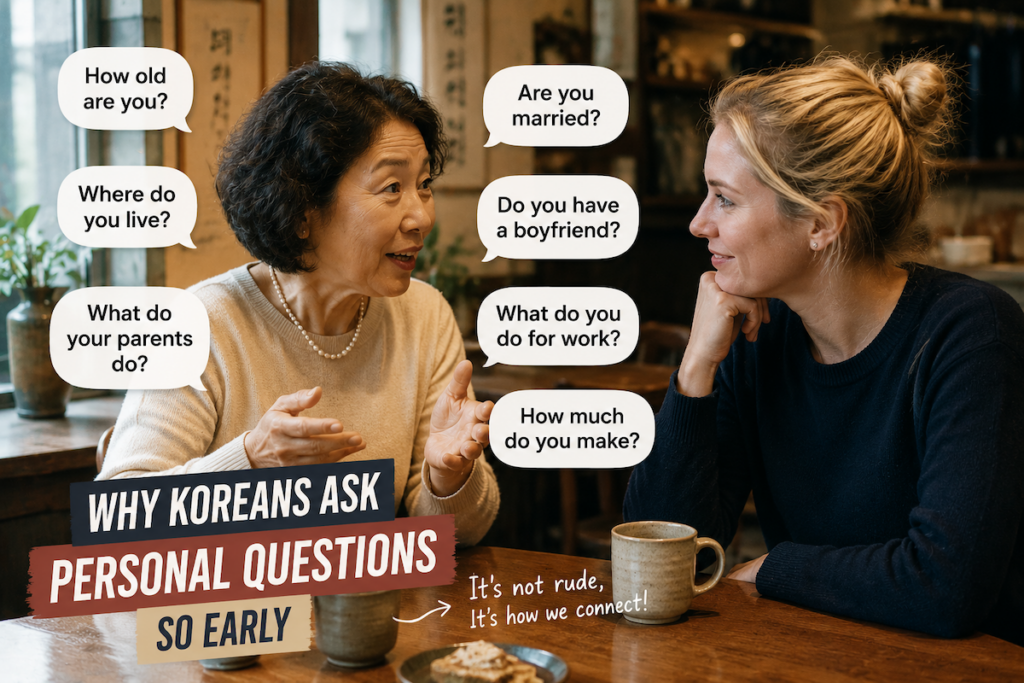
Why Koreans Sometimes Ask Questions That Feel Surprisingly Direct
One thing I slowly realized in Korea is this:
People often ask questions they are also willing to answer themselves.
This matters.
Because the conversation dynamic feels different.
In some cultures, asking something personal can feel like crossing a boundary.
In Korea, the exchange sometimes feels more mutual.
You answer.
They answer too.
The goal is often:
reducing distance.
Not protecting it.
This connects to something many foreigners eventually notice:
Korean relationships often move toward familiarity through information.
The more context people understand, the easier conversation becomes.
Less guessing.
Less awkwardness.
More social comfort.
At least, that is often the intention.
Why Foreigners Sometimes Misread Korean Curiosity as Rudeness
This misunderstanding happens all the time.
Especially early in Korea.
Foreigners think:
That was rude.
Meanwhile, Koreans think:
We are becoming friendlier.
Neither side necessarily means harm.
They are simply following different social expectations.
In many Western countries:
Respect = protecting privacy.
In Korea, respect can sometimes feel more like:
showing personal interest.
This difference creates confusion.
Especially when emotional tone feels neutral.
Because Koreans may ask surprisingly personal things very casually.
Without realizing how shocking it sounds.
And foreigners may quietly feel uncomfortable without saying anything.
The result?
Everyone feels slightly confused.
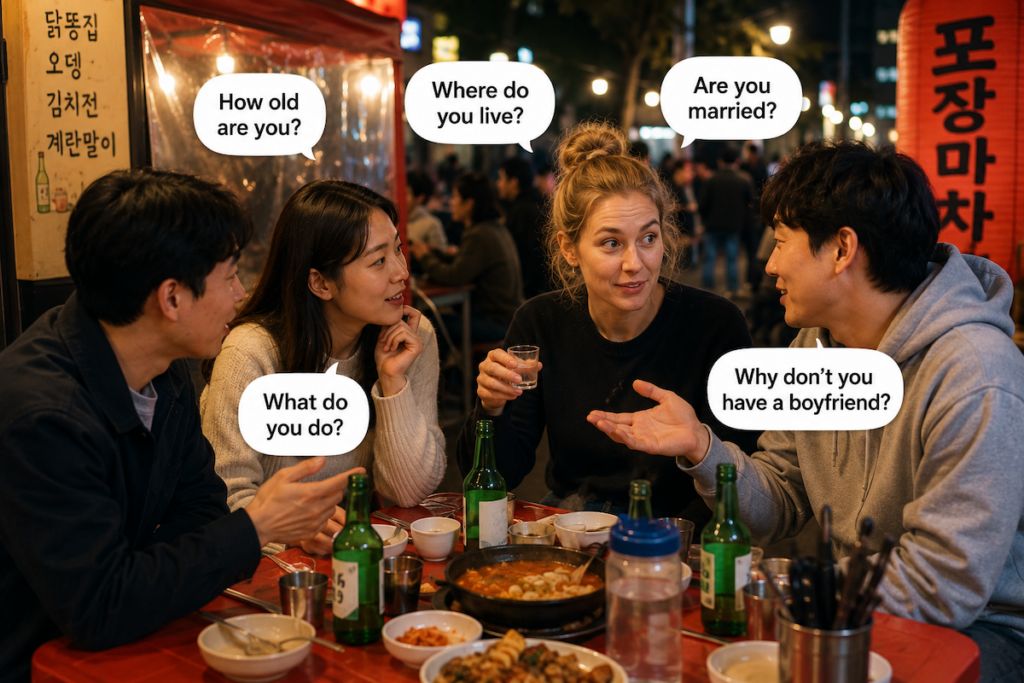
Korean Curiosity vs What Many Foreigners Expect
| What Many Foreigners Expect | What Often Happens in Korea |
|---|---|
| Privacy first | Personal context first |
| Small talk stays light | Questions become practical |
| Personal topics later | Personal topics early |
| Emotional boundaries | Familiarity through context |
| “Too personal” | “Just conversation” |
Understanding this difference alone can make daily conversations in Korea feel much easier.
Because suddenly, what felt invasive starts feeling more understandable.
Even if it still feels unfamiliar.
How to Respond When Questions Feel Too Personal
This is probably the practical question many foreigners actually care about.
What if something feels uncomfortable?
The good news:
You do not need to answer everything.
Koreans are usually not expecting perfect honesty from strangers.
And polite boundaries are completely okay.
For example:
Instead of:
“I don’t want to answer that.”
You can gently say:
“That’s a bit personal in my country.”
Or:
“It’s a long story.”
Or even laugh and change the topic.
Usually, people understand.
Especially if they know cultural differences exist.
And honestly?
Many Koreans themselves sometimes avoid answering uncomfortable questions too.
The difference is simply that the social line often sits in a different place.
What Koreans Are Often Really Trying to Say
This may be the most important thing to understand.
Very often, the question underneath the question is not:
Give me private information.
Instead, it is:
Help me understand who you are.
Sometimes awkwardly.
Sometimes too quickly.
But often sincerely.
Because in Korea, personal questions can feel less like crossing boundaries and more like building a map for the relationship.
And once you understand that, conversations in Korea start feeling much less shocking.
Why Korean Grandparents Often Ask Even More Personal Questions
If you think personal questions feel direct in everyday Korean life, things sometimes become even more intense with older generations.
Especially grandparents.
Or older neighbors.
Many foreigners living in Korea eventually experience some version of this:
You meet an older Korean person.
Maybe at a restaurant.
In an elevator.
At your partner’s family gathering.
Within minutes:
“How old are you?”
“Are you married?”
“Why not?”
“Do you eat properly?”
“You look thin.”
At first, this can feel overwhelming.
Sometimes even intrusive.
But in many cases, the emotional meaning feels different from what foreigners expect.
Older Koreans often grew up in a culture where showing concern meant asking practical questions.
Marriage.
Health.
Family.
Eating habits.
Work.
These topics can sometimes feel less like privacy violations and more like expressions of care.
Not always subtle.
But often sincere.
Of course, this does not mean foreigners suddenly have to feel comfortable with every question.
But understanding the generational difference can make these moments feel much easier to interpret.
Final Thoughts
At first, why Koreans ask personal questions can feel confusing.
Sometimes uncomfortable.
Sometimes surprisingly direct.
Especially if privacy works differently in your culture.
But in many situations, the intention is not rudeness.
It is familiarity.
Koreans often ask questions to understand:
Who you are.
How to relate to you.
What your life looks like.
And perhaps most importantly:
How to make the interaction feel more comfortable.
Of course, you never have to share more than you want.
Boundaries are still okay.
But understanding the social meaning behind the questions often makes daily life in Korea feel much easier.
And strangely enough, after enough time in Korea, you may even notice yourself asking questions you once thought felt far too personal.