Why Koreans are so quiet in public is one of the first things many foreigners quietly notice after spending time in Korea.
At first, it is hard to explain.
Nobody tells you directly.
There are no written rules.
But somehow, you start noticing patterns.
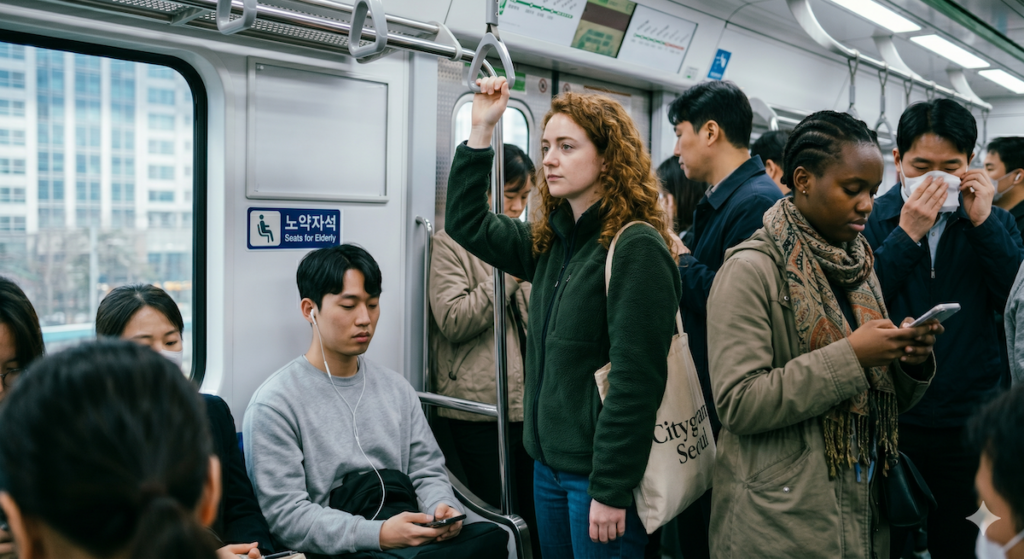
People lower their voices on the subway.
Someone carefully steps aside in crowded spaces.
People avoid talking loudly on the phone.
Someone quickly apologizes for even small inconveniences.
In busy places like Seoul, it can sometimes feel like everyone is quietly paying attention to everyone else.
Almost like invisible social rules exist.
I found myself thinking more seriously about this after hearing someone talk about how differently people walk depending on the country.
According to them, in Paris, many people often walk looking downward.
Focused on their own direction.
Meanwhile, in Korea, people seemed constantly aware of what was happening around them.
Watching nearby movement.
Avoiding collisions.
Quietly adjusting.
At first, it felt strangely intense.
Why is everyone so aware?
But over time, I started wondering if something deeper was happening.
Maybe Koreans are not simply cautious.
Maybe people are constantly trying not to inconvenience others.
→ This article is part of our complete guide: [Korean Social Culture for Foreigners]
Quick Answer: Why Do Koreans Care So Much About Not Bothering Others?
Korean society often places strong value on social harmony and awareness of others. In crowded cities like Seoul, many people try to avoid inconveniencing strangers through quiet behavior, awareness of shared space, and subtle social etiquette. This can show up in small everyday habits such as lowering voices, avoiding loud phone calls in public, paying attention to lines, or moving carefully through crowded areas. While foreigners may sometimes experience this as social pressure or over-awareness, many Koreans see it as basic consideration.
Why Koreans Often Seem So Aware of Their Surroundings
One thing many foreigners notice quickly in Korea is this:
People rarely seem unaware of what is happening around them.
Even in crowded places.
Especially in crowded places.
You see it everywhere.
On escalators.
At subway stations.
In cafés.
On sidewalks packed with people.
Someone notices they are blocking the way and moves.
A person shifts slightly to make room.
People quietly avoid standing where others need to pass.
Of course, not everyone follows these invisible rules perfectly.
But compared to some countries, the general awareness can feel noticeably stronger.
For foreigners, this sometimes feels surprising.
Especially if they come from places where personal space feels more individual.
You focus on yourself.
Your own movement.
Your own destination.
In Korea, awareness often feels more collective.
Almost like:
I need to know what is happening around me so I do not inconvenience other people.
This difference can feel subtle.
But after enough time in Korea, many foreigners start noticing it everywhere.
Why Koreans Care So Much About Not Bothering Others in Public
This becomes especially noticeable in public transportation.
Particularly the subway.
You may notice:
- fewer loud phone conversations
- quieter voices
- people avoiding eye contact
- careful movement during crowded hours
To some foreigners, this can initially feel cold.
Or emotionally distant.
But often, the social meaning feels different.
In many situations, people are not trying to ignore each other.
They are trying:
not to disturb each other.
This same feeling appears in other parts of Korean life too.
For example:
Someone apologizes after lightly bumping into you.
People avoid speaking too loudly in cafés.
Even small actions — like standing in the middle of a walkway — sometimes attract quiet awareness from people nearby.
Not necessarily judgment.
Just shared expectation.
The social message often feels like:
We are all sharing this space together.
And because of that:
We should try not to make things harder for others.
Why Korean Social Awareness Can Feel Intense to Foreigners
At first, this can feel stressful.
Especially for foreigners who are not used to constantly reading social situations.
You may start wondering:
Am I standing in the wrong place?
Am I speaking too loudly?
Did I accidentally break some invisible rule?
Sometimes people describe Korea as feeling socially intense.
Not necessarily unfriendly.
Just… aware.
Very aware.
And honestly?
That feeling is understandable.
Because Korean social culture sometimes rewards people who notice things quickly.
Who read the atmosphere.
Who adjust without being told.
This connects to something Koreans often call:
nunchi.
The ability to sense what is happening socially.
To notice group mood.
Expectations.
Unspoken rules.
But this awareness is not always only about politeness.
Sometimes, it is practical.
Especially in dense cities like Seoul, where millions of people constantly share public space.
In some ways, paying attention becomes social survival.
Why Korean Group Culture May Shape Social Awareness
Another possible explanation may come from group culture.
Many Koreans grow up inside environments that emphasize living alongside others closely.
School.
Workplaces.
After-school academies.
Shared routines.
Shared expectations.
For many Korean men, military service may sometimes reinforce this feeling even more.
Not necessarily because military culture defines everyday life.
But because it can strengthen habits like:
- reading group dynamics
- paying attention to hierarchy
- noticing social expectations
- adjusting behavior quickly
Of course, this is only one part of a much larger picture.
Not everyone experiences Korea in the same way.
And Korean society continues changing quickly.
Still, many foreigners quietly notice the same thing:
People often seem highly aware of how their actions affect others.
Korea vs Other Countries: Different Social Expectations
| What Some Foreigners Expect | What Often Happens in Korea |
|---|---|
| Focus on personal space | Focus on shared space |
| Individual comfort first | Group comfort matters |
| Loud public conversations | Quiet public behavior |
| Casual awareness | Constant social awareness |
| “Do what feels natural” | “Avoid bothering others” |
Neither approach is necessarily better.
Just different.
But understanding this difference often helps daily life in Korea make much more sense.
Especially when invisible rules suddenly stop feeling invisible.
Why Koreans Care So Much About Not Bothering Others in Everyday Life
Once you start noticing this pattern in Korea, you begin seeing it everywhere.
Not only on the subway.
But in ordinary daily moments too.
Someone quietly cleans up after themselves at a café.
People carefully line up without being told.
Someone apologizes for taking up too much space.
Even elevator etiquette sometimes feels surprisingly structured.
At first, these habits can seem overly cautious.
Or strangely self-conscious.
Especially for foreigners coming from places where public behavior feels more relaxed.
But over time, I started wondering if these small actions were all connected by the same invisible idea:
Do not inconvenience other people if you can avoid it.
Not perfectly.
Of course not.
But often enough to feel noticeable.
Why the Idea of “Causing Trouble” Feels So Important in Korea
One word foreigners eventually hear in Korea is:
minpye (민폐)
It loosely means:
causing inconvenience to others.
But emotionally, it often feels stronger than that.
Almost like:
becoming a burden.
making life harder for someone else.
In Korea, people sometimes grow up hearing things like:
“Don’t bother others.”
“Think about people around you.”
“Be considerate.”
Because of this, many Koreans become surprisingly aware of how their behavior affects shared spaces.
Sometimes quietly.
Sometimes automatically.
This may explain small everyday habits foreigners notice:
- lowering voices on public transportation
- avoiding loud phone calls
- cleaning up shared spaces
- standing in line carefully
- moving quickly in crowded walkways
Not because everyone loves rules.
But because social comfort often feels shared.
And when millions of people live closely together — especially in dense cities like Seoul — small acts of awareness start mattering.
Why Korean Public Spaces Can Feel So Quiet
One thing many foreigners notice quickly:
Public transportation in Korea often feels surprisingly quiet.
Especially compared to other countries.
You may ride a packed subway car with hundreds of people and hear very little conversation.
No loud music.
Few phone calls.
Minimal noise.
For some foreigners, this feels refreshing.
For others?
A little intimidating.
You may even wonder:
Am I being too loud?
Part of this comes back to the same idea.
Shared space.
Shared comfort.
The feeling that:
Everyone else is here too.
This does not mean Korea is always quiet.
Far from it.
Restaurants can be loud.
Drinking culture can become chaotic.
Friend groups can get incredibly noisy.
But public space often follows a different rhythm.
Especially places where strangers are sharing limited space together.
Why Korean Social Awareness Sometimes Feels Like Pressure
Of course, there is another side to this.
Sometimes social awareness feels helpful.
Sometimes it feels exhausting.
Even Koreans talk about this.
The pressure to notice social signals.
Read the atmosphere.
Avoid making mistakes.
Not stand out too much.
For foreigners, this can sometimes feel stressful too.
Especially early on.
You may feel like:
There are invisible rules everywhere.
And honestly?
Sometimes that feeling is real.
Korean society can feel highly socially aware.
And while that awareness often creates smoother public spaces, it can also create pressure.
The expectation to quietly know what feels appropriate.
Without being told directly.
This is one reason foreigners sometimes describe Korea as:
efficient but intense.
Warm but socially careful.
Helpful but highly aware.
And strangely enough, all those things can be true at the same time.
Korea vs Other Countries: Public Behavior Expectations
| What Some Foreigners Expect | What Often Happens in Korea |
|---|---|
| Personal freedom first | Shared comfort matters |
| Louder public behavior | Quieter public spaces |
| Fewer unspoken rules | Strong social awareness |
| Individual preference | Group consideration |
| “Do what feels natural” | “Avoid bothering others” |
Neither system is perfect.
And neither is universally better.
They simply reflect different ideas about living together.
What Foreigners Often Misunderstand About Korean Social Awareness
The biggest misunderstanding?
Thinking Koreans are being cold.
Or judgmental.
Sometimes what feels emotionally distant is actually consideration.
Someone stays quiet on the subway.
Not because they dislike people.
But because they do not want to disturb strangers.
Someone avoids loud conversation.
Not because they are unfriendly.
But because shared comfort matters.
Once you understand this shift, many parts of Korean daily life suddenly feel easier to understand.
Even the invisible rules start feeling a little less invisible.
Why Korean Social Awareness Can Sometimes Feel Exhausting to Foreigners
Of course, there is another side to this.
Not everyone experiences Korean social awareness positively.
Especially at first.
For some foreigners, Korea can feel surprisingly stressful.
Not because people are unfriendly.
But because there sometimes seem to be invisible expectations everywhere.
Where to stand.
How loudly to speak.
When to stay quiet.
How quickly to move.
When to apologize.
When to notice social signals.
At times, it can feel like:
someone is always watching.
Or at least:
someone might notice if you do something “wrong.”
Especially in crowded cities like Seoul, this awareness can sometimes feel emotionally tiring.
Some foreigners describe Korea as:
efficient, but exhausting.
Or:
polite, but socially intense.
And honestly?
That reaction makes sense too.
Why Korean Social Awareness Can Feel Like Pressure
In some cultures, people feel comfortable simply being themselves in public.
Less self-conscious.
Less socially aware.
In Korea, however, public behavior can sometimes feel more collective.
People notice each other.
Quietly.
Constantly.
For some foreigners, this creates comfort.
Order.
Efficiency.
Safety.
For others?
Pressure.
The feeling that:
I need to be careful all the time.
Neither reaction is wrong.
They simply reflect different expectations about public life.
And many Koreans themselves sometimes feel this pressure too.
Especially younger generations.
The expectation to read the atmosphere.
Avoid mistakes.
And not inconvenience others too much.
How Foreigners Often Adapt to Korean Social Awareness
Strangely enough, something interesting often happens after enough time in Korea.
Many foreigners slowly adapt.
Without realizing it.
You lower your voice on the subway.
Move aside automatically.
Notice when someone needs space.
Quietly stop taking phone calls in crowded places.
Not because someone forced you.
But because the social rhythm slowly starts making sense.
At first, it can feel restrictive.
Later, sometimes surprisingly comfortable.
Final Thoughts
At first, why Koreans care so much about not bothering others can feel difficult to understand.
Especially if you come from places where public behavior feels more individual.
You may notice the quiet subway rides.
The careful movement.
The social awareness.
The invisible rules.
And wonder:
Why does everyone seem so careful?
But over time, it often starts making sense.
In Korea, daily life happens very closely together.
Shared spaces.
Crowded cities.
Constant interaction.
And because of that, many people quietly learn to pay attention to how their actions affect others.
Not perfectly.
Not always.
But often enough to feel noticeable.
Sometimes, what foreigners first experience as pressure slowly starts feeling like consideration.
And strangely enough, after enough time in Korea, you may even catch yourself lowering your voice on the subway too.