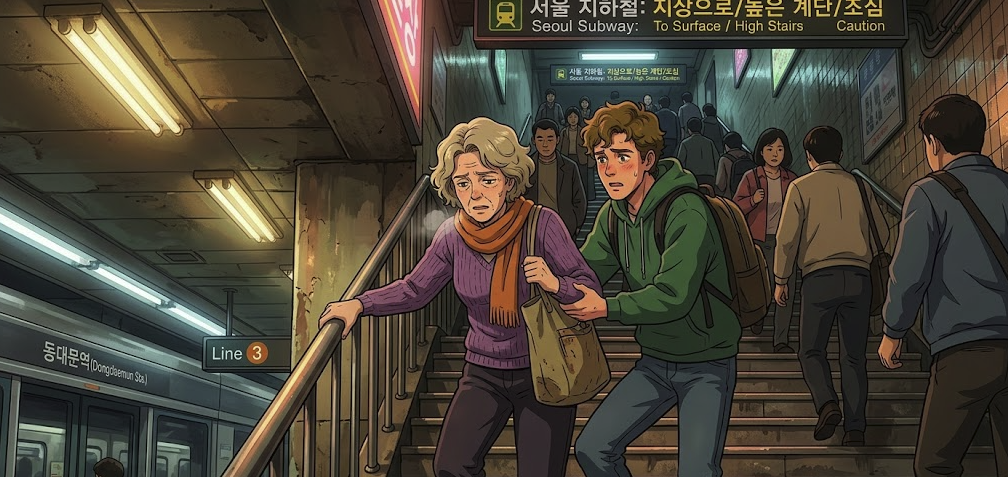
Can you put your feet in Cheonggyecheon?
It is a question many foreign visitors may not ask out loud at first.
You walk down from the street into the stream area. The city is still above you. Buses pass. Office workers cross the bridges. Restaurants and cafés glow from the streets nearby.
Then you see it.
Children sitting by the water.
Older people cooling their feet.
Couples talking quietly with their shoes beside them.
Travelers from different countries looking at the water, hesitating for a moment, then doing what everyone else seems to be doing.
On a hot summer night in Seoul, Cheonggyecheon can feel less like a tourist attraction and more like a shared living room for the city.
But then another question appears.
What kind of water is this?
Is it Han River water?
Is it tap water?
Is it safe?
And why does a stream in the middle of downtown Seoul feel so clean, calm, and carefully managed?
This guide explains Cheonggyecheon not only as a place to visit, but as a small everyday Seoul scene that many guidebooks do not explain well.
Quick Answer: Can You Put Your Feet in Cheonggyecheon?
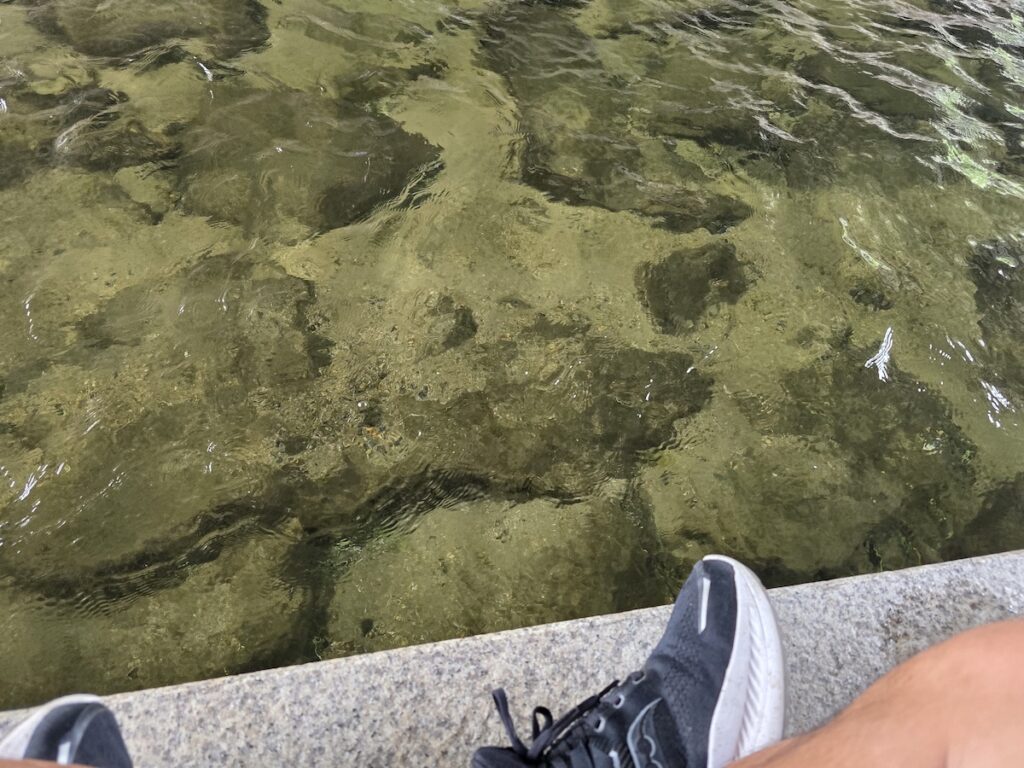
You may see many people sitting beside Cheonggyecheon and cooling their feet in the shallow water, especially during hot summer evenings. It is one of the most familiar summer scenes in central Seoul. However, Cheonggyecheon is still a managed public stream, not a swimming area or bath. Visitors should follow local signs, avoid entering restricted areas, and never treat the stream like a pool. The water itself is part of a managed urban water system. It is supplied and treated so the stream can flow year-round, and the area is maintained as a public space for walking, resting, and enjoying the city.
Why People Put Their Feet in Cheonggyecheon
The confusing part is not the water itself.
It is how normal the scene feels once you notice it.
In many cities, a stream running through downtown might be something you only look at. You take a photo, cross a bridge, and move on.
Cheonggyecheon works differently.
Because the walkway is low and close to the water, people do not feel separated from it. You are not standing far away behind a fence. You are walking next to the stream, sitting beside it, listening to the water, and feeling the cooler air near the surface.
In summer, that matters.
Seoul can feel heavy in July and August. The heat does not only come from the sun. It comes from the road, the buildings, the subway stairs, the crowds, and the long walk between places.
So when people come down to Cheonggyecheon, they often slow down.
Some sit on the stone edge.
Some take off their shoes.
Some place their feet in the water for a few minutes.
Some dry their feet carefully, put their socks back on, and return to the city above.
That small action says a lot about how Cheonggyecheon is used.
It is not only a sightseeing route.
It is a cooling place.
A meeting place.
A pause in the middle of Seoul.
What Foreign Visitors Often Wonder About Cheonggyecheon
| Question | Short Answer |
|---|---|
| Can people put their feet in Cheonggyecheon? | You may see people cooling their feet in shallow areas, especially in summer, but visitors should follow local signs and safety rules. |
| Is Cheonggyecheon a natural stream? | Historically, yes, but today’s restored Cheonggyecheon is also a carefully managed urban stream. |
| Is the water from the Han River? | The supplied water includes treated Han River source water used to keep the stream flowing. |
| Is it ordinary tap water? | It is better to understand it as treated supply water for the stream, not as drinking tap water. |
| Can you swim or bathe there? | No. Cheonggyecheon is not a swimming pool or bathing area. |
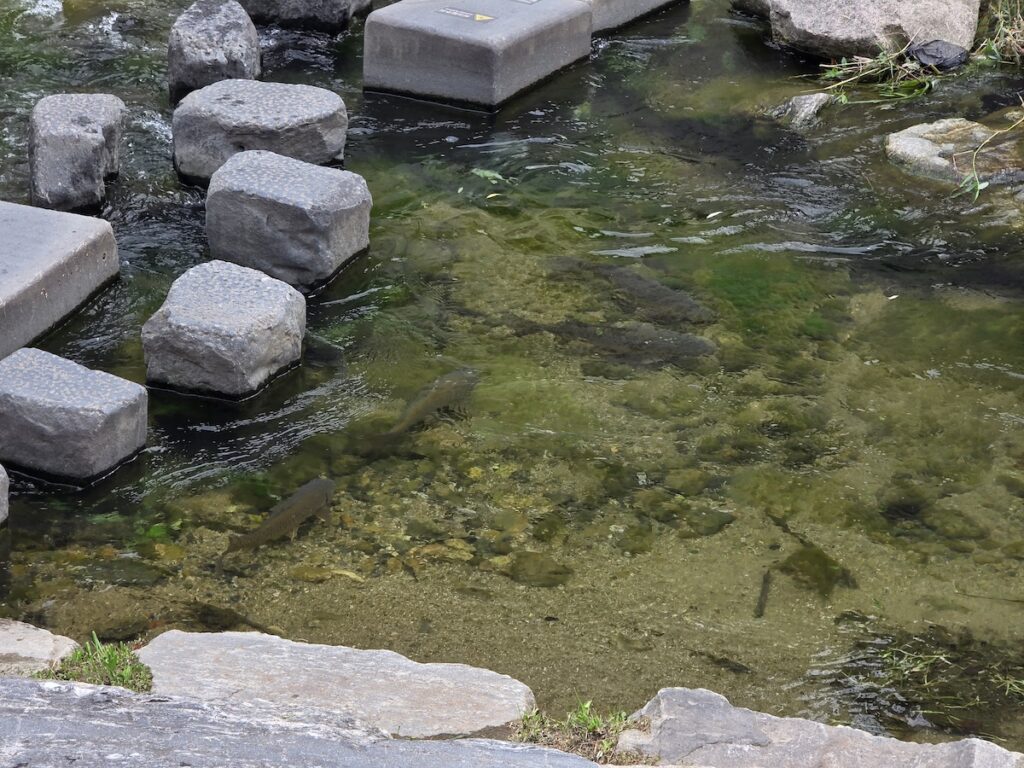
| Why are there fish? | The water is managed at a level that allows fish such as pale chub and carp to live there. |
Where Does Cheonggyecheon Water Come From?
This is one of the most interesting questions about Cheonggyecheon.
Many visitors assume one of two things.
Either it must be natural mountain water flowing through Seoul.
Or it must be tap water.
The real answer is more urban than that.
Cheonggyecheon was historically a natural stream running through old Seoul. But the Cheonggyecheon you walk along today is also the result of a major restoration project completed in 2005.
For much of the 20th century, the stream had been covered by roads and an elevated highway. When Seoul restored the stream, the city had to solve a practical problem.
How do you keep water flowing through the middle of downtown Seoul all year?
The answer is a managed water supply system.
According to Seoul Facilities Corporation, Cheonggyecheon is supplied with clean water to maintain an ecological stream year-round. The water is taken from the Han River source water and treated to a quality level that can support fish life.
So no, it is not simply “tap water” in the way visitors might imagine.
And no, it is not just a wild natural stream flowing untouched through the city.
It is better to think of Cheonggyecheon as a restored urban stream.
Part natural memory.
Part city infrastructure.
Part public space.
That combination is what makes it so interesting.
How Seoul Manages Cheonggyecheon Water
Cheonggyecheon looks simple when you are sitting beside it.
Water flows.
People walk.
Fish move under the surface.
Lights reflect at night.
But behind that calm scene is a lot of management.
The stream needs water supply, water quality control, cleaning, safety monitoring, and flood response. This is especially important because Cheonggyecheon sits lower than the surrounding streets.
On normal days, the stream feels peaceful.
On rainy days, it can change quickly.
The water level may rise fast, and access can be restricted for safety. This is why you may see warning signs, announcements, or staff instructions during bad weather.
This is also why visitors should not think of Cheonggyecheon as a casual playground.
It is a public stream.
It is designed for walking, resting, and enjoying the water.
But it is still a managed urban facility with rules.
That balance is very Korean in a way.
The space feels open.
People use it naturally.
But the system behind it is controlled, maintained, and watched carefully.
Is Cheonggyecheon Water Safe?
This question needs a careful answer.
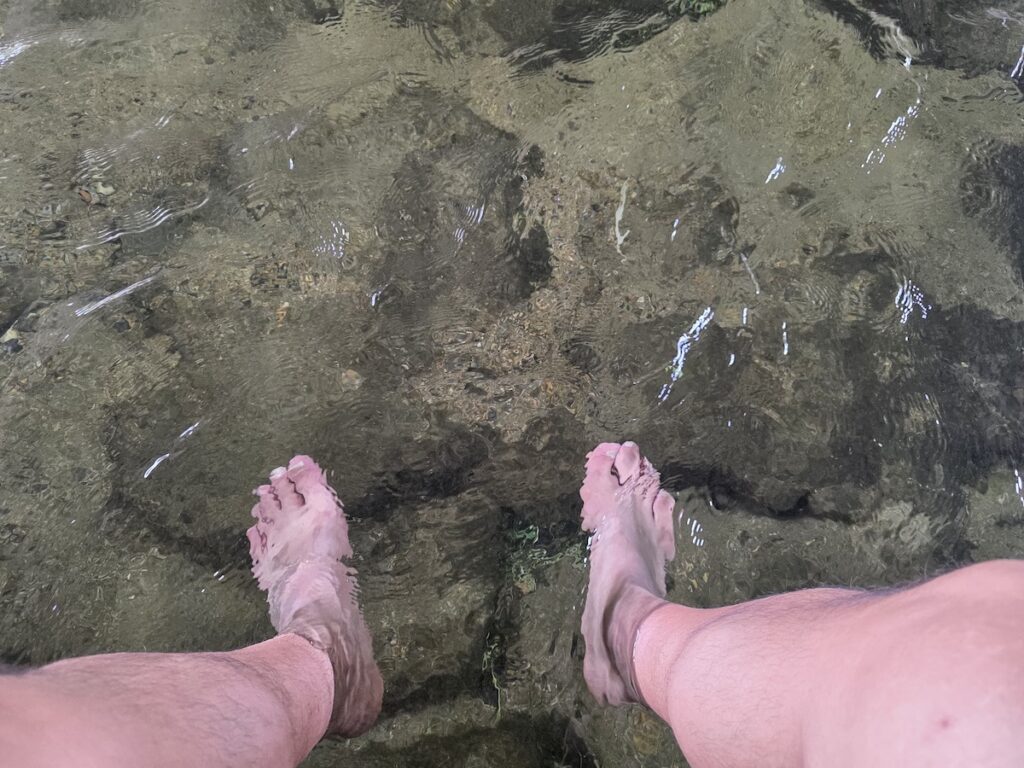
The water is managed and treated for the stream environment. Fish live there, and many people spend time close to the water.
But that does not mean you should treat it like drinking water.
And it does not mean every water-related activity is allowed.
The safest way to understand it is this:
Cheonggyecheon is a place where people often sit near the water and cool their feet in shallow areas.
It is not a place for swimming.
It is not a bath.
It is not a place to wash your body, wash clothes, fish, or let children play without attention.
If you are visiting with children, stay close to them. The stones can be slippery. Some areas are deeper than they look. Water levels can change after rain.
If there are signs telling people not to enter a certain area, follow them.
If staff make an announcement, listen.
The local rule is simple:
Enjoy the stream gently.
Do not turn it into a pool.
Why This Summer Scene Feels So Beautiful in Seoul
The reason Cheonggyecheon feels special is not only the water.
It is the contrast.
Above you, Seoul is moving fast.
Traffic lights change.
Office workers hurry.
Buses stop and leave.
People check their phones.
The city keeps going.
But below street level, next to the stream, everything slows down.
A family sits close together.
A couple talks with their feet in the water.
An older man dries his feet before putting his socks back on.
A child looks for fish.
Foreign travelers watch the scene, not completely sure whether they are allowed to join, but clearly curious.
At night, the lights make the water feel softer.
The sound of the stream covers some of the traffic noise.
The city does not disappear.
It just becomes quieter.
That is why Cheonggyecheon is not only a restored stream.
It is one of the places where Seoul shows a gentler side of itself.
Not dramatic.
Not hidden.
Just quietly beautiful.
Cheonggyecheon Is Not the Han River
It may be tempting to compare Cheonggyecheon with the Han River.
Both are water spaces in Seoul.
Both are popular in summer.
Both give people a place to sit, walk, and cool down.
But they feel very different.
| Place | What It Feels Like |
|---|---|
| Han River | Wide, open, windy, picnic-like, good for cycling and long evening views |
| Cheonggyecheon | Narrow, intimate, walkable, close to the city, good for short pauses |
| Han River parks | A destination you often plan around |
| Cheonggyecheon | A place you may discover while moving through downtown |
| Han River at night | Big sky, bridges, skyline |
| Cheonggyecheon at night | Lights, stone paths, flowing water, quiet conversation |
The Han River feels like Seoul opening up.
Cheonggyecheon feels like Seoul lowering its voice.
That is the difference.
Best Time to Visit Cheonggyecheon in Summer
You can visit Cheonggyecheon during the day, but summer evenings are usually more memorable.
During the day, the stream is useful as a walking route. You can move through downtown while avoiding some street-level traffic and noise.
But after sunset, the atmosphere changes.
The lights come on.
The heat becomes easier to handle.
People sit longer.
The water feels more inviting.
If you want to see the scene described in this article, visit on a warm evening after dinner. Walk slowly. Do not rush from one bridge to another. Sit for a few minutes and watch how people actually use the space.
That is when Cheonggyecheon becomes more than a place on a map.
It becomes a small Seoul memory.
Simple Etiquette for Visitors
Cheonggyecheon is easy to enjoy, but a little common sense helps.
| Situation | What to Do |
|---|---|
| You want to cool your feet | Choose a shallow, calm area where others are already sitting nearby, and check for signs first. |
| It has rained or may rain | Avoid going down to the stream or leave quickly if announcements are made. |
| You are with children | Stay close and watch for slippery stones. |
| You see fish | Look, but do not catch or feed them. |
| You bring food or drinks | Keep the area clean and take your trash with you. |
| You want photos | Avoid clear close-up photos of strangers’ faces, especially children. |
The best rule is simple.
Use the space lightly.
Leave it comfortable for the next person.
Why Cheonggyecheon Matters to Seoul
Cheonggyecheon is often introduced as an urban renewal success story.
That is true.
But for visitors, the more interesting part may be smaller.
It is the way people use it.
A restored stream can be impressive as a city project.
But it becomes meaningful when people actually sit beside it, talk beside it, walk beside it, and cool their feet in it after a hot day.
That is what makes Cheonggyecheon feel alive.
It is not only designed.
It is used.
And the way people use it tells you something about Seoul.
This city can be intense.
It can be crowded, fast, and confusing.
But it also creates these small public pauses.
A bench near water.
A stone edge under a bridge.
A quiet conversation between two people.
A child pointing at fish.
An older person taking time to dry his feet before putting his socks back on.
These are not big tourist moments.
But they are often the moments you remember.
Final Thoughts
So, can you put your feet in Cheonggyecheon?
You may see many people doing exactly that in shallow areas on hot summer evenings.
But the better question is not only whether you can.
It is why the scene feels so natural in Seoul.
Cheonggyecheon is not just a pretty stream.
It is a carefully managed urban waterway, supplied and maintained so water can flow through the middle of the city. It is also a public resting place where Seoul becomes a little softer, especially at night.
If you visit, do not treat it like a swimming pool.
Treat it like a shared city space.
Sit for a while.
Listen to the water.
Watch the lights.
And you may understand one of Seoul’s quietest summer pleasures.